

The Big Interview: Asics
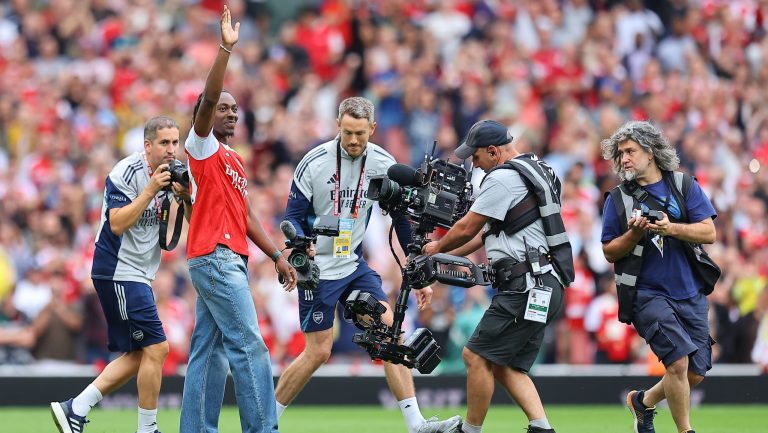
Following the announcement that ASICS had partnered with The Running Charity, CEO of ASICS Europe, Alistair Cameron (pictured, second left), talks to sportindustry.biz about the reasons behind the partnership, the importance of corporate social responsibility (CSR) and the brand’s plans in the fitness market…
Tell us about your latest partnership with The Running Charity. What do you think both sides can gain from the new deal?
The Running Charity is a relatively young charity so our partnership will help to raise its profile and enable them to get further sponsors and recruit more employees, meaning they can help more people. There’s also a tangible benefit in that we’re employing the workers in terms of fundraising and managing the young people allowing 100% of runner donations to go to frontline work.- so that’s a real positive. For ASICS, it just fits our ethos, ‘sound mind, sound body’ and it goes back to our roots so there’s a vehicle for us as we grow to link them in with our retail stores, our training programmes, our running programmes and who knows where we can take it and I believe we can take it a long way.
Why The Running Charity over other organisations?
A group of our managers were doing team building and involved some people from the charity so it was a matter of the right time and right place. They also fit very well for us as a brand and we fully endorse the philosophy that sport can have a positive impact on the lives of many.
How important is a CSR programme to big organisations?
It’s extremely important and we’ve all got a responsibility. We were in the Netherlands last week and took 1,200 disadvantaged children, who had not been exposed to sport, to the Olympic Stadium. It was a really good experience for our office staff who volunteered and most importantly for the children. We also do a lot with tag rugby and in the townships in South Africa to make the Springboks relevant in the emerging communities and that’s good for our business. We’ve got to a responsibility to do that.

In February you acquired RunKeeper, do you have further plans to move into the fitness tracking space?
We recently announced that the whole digital world will come out of Boston, so Jason Jacobs, who was the founder of RunKeeper, has been tasked with leading that. Our whole digital footprint will come from there.
There’s clearly a space for tracking devices, but the key is to build communities and communicate with each other. The beauty of things like RunKeeper is that when you or your friend runs you can post it and congratulate. Anything that can get you running out there with the elements is a positive. It depends what sort of runner or consumer you are as to whether personal bests are relevant or not, but it’s part of our life. RunKeeper gives us a huge opportunity to talk to more runners, especially fitness runners, we tend to be the discovery brand, we are the brand who are admired by our competitors for being the most technical brand, but we are only known once people get serious. What this does it gets us to those 5k runners, which is the biggest part of the industry.
But still there is an obesity issue in the country. What needs to change?
We’ve all got to get people moving, the more you can be involved in activities the better. We sponsor 135 marathons around the world, that’s millions of people who are affected by our events and if you’ve got a target, you can work to achieve it- very much like the philosophy The Running Charity is built on.
I ran the New York Marathon last year and I’ve never run more than 5k in my life, so if I can do it, then anyone can, that’s not to say it’s easy. If we can help people get off the couch and just get moving we can help society no end and that should be our role.
Earlier this year, you revealed that sales had more than doubled over the last five years, is this down to a national running/fitness boom, or is it more targeted for the brand?
Five years ago we were the biggest brand in running and five years later we are still the biggest brand in running. We are the category leaders and the leaders grow the category and our responsibility is to make running relevant for more people than just the serious, personal best runners. The market has grown, more people are active and we’ve launched a lot of products, so we’ve gained market share as well.
What’s the biggest challenge of working in the competitive fitness market? Is it about finding your niche, such as people who ‘want it more’, as this year’s campaign suggests?
What competition does, is keep you on your toes and we’ve launched a lot of new innovations. We launched the MetaRun, which is the most highly technical shoe in the industry and has nine new patents and a revolutionary new cushion system. That system is now in new products and it’s 50% lighter than anyone else’s and that’s increased sales.
We went into tennis with Speed Tennis and doubled the tennis market and became the number one tennis footwear in brand in Europe. You wouldn’t expect that because we don’t sponsor the big tennis icons; we’ve got Johanna Konta and Gael Monfils which is great, but we are the number one tennis shoe because innovation in footwear and clothing has made us number one. Product is still king in our world and that’s what people respect us for with over 100 scientists in Kobe, Japan persisting away at technologies and compounds in white coats.
Do you ever compare your progress to others in the market?
What you have to be aware of is what’s going on, so you’re always aware of who’s up, who’s down, who’s in and who’s out, and what part we’ve got to play in that. It’s very much about elevating our brand presentation at retail and in a sense that’s what the flagship store in Oxford Street is about. It’s about the technology, the lab, the science and expertise behind it. That’s what we have in comparison to low-tech brands that are involved in the market.
What’s in store for ASICS over the coming months?
We’ve got lots of new product launches coming up, so we hope to reach even more runners on that front. We are also really targeting what we call the ‘fitness explorer’, which is more the urban runner, maybe 5k to 10k and we need to grow in that market. So all our marketing will be focused more in social communities and digital to connect with cities where running clubs and urban running are becoming increasingly popular.