


The Big Interview: Commonwealth Games England
After a record-breaking Olympic Games for Team GB and ParalympicsGB, the focus will soon switch to the Gold Coast, for the Commonwealth Games in 2018. Paul Blanchard, CEO of Commonwealth Games England, tells us how…
Coming off the back of a record medal haul for Team GB and ParalympicsGB in Rio, what does that mean for Team England in two years’ time?
It can only be a good sign! It was a brilliant Olympic and Paralympic Games and hopefully, despite a few problems, people will remember it as a success. Of the record 67 medals won at Rio 2016 by 130 medallists, 103 of those medallists were English. It bodes well for UK Sport, Sport England, all the NGBs and the stakeholders – you don’t get success like that without a lot of planning and preparation. From a Commonwealth Games point of view, my interest is obviously how Team England is going to do. We want to go there and top the table. Of course, it also bodes well for Scotland and Wales, who were both big contributors to the medal haul this summer.
For Team England, it’s looking pretty good, and there’s going to be some great competition from the home nations as well. The team is hugely diverse, inclusive and equal, so it is the best representation of England as it is today, combining athletes from a cross-section of demographics, cultural backgrounds and geographies.
There was a huge focus in the run-up to Rio, and during the Games itself, on “medal targets”, which can have a huge impact on the athletes as funding can come and go as a result of it. This isn’t the case at the Commonwealth Games, but has the recent success made you re-evaluate any targets you may have had in mind for the Gold Coast?
It’s given us a lot of reassurance that we’re heading for a great Commonwealth Games, as much as anything. As you said, medal targets have very different meanings for the Olympic and Paralympic Games compared to the Commonwealth Games. The Team GB and ParalympicsGB medal targets are a direct result of funding to governing bodies, so it’s very much a collective of all the sports, specifically linked to past and future funding. In our case, our member sport is the English association or federation, and those bodies are not specifically funded by UK Sport. Obviously some athletes who are English will be on the UK Sport podium pathway but in terms of the funding structure it’s very different.
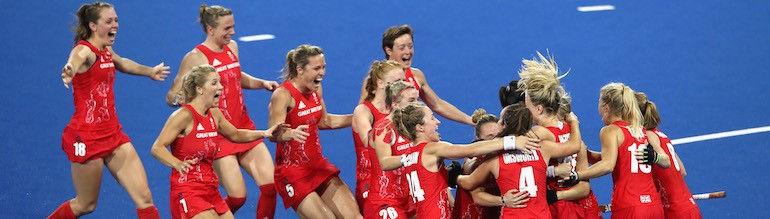
Team England will be hoping to replicate their success as Team GB at Rio 2016, but will have to do it without their home nation team-mates
In terms of targets, we’ll tend to have a finishing position target rather than a medal target. A lot closer to the time we’ll talk to our sports’ governing bodies around their expectations and we’ll set some more definitive targets. It’s too early to tell at this stage, but having topped the table in Glasgow for the first time in 30 years, we would obviously like to repeat that success. It’s a massive ask, because now the tables are well and truly turned on us. We’re in Australia’s backyard, they’ll have the biggest team of athletes because they’ll have a home nation allocation, there’s all the issues that come with acclimatisation on the other side of the world, and the sports programme is designed to favour the Australian team because, well, why wouldn’t you! Perfectly reasonable, and we’d do exactly the same with home advantage, but it’s certainly a big obstacle to contend with.
It’s stacked against us, but I think we’d be disappointed with anything less than a top two finish. We’ll go there and go for it.
Does a successful Olympic and Paralympic Games have any impact on you commercially; are sponsors knocking on the door to get involved?
Well it certainly doesn’t do us any harm, the true impact is obviously yet to filter through, but the profile that a lot of these sports have received over the summer will have some benefit, and there’s already been some very promising conversations with new brands. It has shown the level of impact and value that brands can get from being involved in these sports. DFS is a great example of a brand that has really utilised an asset that is traditionally more tricky to activate than something like a Premier League shirt sponsorship, for instance. There has been some good examples of best practice throughout the summer that we can learn from, and hopefully it will encourage and inspire some of our partners to put themselves out there.
As for the commercial impact overall, it’s a little early to tell just yet. There were a few concerns post-Brexit with what brands might do with their budgets, and whether or not things might get put on hold until the dust settles. Fortunately, any brands on the fence with regards to sponsorship in sport can be encouraged by the success of many of the brands involved with the Rio Games, so it will be interesting to see what conversations come about over the next six months or so. Time will tell.
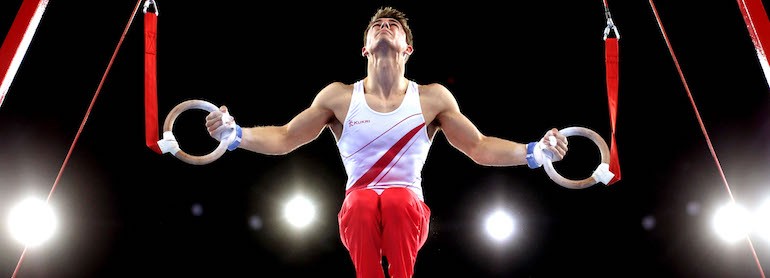
Team England’s Max Whitlock in action at the Glasgow 2014 Commonwealth Games
There’s around 18 months to go until the Commonwealth Games kicks off, when would you have in mind to have your commercial portfolio confirmed?
We’re out there at the moment looking for our first ever presenting partner. It’s the biggest partnership we’ve ever offered before, so we don’t want to rush in. We’ve set ourselves an informal target of being pretty much settled with around 12 months to go, so at that point we can put all our focus on getting everything else right. Of course in a perfect world, we’d like to get our partners on as early as we can, but it was always more likely that the best time was going to be post-Olympics. We’ve already signed a number of second-tier partners such as CGI and STA Travel, so there is interest there already, and we’ll look to expand on that tier as well, hopefully with a top tier partner in above that.
As for the Commonwealth Games England team itself, how soon will that start to grow in the build up to 2018?
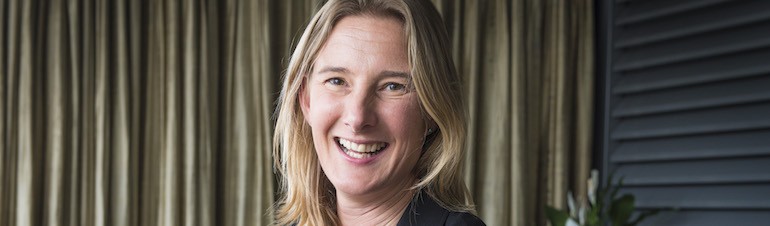
We’ve already recruited our Chef de Mission, former Olympic rower Sarah Winckless MBE (pictured below), who was out with the British Olympic Association (BOA) at Rio 2016, so she’s come back with all sorts of feedback and examples of best practice. Over the next few months we’ll work out exactly what we’d like to translate into our programme and preparation, so she will have a significant impact on what the team looks like. So yes, we’ll certainly start to grow very soon.
Of course, we’re not like the BOA or BPA, we’re in different worlds in terms of budget, so our levels of staffing and infrastructure will still be comparatively smaller. Our Games delivery team will also largely consist of volunteers, who will come and work for us out there for a month or so. We also have a team leader for each of the 18 sports, so there’s quite a lot of preparation going on with them who will feed back and work with us throughout the build up to the Games. That will really ramp up in October when we lock them all in a room at St George’s Park for two days to try and soak up all the information; including selection criteria, accommodation, transport, flights, the village, venues, the list goes on! That will be the first time everyone will come together, so I’m sure there will be plenty of feedback to share and collect around all aspects of the journey.
We’re looking to run a preparation camp just down the coast in Brisbane around ten days out from the village opening, which will form the key part of the acclimatisation process. Given the travel time, these small changes can make a huge difference to performance.
I think everyone in sport can appreciate the famous ‘marginal gains’ phrase these days, and it’s never more applicable than when you’re competing on the other side of the world.
Image: ©Getty Images