


The Big Interview: Tim Shriver
Tim Shriver, chairman of Special Olympics and member of the Kennedy Family through his mother, Eunice – the founder of Special Olympics – talks to Sport Industry Group about the 50th anniversary of the programme, taking the movement to new territories, and becoming the Official Charity Partner of the BT Sport Industry Awards…
Let’s start with the background, how did the Special Olympics movement begin?
When I was little, my mother started a summer camp in our backyard for people with intellectual disabilities. This summer camp grew from our backyard to the first International Games at Soldier Field in Chicago. On July 20, 1968, 1000 athletes from 26 U.S. states and Canada competed in track and field, swimming, and floor hockey.
It’s your 50th anniversary this year – what are your hopes for the next 50?
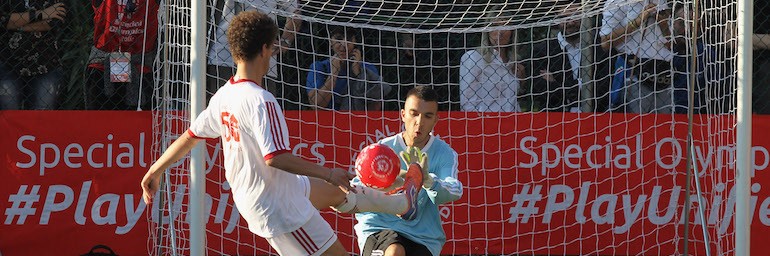
I would like to have Special Olympics Unified Sports in every school around the world. Every child should be able to grow up in a world with a chance to either play, volunteer, or coach a Unified team. In the first 50 years, over 1.4 million people around the world took part in Unified Sports. In the next 50 years, we will spread the movement to the other billions of people in the world.
Inclusion is a key topic throughout, how does this manifest in your programming? (Play Unified)
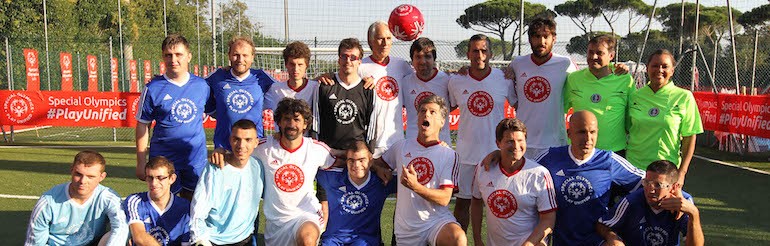
In the past 50 years, Special Olympics has moved passed only providing sports to people with intellectual disabilities. Now, our programs promote inclusion for everyone. For example, we have Unified Sports that bring people with and without intellectual disabilities together to train and compete on the same team. By using sports to bring people together, we are working to create a Unified Generation that values inclusion over exclusion.
What is the make-up of your volunteer programme?
Our volunteers are all ages and from all over the world. Their volunteer commitments can range from an afternoon to a lifetime. Special Olympics could not have been created and could not continue to thrive without the millions of volunteers in our movement.
What wider impact have you seen your athletes have on those around them, friends and family?
Our athletes live by the Athlete Oath, “Let me win. But if I cannot win, let me be brave in the attempt,” and their bravery has a great impact on those around them, especially their friends and family. They inspire people to trust themselves and to believe in the goodness of people. They remind others to believe in the beauty and strength of the human spirit. Through Special Olympics, athletes, their friends, and their families learn that disability is not a barrier that cannot be overcome. Everyone has different gifts, and through our programs, our athletes learn about their gifts and how to show them to the world.
What is your biggest challenge when organising a global sporting event like your World Games?
Our biggest challenge is awareness. People around the world have heard about Special Olympics, but often, they don’t see it as urgent. The reality is that people with intellectual disabilities are dying 16 years earlier than those without because of the lack of health care. People with intellectual disabilities are bullied 2/3 more than the average person. Our mission is more than being nice. We are changing the world.
Would you ever consider the Special Olympics combining with the Paralympic movement? Would you want it to?
That’s a great question. We often get the question of how our organizations differ and many people mistakenly think we are an event that happens every two years, following the Olympic Games, which you and I know, is the Paralympics, not the Special Olympics. Special Olympics is an organization for and from people with intellectual disabilities and we allow ALL ability levels from age eight up to whenever you depart this Earth, to play sport and compete. The Paralympics require a specific ability level to compete and hold competition once every two years. Special Olympics is EVERY DAY around the world. We have over 108,000 competitions a YEAR, which breaks down to 12 competitions a day. We support the Paralympic movement, and have some Special Olympics athletes who have competed in the Paralympics, but we would not combine with the Paralympics.
The Special Olympics has recently spread to Abu Dhabi, a region where intellectual disabilities are not widely discussed. How important is it to bring the conversation to new areas?
I just returned from Abu Dhabi, where the ninth Middle East North Africa Regional Games took place, and I was so impressed with everything Abu Dhabi has accomplished. Before Abu Dhabi won the bid to host the 2019 World Games, the government was just starting to address the needs of its citizens with disabilities. Now, they have a place of honor in society and are called “people of determination.” It is amazing how fast the UAE is moving toward inclusion, especially with the help of the 2019 World Games, and it shows how important it is to bring the conversation to new areas. About 200 million people on Earth have intellectual disabilities, and we are only reaching 5 million right now. By expanding the conversation to new areas, we open up our message of inclusion to more people around the world.
Finally, you have teamed up with Sport Industry Group for the BT Sport Industry Awards on 26th April in London. With senior figures from across the industry set to be in attendance, what challenge would you lay down to the UK sport industry that would help contribute towards Special Olympics’ goals for inclusion and community, regardless of ability or disability?
I challenge the UK sport industry to live and play unified. Be inclusive. Learn from our athletes, our volunteers, and our students, and approach the world inclusively.
ESPN Special Olympics are the Official Charity Partner of the BT Sport Industry Awards 2018. Find out more here.