




Adam Warner: ‘a Pivotal Moment For Sport And Culture’
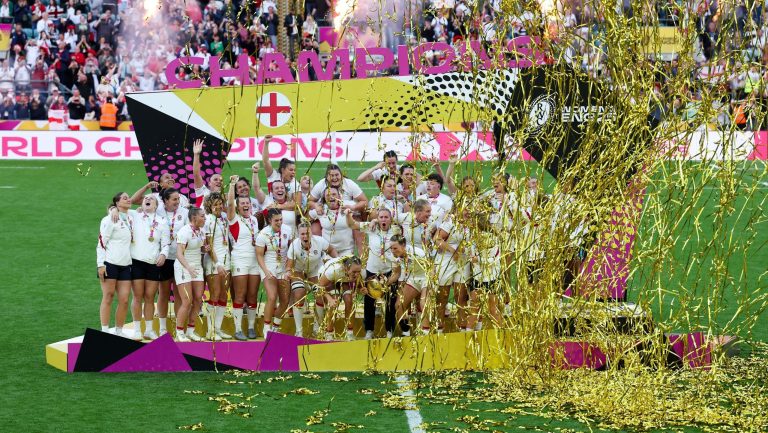
Chloe Kelly’s extra-time winner in the UEFA Women’s EUROs final against Germany sealed England’s first major international tournament victory since 1966. The unforgettable win pulled in a peak TV audience of 17.4 million, the most-watched women’s football game on UK television of all-time and the most-watched programme of 2022 so far, while investment in the women’s game is expected to grow set to soar as a result.
“They have changed the way women’s football is viewed in this country,” declared former England international Alex Scott moments after the final whistle was blown. “The train has left the station and it is gathering pace.”
PepsiCo’s Senior Director Global Sports Marketing, Adam Warner, was in the crowd at Wembley for England’s momentous victory and emphasised the special feeling around the final.
“It’s a defining moment for not just women’s football but women’s sport. I feel proud that we played our part. Being in Wembley, at the final whistle, after extra-time, around fans and colleagues – the energy was incredible and it will live long in my memory.

“It felt like such a pivotal moment for sport and culture in a much bigger sense. The positivity flowing out from everyone around you was just amazing,” Warner beams.
Less than 24 hours after England captain Leah Williamson lifted the trophy to nationwide jubilation, thousands of supporters swarmed Trafalgar Square. The image of England fans of all ages and genders draping themselves over statutes and fountains in celebration was an unforgettable moment, however, Warner points to several instances over the last year that suggested that the women’s game was on the verge of a breakthrough regardless.
“I would say that the past six to twelve months has just seen the next step for women’s football,” says Warner. “Clearly the 2019 World Cup in France was big, but we also saw some incredible moments last season.
“For example, the Women’s Champions League saw attendance records being broken on two occasions, notably with Barcelona in the Nou Camp. Then, coming into the Women’s EUROs, we had expectations, but I think they have been exceeded.”
A range of PepsiCo brands – including Pepsi, Gatorade, Doritos and Lays – were visible throughout the tournament this summer, hoping to make the most of the wave of positivity that accompanied the tournament. As well as PR, POS, OOH and the entire array of acronyms the comes with a fully integrated marketing campaign nowadays, Doritos ran its first-ever brand-led football campaign in the UK starring Jill Scott and Mason Mount, while Pepsi was presenting partner for the tournament’s final show.

Despite describing the activation, which featured popstar Becky Hill, as a “fusion of sport and entertainment”, Warner says he’s most proud of the work involving Gatorade and its ambition to champion not just the women that play, but the “many amazing actors that help elevate the women’s game.”
“In partnership with UEFA, the Gatorade Sports Science Institute put a focus on the different female match officials. We did workshops with them, educated them, and used performance tracking leveraging GX tech to help improve their performance,” he explains.
PepsiCo’s support for women’s football can be traced all the way back to 1997 when the company featured US female soccer player Mia Hamm in a commercial alongside basketball legend Michael Jordan. Since then, the involvement has been growing, notably with the UEFA partnership in 2020. Now, Warner hopes more will join the movement, but wants to ensure PepsiCo will still benefit from being a first-mover.
“The challenge for brands is that there have been some investing for a while, but now some more are going to step in. I guess, you could look at that opportunistically, so I think the focus has got to be on making sure they do it in the right way. Make sure they come in and show commitment, and really understand what the women’s game is. It’s not a copy and paste of the men’s game, its different. That’s the challenge for brands, how they evaluate this as a platform.
As to how PepsiCo will stay ahead of the curve, Warner adds, “I think we are already benefitting given the great moments we have seen over recent months. By coming in, it has allowed us to really build an understanding of the women’s game. It allowed us to build authentic connections and partner with athletes and players.
“Of course, there are opportunities for new brands. They have to be prepared, ready to get stuck in and really understand the game. Some will get it right, but a lot will get it wrong, because they’ll be too opportunistic and not have the right mindset to succeed.”

Despite emphasising the importance of new investment into the women’s game, Warner underlines that more is needed from those within power. Recent data from England Football shows that only 63% of all schools in England offer equal football coaching to both boys and girls, and Warner wants the imbalance corrected.
“On the governing body and political side there is more that needs to be done,” he says. “Unfortunately, there is not equal opportunities for young girls in school to play like young boys have. That needs to be fixed. No doubt, more investment from brands and media can help that, on the political side, there needs to be a step up in commitments there.”
PepsiCo wants to continue to push forward the agenda. Research from Ipsos suggested that, in the wake of the tournament, 44% of British people are now more interested in watching women’s football in the future. That figure rises to 64% for self-identified football fans. Warner is acutely aware of the opportunity on offer and outlines PepsiCo’s strategy to capitalise.
“We are really focused on taking a holistic, end-to-end view on how we approach women’s sport and women’s football. There are three or four vectors we look through regarding how we are approaching it. One is the role we can play given the scale of our brands and variety in our portfolio, just to help grow awareness and visibility.
“Secondly, partnerships play a big role. Not just our partnerships across men’s UCL and women’s football, but we also have partnerships with athletes. We also hold a relationship with Women in Football which is committing to creating 45 female coaches in the UK.
“Thirdly, education and innovation. We are thinking about how we design sports nutrition products to specifically help female athletes.
“And finally – community. Community plays an integral role. You think about the top-bottom element in the women’s game. For example, we launched a powerful initiative last year called Lays Replay. It basically turns Lays crisp packets into artificial football pitches in disadvantaged communities around the world. We most recently launched that in Turin, where the women’s UCL final was hosted last May. We are focusing on boys and girls getting access to the game.”
Images: Shutterstock