



Ben Shalom: Changing The Face Of Boxing
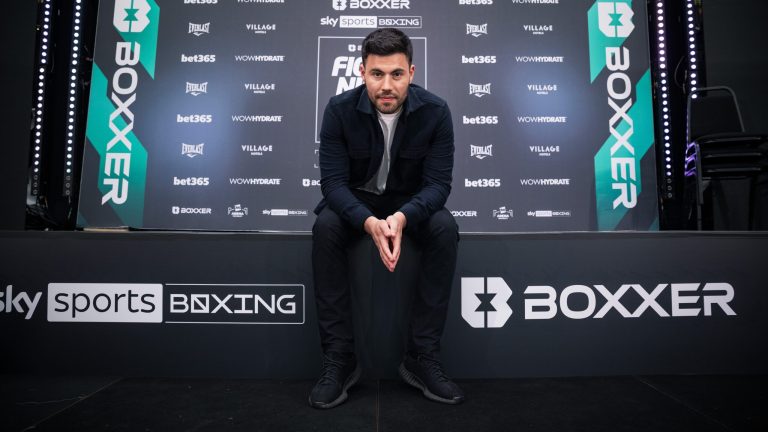
BOXXER CEO Ben Shalom is the youngest licensed boxing promoter in the UK. Aged 23, Shalom took out a £10,000 loan to pay for his very first boxing license. Fast forward four years and he generated over £10m in a single event when he sold out the Manchester AO Arena with Amir Khan Vs Kell Brook in 2022.
We caught up with Ben to learn more about his journey and explore the future of boxing…
What does a boxing promoter do and how exactly did you get into such a tough industry?
To put it simply, boxing promoter puts on fights. I first got into boxing by helping local promoters in Manchester. I had run previous businesses before but as soon as I sort of finished studying, I did a law degree, and it was it was boxing that I always wanted to go.
But I always saw a huge amount of opportunity in the sport. At the time it was very underdeveloped commercially, very limited in the connection between small hall boxing and professional boxing and the big TV nights. For me it was about how can we make the sport easier to access, easier to understand, more transparent, and probably less intimidating as well.
I was always around fighters and for me, fighters within boxing and combat sports stars in general, put in so much to the craft. It’s a sport that requires the most hard work the most honesty and the most integrity. Yet the sport was sort of shrouded in this mysterious vale where people didn’t quite trust it and it was always a little bit murky.
That was always the opportunity that I saw. How can we create a sport that fighters can be proud of? That different fans can come to. That was more diverse.
How are you trying to make the sport more inclusive, but keep its core values and traditions?
I think the key is trying to find role models within a sport and to make sure the sport doesn’t appear so egotistical, which it has for so many years.
We’ve tried to make it less confusing for people trying to invest in women’s boxing. Making it a more diverse space is really the golden bullet. We’ve seen huge events that we’ve put on like the all-women’s night with Claressa Shields vs Savannah Marshall, but also the stars that we’re bringing through like Caroline Dubois and Lauren Price. Making sure that it appears like a progressive sport was the key.
Making it easier to access cheaper tickets and easier to broadcast is also important. I think for so long, people know of the big names and know the big fights but don’t really understand the belt systems, can’t keep concentration for the long winded under cards. There’s a lot we want to achieve in the sport, but we knew without enough influence and without an infrastructure within the sport, we could never affect the change that that we wanted.
“For me, it’s just making boxing easier to understand, easier to access, and more transparent.”
BEN SHALOM
Now we’re getting to the point where we have the big TV contracts, we have the relationship with the British Boxing Board, and we have the vision that we can really affect change. And for me, it’s just making boxing, easier to understand easier to access and more transparent. That’s when broadcasters are going to ultimately want to be involved in the sport and be proud to be involved. And that’s when we’re going to see it grow.
I think over the past couple of years, with the help of YouTube boxing, the participation in boxing which has gone through the roof all around the country and it has become a more mainstream sport. And that’s where we want to continue to develop.
What is the biggest challenge you face as a promotor?
The biggest challenge is to convince. Sky Sports has been a massive supporter of boxing for a long time. But sometimes broadcasters need to be convinced of the reason to stay in the sport.
“I think many times in the past five or 10 years, there’s been so many scandals and things within boxing that the major broadcasters just find football, tennis or F1 less risky.”
BEN SHALOM
It comes with so many problems and pitfalls from a business perspective. It’s not easy to schedule. It’s not easy to organise. It comes with a lot of PR issues that have to be dealt with. The main thing for us was to understand the broadcaster’s business, understand their challenges, understand their shareholders, and I’m working out how boxing can fit within that space.
One of the key focuses we have at Boxxer is how can we make boxing something that a broadcaster like Sky wants to be involved in a wants to promote long-term. I think many times in the past five or 10 years, there’s been so many scandals and things within boxing that the major broadcasters just find football, tennis or F1 less risky.
When getting our Sky Sports contract over the line, it was important to show how important boxing can be in everyday life, showing a way where we can invest more in women’s boxing and making it more diverse by showing that we can make it more accessible. cheapening the tickets and making it really more mass market.
How big was Chris Eubank vs Liam Smith 2 at the Manchester Arena for Boxxer?
These are the reasons that that you’re in the sport. These are the events that really take over and catch the public’s imagination and keep people interested in boxing. This was a huge event.
Luckily, we have an amazing team now. And it’s still hands on. It still has elements of stress, but it’s not what it was and usually when it gets to fight night, that’s when you can enjoy it. Most of the work is done way before a fight gets announced.
Manchester Arena is a place that we love doing events. We think it’s the best venue for boxing in the country.
What legacy or impact do you want Boxxer to have?
Longer term, I think hopefully in 5-10 years, the sport is gone of the days where people grimace when they hear boxing mentioned or think that it is unsafe. Or they think that it’s not a nice thing to be involved with or a nice environment to go to I think that’s what the fighters deserve.
The sport has so much potential – it can be so much bigger. It’s so entertaining. I think the focus for us and the vision for us is, if we can have an impact on broadening the horizon of the sport and making it more accessible, making it more mainstream and making it more respectable. I think that’s the lasting thing effects we’d like to have.

How do you go about doing that? Is Boxxer trying to create more free-to-view fights?
The focus at the start and up until this point has been has been getting that influence. The key is to make a sport where fighters can fight more regularly and that will make the sport that is cheaper to access.
We want to make a sport that’s on TV more often and introduce more free-to-air events 8pm to 10pm rather than so late.
We are trying to make sure the arena is a different experience to perhaps what you would experience 10, 15, 20 years ago, women’s boxing is absolutely huge, not just important for women’s boxing, but important for boxing in general.
It has to be taken out of the very sort of ego driven, masculine dominated sport that essentially it was built on. And there’s judging, regulation, doping, there’s so much that hasn’t been developed in the sport that perhaps has been in other sports.
We can only start to affect that change in a position that we are in now.
Subscribe to the Sport Industry Daily for regular updates on the biggest stories and latest news in the sport industry.