



The Big Interview: London Marathon Events
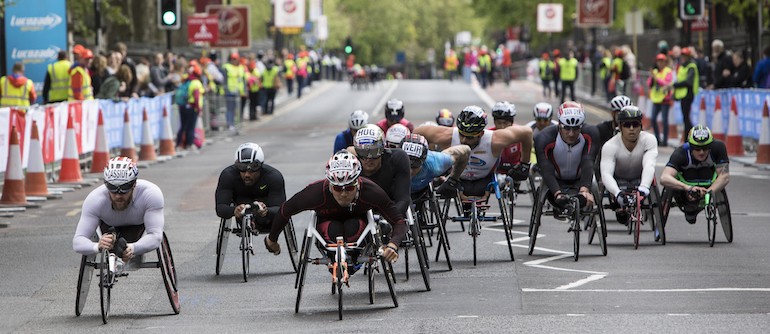
Hugh Brasher, event director for London Marathon Events, tells Sport Industry Group about the latest mass participation event in their portfolio, The Vitality Big Half, which takes place this weekend on 4th March. Brasher explains why it’s helping change the face of mass participation sport, encouraging hard to reach communities to take part, finding the right commercial partners and the family legacy that runs through The London Marathon Charitable Trust.
How long have you had the idea for The Big Half and when did the actual planning begin?
The idea came from a member of staff during our staff conference in September 2015 so it’s effectively taken two and a half years in planning, consultation and execution. What we wanted to do was effectively change the face of mass participation sport. We have a strapline of ‘truly global, uniquely local’ and for London Marathon Events, without being too arrogant, the truly global bit is what we are used to doing and we pride ourselves on putting on the greatest marathon in the world. What we were gripped by is this concept of “uniquely local” and the challenge of creating a mass participation event where the participants truly represented London’s unique diversity. That has never been done with a mass participation event previously.
You have a wide portfolio of other events already, what was the driving force to create this one?
Before if you looked at our portfolio of events, we had one of the greatest mile events in the world, one of the greatest city centre 10k races, one of the greatest marathons, one of the greatest city centre open water swims, one of the greatest cycling events and therefore a half marathon was something that was missing. That’s where the team came up with the idea, developed the concept and worked with the boroughs, TfL and the Mayor’s office to deliver The Big Half.
In addition to a half marathon being the missing event from your portfolio, was there any data or research that informed you that the end participant, specifically those in the traditionally harder to reach communities, would want to take part in a half marathon as opposed to another distance or format?
The event is more than just a half marathon. We have The Big Half, The Little Half, The Big Relay and The Big Festival. The Vitality Big Half is a challenge of 13.1 miles and you need to get people on the journey to that distance and you also have to make sure it’s fun. Fun has to be the centre point of what we are achieving.
The Big Relay is teams of four people running the same course of 13.1 miles but one participant will run one mile, two will run three and a half miles and one will run five miles. All the research says doing things as teams and as a group means it is more likely to keep people motivated. 13.1 miles could be a barrier to entry for some and it’s also a barrier to anyone under the age of 17 as you have to be over 17 to take part in a half marathon. With The Big Relay runners can be twelve years old or above. We have only allowed teams from the four boroughs that the course goes through which are Lewisham, Tower Hamlets, Greenwich and Southwark. It’s about fun and inclusivity.
The Little Half is a 2.4 mile fun run starting at Southwark Park and finishing on the same course as The Big Half. What is unique about it is that we will feed the runners into the back of The Big Half as opposed to the standard practice of fun runs or similar taking place very early in the morning before the main event. By feeding the runners into the back of The Big Half it becomes more of a celebration and then, after the finish line, there’s The Big Festival which is all about nutrition and wellbeing. The idea is that it will motivate people who haven’t done The Vitality Big Half to get involved in future years. We will be making more announcements about inclusivity at this event so it doesn’t matter who you are, we are hoping we will have an event that will be right and will be fun for you.
What else justifies the ‘uniquely local’ part of the strapline?
In addition to the teams from the four host boroughs for The Big Relay, we had a special entry system for local community groups. The event sold out to what we call ‘already inspired runners’ in less than 48 hours just through social media but we had teams of people going into the communities of the four boroughs to generate community entries which are charged at only £10 each. The next cheapest closed road half marathon prior to this was £46. Runners from outside the four boroughs pay £39 but runners from the local community who were engaged via schools, faith institutes, NHS Trusts and more have a guaranteed entry price of £10.
How can you be sure that you are reaching the right people in those boroughs?
They don’t have to prove they are from a particular demographic because the demographic is about hard to reach people. Sport England has produced a huge amount of research on mass participation sport and sort in general and the government uses NS SEC levels 1 – 8 looking at employment levels. It has been proven that those at level 1-2, in managerial positions, are twice as likely to do sport than people at levels 7 and 8, where 8 is unemployed and 7 is manual and repetitive labour. There are twice as many people at level 7 and 8 as there are at levels 1 and 2.
We are going into the community, working with our partner Sported who already engage with 3,200 sports clubs around the UK, and encouraging people to go on a journey of having some control over their health and wellbeing.
What do you think are the biggest barriers to entry from those lower down that scale?
There is never a one size fits all solution. There is always a myriad of different reasons. It can be cultural, cost, time or engagement. You need to create something that is fun to overcome that. Our research on the London Marathon has shown the word fun is paramount to our participants and the reason it’s fun is because it’s the biggest street party in Britain with three quarters of a million people out on the streets of London willing runners to be successful.
The Big Half is a shorter distance but we want it to have this incredibly local feeling. London is such an amazing city, there are so many people focussing on what’s wrong but we are trying to focus on what is right to create this fun and encouraging atmosphere for everybody.
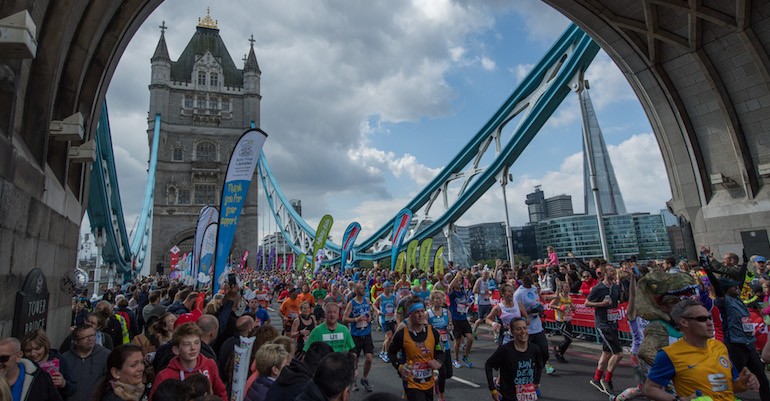
Do you think that other professional organisers of mass participation events have more of a responsibility to make those events more accessible to a wider demographic and possibly less commercially focussed?
It’s very difficult for me to comment on what other organisers should or shouldn’t be doing. We are a not-for-profit organisation and all our profit goes to The London Marathon Charitable Trust. We have the pillars that my father and John Disley created for this company in 1981 and those pillars explain why we think this is important. One of the pillars was to create fun and a sense of achievement in what is often a troubled world. Some terrible things have happened recently but something incredible that sport can do is to create an environment that shows the unity of people and that it doesn’t have to be something terrible that creates that unity. It’s part of our DNA at London Marathon Events.
A lot of your commercial partners for The Big Half are existing partners elsewhere across your portfolio of events. That could be looked at two ways; that they love working with you and want to grow that relationship or, in what is a tough market for sponsorship at the moment, that you have gone to existing partners looking for support to help get this event of the ground. How would you describe it?
In 2012 when I started at London Marathon Events we had about eleven partners and we now have about 24. Of those original eleven, eight are still with us. It shows we care, we look after their needs and they love working with us. Our attention to detail, is I believe, unparalleled. We have a great sponsorship team and what we try to do is create events that are needed and can really engage with target audiences, the media, sponsors staff and their customers. The Big Half is something that is right for us and is right for society to encourage people to take control of their health. We go out into the market and we also have deep conversations with our existing partners. We have some exciting other announcements that we will be making in the next few months about other partners for events that we organise and we are still looking for new partners for The Vitality Big Half. All our partners share our company values.
The London Marathon Charitable Trust has awarded grants totalling more than £68m to more than 1,200 projects. Is that the key driver for you and the team?
It’s not the key driver but it is the incredible icing on the cake. What drives this company is inspiring people to take up sport, to create fun and to create some of the greatest mass participation events on the planet. To see people crossing the finish line, the smiling faces, the fun and the moving stories that come out are an incredible inspiration. To know that the final piece of the jigsaw is that the profits from the event are going to The London Marathon Charitable Trust which is then improving sport and recreation across the UK is that icing.
Lastly, from the work that The London Marathon Charitable trust does is there one thing that personally stands out for you and sticks in the memory?
There are so many things to think of that it’s a tough question to answer. One thing that has a lovely symmetry to the pillars of the company that my father and John created was last year when my daughter – my father’s youngest granddaughter – and John Disley’s youngest granddaughter cut the ribbon of The London Marathon Community Track in Queen Elizabeth Olympic Park. This is a track next to the Olympic Stadium, funded by a £3.5m grant from The Trust and now used by the community, with a school next door, and it is also the home of the local athletics club. As a story from 1981 through to 2017, it has a lovely symmetry.f