

The Big Interview: Sela Sport
Ahmed Al Mohtaseb, vice chairman and chief strategy officer at Sela Sport speaks to Sport Industry Group about the commercial growth of the MENA region and how a chance meeting with Prince Naseem Hamed led to the founding of the agency…
Sela Sport was founded in 1995, what was the story behind the start of the business?
Sela Sport was founded by my partner and the chairman of Sela Sport, Dr Rakan Al Harthy, whilst he was studying at medical school. It was at that point he met the boxer Prince Naseem Hamed and together they wanted to explore the opportunity to have a boxing match in the Middle East, which eventually took place in Dubai, with predominantly Middle Eastern sponsors. Sela Sport therefore started as an athlete representation agency.
In 1997 Sela Sport was granted the first license to act as a player and match agent. The first task was to find a coach for the Saudi Arabian national team, which had qualified for the 1998 FIFA World Cup in France. After shortlisting six managers, the top target was Carlos Alberto Parreira, who Dr Rakan Al Harthy managed to sign within three days. From this starting point, Sela Sport continued as an athlete representation agency working with high-profile names such as Andrei Kanchelskis, Hristo Stoichkov, Mark Williams and Oleg Luzhny.
When I joined in 2005, Sela Sport switched from an athlete representation agency to a more commercial sports marketing agency.
How has Sela Sport ensured success since it was founded in 1995?
In 1995, there were several sports marketing companies, but today we are the company with the biggest achievements and credibility with track record in KSA (Kingdom of Saudi Arabia) – mainly down to our ability to sell. We were not the first company and we certainly won’t be the last. This is a huge market that is big enough for other players to be present. We have managed to secure a reputation for delivering in high pressure situations, we carefully choose the properties we work with, and we fully commit and deliver.
You announced a deal with La Liga last month to represent their commercial rights across the MENA region, what was the strategy behind this partnership?
This partnership is the third step of our long term strategy to grow on a global scale. Our initial strategy was to concentrate on Saudi Arabia and take the lion’s share of the market. Whilst we only have eight properties, these are eight biggest properties in Saudi. More recently our strategy has been more regional and global. The first move was the investment in New York Cosmos, which was followed by the opening of the offices in Egypt and winning the rights to represent Al Ahly, considered the biggest and most successful club in Africa.
The La Liga partnership was an honour for us as we were chosen by them to exclusively represent their commercial rights in the MENA region. This partnership is not only about promoting La Liga in the Middle East and North Africa but also helping find sponsors for the clubs. We see this as a significant step in the global growth of Sela Sport.
You recently brought the Saudi Super Cup to the UK, what was it about the market that appealed to you?
The Saudi Super Cup, sponsored by Saudia, is the season opener, the equivalent of the Community Shield in England, the Super Cup in other big football countries, and previously had not been well attended. Our vision was to change the location from Saudi to achieve a number of goals.
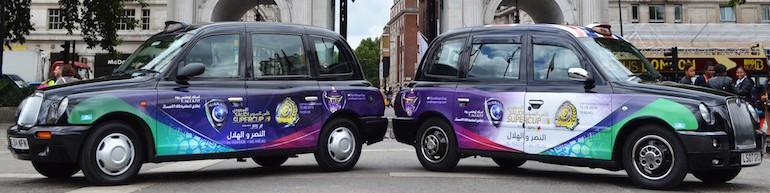
Firstly, we wanted to promote Saudi football outside the kingdom. However, the biggest goal for us was to promote Saudi Arabian culture and change the perceptions of Saudi Arabian society. These matches have a message of peace and unity which we want to promote to a global fanbase. The match was a huge success commercially but also in terms of safety and respect. In Saudi Arabia females are not allowed to attend football matches, but during both editions of the match in London we were able to welcome all family members and promote the message of peace and respect.
This is a similar message to the Arab Championship where a cultural and music festival take place at the same time. In this way, we are looking to send positive messages as we shift from being purely a sports company into a sports and entertainment company working in broader sectors including culture, music and education, becoming ambassadors for Saudi Arabia.
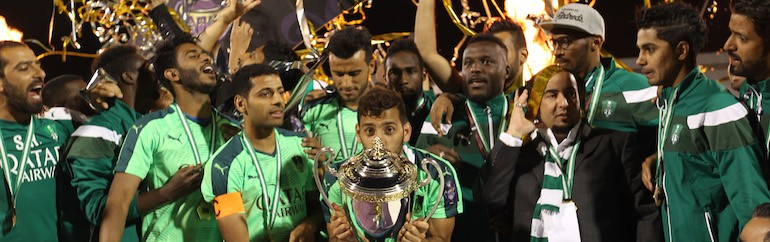
The ability to promote Saudi Arabian football by moving the location of the Super Cup to other countries has followed the example set by the likes of the German Super Cup, Italian Super Cup and French Super Cup – all of which have been staged abroad. The next edition of the Saudi Super Cup will be played in Abu Dhabi in January.
There has been a recent trend of clubs playing exhibition matches in the Middle East, what affect did you see on Saudi Arabian football?
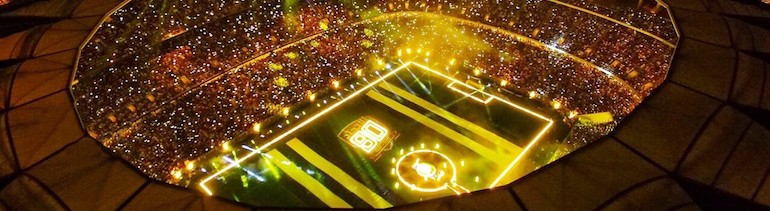
Atletico Madrid played against Ittihad FC as a celebration of Ittihad FC’s 90th anniversary, which makes it the oldest club in the GCC region. This exhibition game had two main purposes, the first of which was the celebration. The game also helped send a message to the world about Saudi Arabian football by welcoming teams from around the globe. For this particular match, we wanted to welcome an internationally renowned team who had not played in the Middle East previously.
These exhibition matches have taken place in the past with clubs like Manchester United, Inter Milan, Juventus and Real Madrid to celebrate the retirement of high-profile Saudi Arabian football players. The success of the matches continues and as a result we will be looking to host more of these games in the coming year or two.
Is it all football or are there other sports from Europe or the US you are looking to work with too?
We have previously worked with other sports before but at the end of the day we are a commercial company who look at fanbase, interest levels and scaleability. We have worked in equestrian during the Beijing Olympics and motorsports within Saudi Arabia. This included a F1 Show Run with Red Bull and their previous driver, David Coulthard, where we had 120,00 people lining the streets watching an F1 car. However, at the end it is about supply and demand and we cannot commit to rights where the followership is not present. We will always be looking at the interest levels of other sports, but today football is the number one worldwide.