





The Changing Strategy Behind Sport Hospitality
Andrew Hampel, president of Legends International, speaks to Sport Industry Group about growing the business around the globe, how the availability of data has changed the way that businesses approach their venue, and what makes sense for Wembley Stadium…
Can you give us an overview of Legends International and how you came to oversee its expansion?
We are coming to the end of a very diligent process, putting together our international resource. The real message we are trying to communicate now is the excellent senior resource at our disposal across the various disciplines in which we operate. We’re European-based and culturally aligned to global markets, so we are now able to offer everything we do in the States, but on an international level. Everything we do is absolutely aligned and culturally sensitive to local markets.
Alongside putting across the message about that resource, the great news is that we are already getting extraordinary traction in the market both in terms of developing conversations and also relationships that we have concluded from a contractual perspective. The long-term contract, which we have recently concluded with The Shard in London is a good example.
How did you become part of Legends?
I was originally a lawyer before joining IMG. In those days, it was rather common to start as a lawyer or an accountant and then move on to other areas of the business. I spent 19 years at IMG in the end, doing a variety of jobs and eventually ended up on the board, with responsibility for the business in EMEA, before we sold the company in 2004. I left a year later and set up a business in partnership with Ian Todd, my original mentor at IMG, focusing entirely on the stadium sector, called ISG (International Stadia Group) in 2006. We sold that business in 2016 to Legends, which brings me here today.
Legends was founded in 2006/07 by the original shareholders of the Dallas Cowboys and the New York Yankees, both the premier brands in their respective sports. They each committed to building new stadiums. They were investing a huge amount of money in developing and building these new facilities and recognised that, in addition to the stadium infrastructure, the critical ingredients in terms of fan experience that you could control were the delivery and quality of food, beverage, retail and merchandise in the building. They wanted to be sure that they would be delivering these better than anyone else in the market, and therefore decided to establish their own food, beverage and merchandising company. That company was the original incarnation of ‘Legends’. They knew Legends would deliver a better experience in Yankee Stadium and AT&T Stadium than anywhere else. That was the origin of Legends as a company.
Over the period 2007/08 to the present day, having started in food and beverage, Legends have developed expertise in all the areas of operation. Legends now helps owners deliver the best experiences they can in their stadium or arena, designed to generate the optimal returns from their investment from both a brand and a financial perspective. From this, Legends has built a very powerful business, which comprises three verticals operating across sport, entertainment and attractions venues: Legends Global Planning, Legends Global Sales and Legends Hospitality.
How does your team work to address such a broad series of objectives?
Legends Global Planning sits across research strategy, business planning development and project development. First, our planning group will figure out what the market desires and the level of demand. Then, our project development team will play a key role in helping the client navigate the early stage of developing their new build or redevelopment project, ensuring that mistakes are not made in that period – these mistakes have the potential to add to the cost and time required, as well as significantly impacting the ability to deliver the optimal returns and ROI. In addition, the project development team is responsible for taking the strategy ideas and business plans and ensuring that when a stadium is built, it is built on time, on budget and to specifications. During that process, there is inevitably some level of value engineering that goes on as people look to take cost out of their budget. Our project development team are responsible for ensuring that when they take cost out of the budget, this is done in a way that does not compromise the ability to deliver the revenue forecasts on which the business plan is based.
Legends Global Sales sits across ticketing, hospitality and sponsorship. The sales team is responsible for delivering the revenue forecasts from ticketing and hospitality, going out to the market and making sure we meet sales expectations. We have a dedicated sponsorship and partnership sales group who are in charge of delivering sponsorships, another key component of Legends.
Finally, we have the hospitality business, which focuses on food, beverage, retail and merchandise.

The main Legends mission statement is to help a venue owner across all of the key areas of expertise they may need in order to deliver the best guest experience in their stadium, while extracting the maximum value from both a brand and revenue perspective.
What were the biggest challenges going into new territories?
The key challenge is cultural, in terms of building the right expertise within our organisation. That means not just subject matter expertise, or finding the right experts in sponsorship, sales or research, but also making sure that that expertise is culturally flexible so you are able to operate on an international scale as opposed to only a US-based platform. The most important elements are:
- Having leadership and expertise that is culturally flexible
- Finding the right people to create the right culture within Legends, both outward facing in the way that we engage with our clients but also internally. Having the right group of people that creates a good dynamic internally and have the right relationships that sets the tone for how we go about our business and how we engage with our clients
Do you find there are any cultural differences from sector to sector dealing with sport people compared to entertainment?
We work across three sectors: sport, entertainment and attractions.
Of course, sport deals with teams, stadiums and arenas. Similarly, our entertainment clients would be music and entertainment arenas and venues, as well. For example, we work very closely with Live Nation on nearly 40 of their outdoor amphitheatres in the US.
The attractions space is comprised of visitor experiences such as One World Observatory in New York City, the attraction at the top of the tallest building in the Western Hemisphere. The challenges and the skills required are very similar to a sports or entertainment venue – it is about understanding who the potential visitors or guests are, how many of them there are and the experiences they want. Also how that experience segments across the different potential user groups, how often they will come, what they do when they are there and how much money they will spend. Understanding all of that, planning how best to meet the market demand and then putting in place both the physical structure and the human infrastructure to deliver the mix and the quality of the experience those people want, which is common across all of those verticals, whether you’re going to Yankee Stadium, to the O2 or to the View from The Shard. There are cultural differences, but a similar business drive.
Do you think the availability of data on fans and consumers has changed the way that rights holders, club and venues approach their venue as a business?
No doubt about it. The foundation of our business is about planning and our planning is all about gathering, understanding and interpreting data. We have worked on nearly 2,000 venues worldwide, which is a huge accumulation of experience and information. It applies to what happens in a venue, how you gather data, what data you need, how you interpret that data and how you build a series of offerings to customers. It’s also about developing the optimal specification for the building, how you craft the business plan and business models to underpin all of these venues. One of the most significant client groups for us are the people that finance stadiums – they are taking our business plans and financial models and providing very significant levels of finance relying on data that we have gathered and interpreted.
The availability of data and how it’s interpreted and used has affected our industry is huge. It is not just about what you do at the outset, it is about how you then continue to stay in touch with the changing wants and needs of your consumers. You can be sure that in five years’ time or even next year, what they want and how they want it is going to change and you have to be flexible and able to react to that. You basically have to learn to see it coming and anticipate these trends.
Finally, based on your history with Wembley Stadium, do you see its best future in the hands of private ownership?
It is a very emotive topic because it is a massively iconic venue. In answering your question, I am going to have to take the emotion out of it. Having said that, it’s basically impossible to remove all emotion out of Wembley Stadium isn’t it?!
From the FA’s perspective, if they can get to the point where they get a massive injection of capital to use in the development of grassroots and servicing their mission statements for the benefit of their stakeholders, you can see that being attractive provided that they don’t suffer on a revenue-basis going forward.
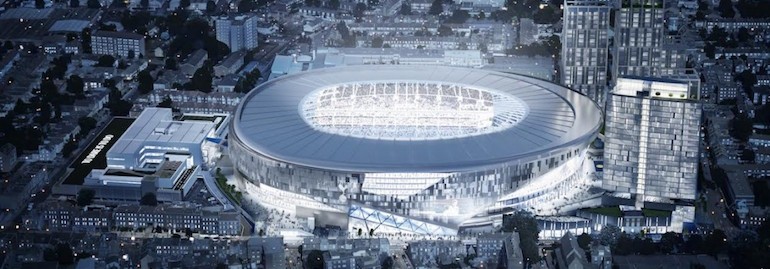
From a purchaser’s perspective, you must look at the particular circumstances. I can imagine a situation where for someone who might otherwise be wanting to build a big stadium in the London area, then it might be a great thing to look at. The NFL has aspirations to be here, and certainly there are alternatives where they can be housed. Tottenham Hotspur Football Club has done an amazing job to prove that they are NFL ready. You could imagine a situation where owning Wembley privately – if you have content that can benefit from being on that big stage – could be very attractive. Ultimately, it should come down to the question of whether it makes complete business sense for both sides, and I can see that being the case.