






Diversifying The Content Portfolio – From Poirot To Horse Racing
Ross Sylvester, head of sport at Wiggin LLP talks about sports content providers catching up with the entertainment sector, auxiliary businesses owned by the media specialist law firm, and growing opportunities for revenue drivers in esports…
What can you tell us about Wiggin’s focus on media, technology and brands?
First and foremost we are a law firm but one that specialises in media, technology and brands so that we can provide our clients with commercial insight in addition to legal advice on all of the issues that matter to them. Within these sectors there are a number of sub-industries that we focus on – for example, in addition to sport, we focus on film & TV, digital entertainment, betting and gaming, Ecommerce, music, publishing, and computer games.
When did you start with Wiggin and what areas of law/sports law do you personally specialise in?
I joined Wiggin in 2004, was invited to join the partnership in 2014 and took on the head of sport role in 2016. I am primarily a commercial lawyer advising content owners and brands negotiating deals for the licensing and exploitation of rights. In the sports sector, this can mean event hosting, access rights, audio-visual content, data, sponsorship, marketing and merchandising opportunities and image rights and endorsements. We have developed a particular specialism in working with clients to develop industry-leading services in the digital entertainment space as technological opportunities continue to open up.
How does this help you go beyond the legal advisory role?
Our specialist focus enables us to seek out commercial partnership opportunities for our clients and to advise how best to capitalise on them. Wiggin has also used its market knowledge to establish several other complementary businesses. If you take content protection as an example, we founded our own software company, INCOPRO, which tracks infringing content and unauthorised use of trade marks. This aligns us with our rights holder and brands clients seeking to tackle the growing problem of internet piracy and counterfeiting. We then assist with developing a brand protection strategy and wrap the necessary legal services around the implementation.
We started this business to address a gap in the market – it started with just two people in 2012 and now has a team of more than 90 with other law firms now working with INCOPRO too.

Ross Sylvester, head of sport at Wiggin LLP
What other businesses do you own or have connections with?
Our additional businesses are very much centred on the sectors we work in. We have a business called ViewFinder which is an Executive Producing business putting content producers in touch with financing to create films and TV programmes. In addition we have a joint venture called Reviewed and Cleared, which provides clearance of content prior to publishing or broadcast – this is very complementary to our litigation practice.
We also have a SVoD (subscription video on demand) service in Scandinavia called Cirkus which provides the best of British content for Scandanavia. While the British public seemingly love dark Scandinavian dramas, over there they’re big fans of Midsummer Murders, Poirot and the like. We saw this gap in the market and created a joint venture with Ostmodern, a tech provider that put in the platform, Content & Co, a content consultancy that negotiated deals with the various producers, and Wiggin who put in place the legal framework. Rather than going direct to the consumer we did deals with cable operators – so it’s a bit like Netflix being available on Virgin Media over here. ITV has now come in as a shareholder of Cirkus.
Content distribution is clearly a core area for you, something you have been specialising in since the 90s. Who are the sorts of clients you work for and is there anything as a typical case you might be working on?
We advise some of the world’s leading businesses in content distribution on the financing, exploitation and protection of creative and commercial assets. For example, we are the only law firm in Europe to have acted for each of the six major Hollywood film studios. So whenever there is a production in UK or in Europe we will do the relevant production works, such as Game of Thrones on HBO. We also act for many other production companies, major broadcasters and content distribution platforms. In sport, longstanding clients include Perform Group, Manchester United and Racecourse Media Group.
What services do you provide these sport clients?
The work is mainly commercial rights based whether its audio visual, data, merchandising or brand licensing.
We are really proud to have worked with Perform since they were founded in 2007. We’ve been with them since the start, working across all their acquisitions, including Opta and RunningBall, and all the commercial work. With Manchester United we advised on MUTV initially and our role has grown from there. We’ve also acted for Racecourse Media Group since the start. A group of racecourses came to us wanting to structure a broadcasting vehicle in an innovative way and that’s how Racing UK started. It’s evolved from a simple linear channel to offering a streaming product for betting operators, data products and more. It’s grown from just being a broadcaster to a much bigger media business.
How do you see the sports broadcast market changing in the current climate and moving forward?
Two of the key themes disrupting the traditional broadcast market are digital distribution of live sport and fan engagement. Rights holders are seeking to balance their exclusive key revenue deals with brand awareness through free-to-air exposure and carving out their own direct-to-consumer products. There are some great examples of this in the UK market – the ECB launching their new partially free-to-air product rather than just doing an exclusive deal with Sky, and iFollow from the Football League as an example of a direct-to-consumer digital product, something the US rights holders have been doing for a few years with the likes of GamePass. Add to this the launch of standalone OTT services such as DAZN and Amazon’s increasing interest in live sport and you have a very competitive and diverse global climate. We haven’t even started talking about technology but VR/AR and complementary data products will no doubt continue to have an impact over the next 12 months.
Overall I’d say that sports content services are catching up with their entertainment counterparts; putting the consumer first with flexible offerings. As a result more and more niche sports are able to get exposure to a general market allowing fans choice about where and when they view them.
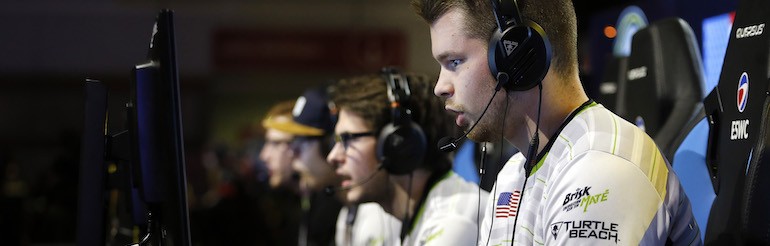
Esports is another area of focus for Wiggin and there are clearly a lot of legal areas of interest from regulation, player welfare, IP, digital currencies, mergers and acquisitions, data protection and more. Which are a focus for Wiggin and which do you think are personally the most interesting or relevant in the current market?
Everyone is talking about esports and some of the statistics are quite attention grabbing. Wiggin is focussing its esports advice on the firm’s traditional strengths in content, regulation and brand exploitation. Sponsorship and advertising are currently the main revenue driver but I think that media rights and betting products will continue to develop to bring the esports industry more in-line with the traditional sports markets, though I wouldn’t say we are there yet.
Where can your clients find you on a normal day?
We’re based in London in the west-end so I’m here for much of the week meeting with clients. We also have an office in the Cotswolds, so I spend the rest of my time there – it’s great to have the balance between city and countryside and the area has sporting credentials with Cheltenham Racecourse (and Forest Green Rovers FC!).
Wiggin is category partner of the Brand of the Year Award at the BT Sport Industry Awards 2018. Find out more here.