






How Innovation Happens: The Sporting Outlier
Cutting Edge Sport curator, Mehul Kapadia, managing director of F1 business, Tata Communications, discusses influence of technology in sport, as well as the important relationship between the two.
Being an outlier means standing apart from others – it could be an extreme thing, even an anomaly. Certain environments that present unique challenges to the people and machines operating within them are also called outliers. In these environments, necessity breeds innovation.
To succeed in outlier environments requires a combination of out of the box thinking, technical expertise and past experience. Designing solutions to meet the demands of these extreme settings has led to game-changing innovations and holds the key to future technological breakthroughs, which can make the world a better place and permeate every part of our day-to-day lives.
Outlier environments such as space have contributed to technological innovation across a number of industries, and Formula One can be seen as the outlier of the automotive industry – bringing the edge of competition and a complex environment of rules, regulations and challenges to automotive engineering.
The relationship between technology and sport extends beyond F1 and technologies from other outlier environments are starting to change the world of sports. Team sports are notoriously difficult to officiate due to the pace at which they are played and the fact rules books tend to be littered by grey areas.
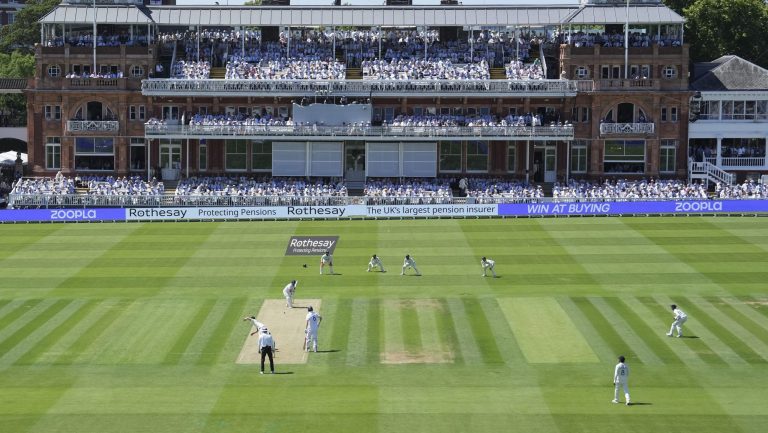
For example, cricket batsmen traditionally hold the option to decide whether or not to surrender their wicket if a decision is unclear, as in some cases only they honestly know if they have made contact with the ball before it is caught.
Hawk-Eye technology, a system which visually tracks the trajectory of a ball and displays a record of its statistically most likely path as a moving image, helps cricket, tennis and football umpires and referees make more accurate decisions, reducing injustice caused by human error.

All Hawk-Eye systems are based on the principles of triangulation using the visual images and timing data provided by high-speed video cameras. The technology has its origins in a subsidiary of Siemens, Roke Manor Research Limited, which specialises in image processing technology for use in applications such as visual positioning systems designed for space missions and location systems for the military – two classic outlier environments.
Putting tech through its paces
Hawk-Eye first appeared as a commentary feature on Channel 4’s coverage of live cricket. It was installed to assist umpires’ decision-making in 2008/09, by which point it was already being used in tennis – debuting at the 2005 US open.
Having become established as a technology that had added value to cricket and tennis, its deployment in football was first showcased at FIFA World Cup 2014 – triggering a vibration on a wristband worn by the referee if the ball crosses the goal-line.
According to an announcement made by FIFA, it may not just be the referees who are equipped with wearable technology soon, as the international football governing body has declared itself open to the idea of allowing players to use wearables too. Insightful results are gleaned from monitoring athletes while they are performing, which until now has only been possible in the gym or on the training ground/ test track.

While wearables are already registering an impact on the training ground, through gathering performance and health data on professional athletes and sportspeople in a competitive environment, sports scientists can develop new ways to improve performance and make sports safer.
This blossoming relationship between technology and sport is a pathway to further technological innovations that affect other industries. Sports generally, and the competition they create, present attributes of an outlier environment. Teams and individuals push the boundaries of how they train, prepare and execute, even if the result is to get that extra 1% of performance.
The stakes are high and wrong decisions caused by human error can result in losses of millions for clubs. As a result professional sport is becoming a hotbed of biological, medical, nutritional, physiological, psychological and even technological research and testing.
Research on methods to maintain maximum performance output from athletes has led to numerous innovative product developments from energy gels to advanced systems that test and improve reaction times.
Bringing outliers in
The role of outliers in incubating extreme innovation has gone full cycle. From using technologies developed for space in sport to sharing research and development from sports testing with technology innovators. Quite simply, any environment where the stakes are exceptionally high for whatever reason is a foundation for innovation.
Enterprises such as partnerships between companies operating in different industries affected by unique outlier environments; the F1 Connectivity Innovation Prize; and bringing wearable technology into professional sports environments are ways of stimulating a culture of innovation.
The cross-pollination of ideas, expertise and technology that evolves from these initiatives will undoubtedly register an impact on the technology we use every day at home, on the move and in the workplace.