




Hwfc: The First Openly Gay Womens Football Club
Hackney Women’s Football Club is a unique sports team. The club is making history as the first ‘women-run, majority-lesbian’ football team and is leading the way in ensuring the sport has an equal playing field.
We caught up with Hackney Women’s former player and club legend Joanie Evans to find out more about this trailblazing side…
Can you tell us a bit about Hackney Women’s Football Club and why it is so unique?
Founded in 1986, Hackney Women’s FC is the first openly gay women’s football club in Europe- and probably the world! In the early days, in response to the abuse we’d get from other teams, we got together and wrote a constitution that set us out as a women-run, majority-lesbian club. Nobody had done that before, and the core of that passion is still there today.
From that moment on, for nearly 40 years, we’ve been a place where all women can come to play without judgement. We’ve maintained the club’s philosophy and we currently have 3 teams, with a community over 100 strong. Many of the other gay football clubs now can trace their roots back to us.

In the ’80s we were the lesbian team, to the point that we struggled with too many players! There are others now, and it’s wonderful to see the passion for women playing football is continuing to spread.
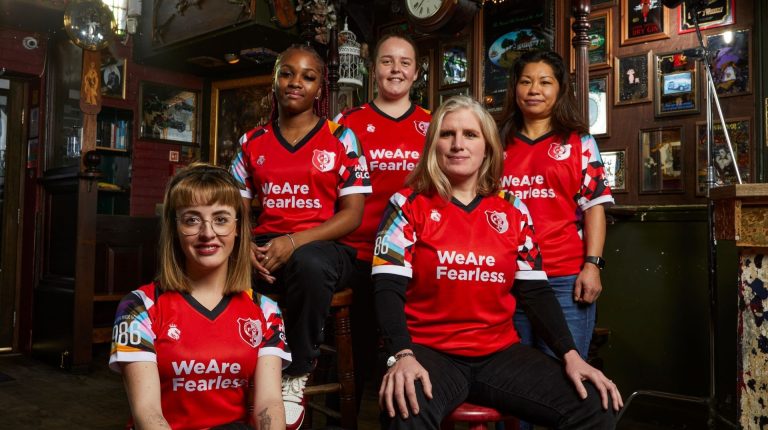
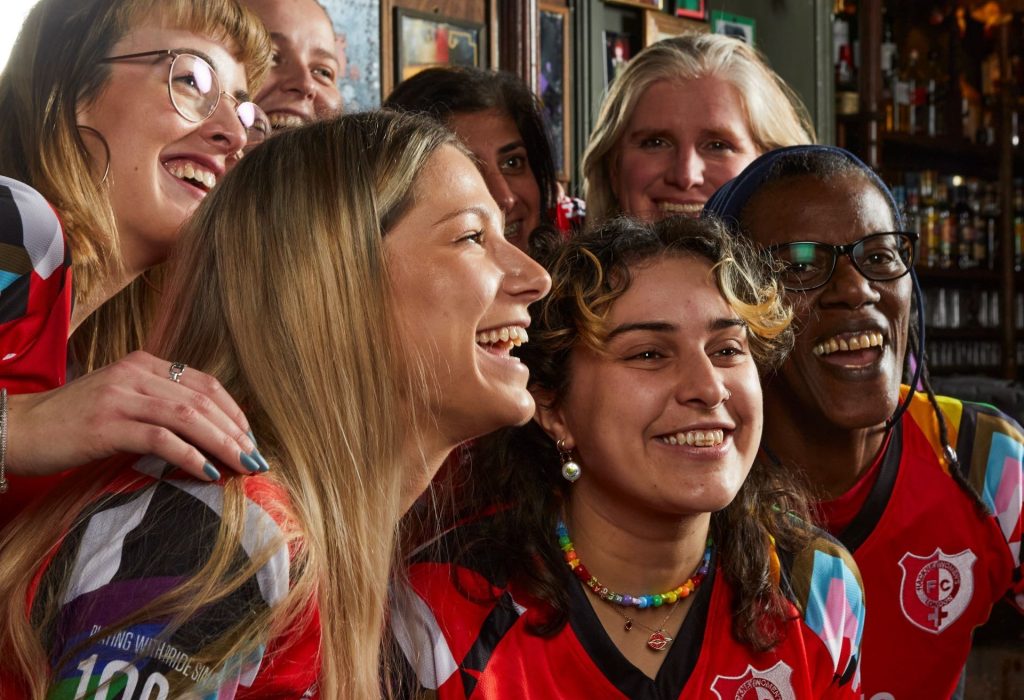
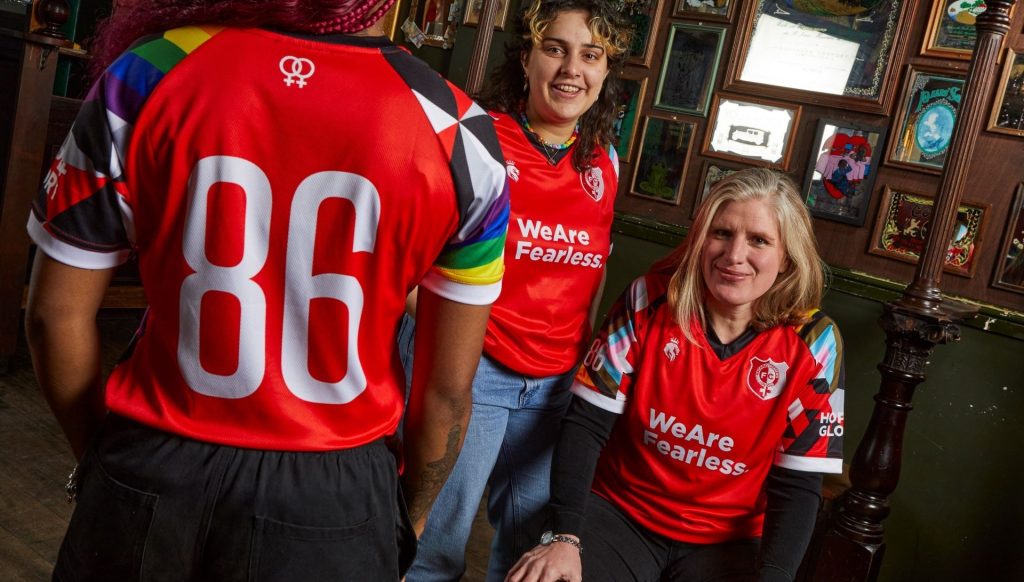
We’ve just launched a new kit that celebrates that legacy, taking the history of the club and expressing it to the next level. To develop it, we partnered with WeAreFearless, a local sports and entertainment agency committed to Women’s Sport, diversity and grassroots football. I’d love to have run out for Hackney in a kit like this when I was still playing- it would have put some people’s noses out of joint in those days.
Generally, how have you found the response to being the first totally women run and out lesbian team in the UK?
We were hated by some people in the women’s game at the beginning. Here was this out team, very flamboyant, sang everywhere we went, having a good time – some people couldn’t handle it. Early on, I was once told by a professional player that we would ‘set women’s football back 20 years’.
Initially, our constitution was a way of ‘saying do your worst’ to people like that, who said homophobic and abusive things to us – we used to get all sorts. But things immediately improved once we were an out team because we owned it and players from other teams would quietly come and talk to us about what we stood for. And it has only improved from there.
We obviously didn’t set women’s football back 20 years, and in fact I think the opposite is true. Hackney Women’s is the pinnacle of what women’s football is about – being your true, authentic self. Particularly in a male-dominated sport, Hackney has taken away that fear of being yourself.
How big has the impact of the Lionesses been for you? Has it affected HWFC? If so, how?
It’s helped us a lot. Women’s football is on the map, and allowed more and more women and girls to feel welcome in football. When the Lionesses speak, they’re so often talking about the grassroots level, and they haven’t forgotten where they came from.
But what they’ve done for women’s football has also brought more interest in our story. We’re seen as pioneers because we’ve been supporting the grassroots for almost 40 years, and the more people hear that story, the more people can be part of this inclusive, safe place for women to play football, have fun, and be themselves.
Do you see the rise in interest in women’s football generally translating to the grassroots game?
Yes. It’s given women and girls hope. Before, you would just play for your team and that was it. Now there’s progression, and it can be a profession for players, referees, coaches and backroom staff. And all of those careers start at the grassroots level, so it’s had a positive effect there, too.
But it’s so important that we keep those avenues opening up, because it’s easy to talk the talk at the beginning, but over time people forget about the work required to maintain those big ambitions.
What are the barriers and challenges to the women’s game continuing to grow?
Recognition is a big part of it. Women have done everything that the male players have done, and often surpassed it already. The difference is they don’t get the recognition for it.
We need more recognition and a bigger platform to get more women and girls involved at every level, particularly grassroots because that’s where it all starts and often where it goes wrong.
Can what you are doing in the women’s game translate to the men’s game? Do you think you can contribute to making men’s football a place where people feel that they can be openly gay?
Yes it can, but there are some differences. Sexuality seems to be less of an issue within the women’s game, in part because for a long time people would assume any women participating in a male-dominated sport were lesbian anyway. So in a sense it didn’t matter if you were or weren’t.
But on the men’s side, I think there’s a fear of the unknown. Justin Fashanu came out in a different time, and the truth is we don’t know what the response would be if a top-tier men’s player came out nowadays. They probably fear losing sponsorships or not getting picked, but until someone does it we won’t know what any actual impact would be.
We’ve had gay men’s teams come to us for advice before they went public, and for both men and women the important thing is that you do it for yourself- that’s what we did. We decided to do it as a team, for the team, for our own wellbeing. That’s the only way to do it.
Stonewall FC, for example, have broken a lot of barriers in the men’s game. They’ve had a good response from the non-league teams they play against, and their skill outweighs their sexuality as a talking point. That’s the way it should be because your sexuality shouldn’t have to impact anything you do.
“Football needs to be an equal playing field. A big part of making that happen is more recognition, more funding and more diversity in the women’s game.”
Joanie Evans, HACKNEY WOMENS FC
What are your hopes for women’s football, and the game in general for 2023?
Football needs to be an equal playing field. A big part of making that happen is more recognition, more funding and more diversity in the women’s game. Though we’ve come a long way, there’s a lot more to do.
For example, we know there’s a big drop-off in young women playing the sport around the ages of 14-16. That’s a really important time, and a lot of work is going into making sure everyone at that age is comfortable continuing to play.
There’s also a lot of work going into improving diversity by increasing accessibility, removing the barriers that are stopping women from playing. Whether its transport or equipment costs, we need to be able to connect every girl and woman to the right information and support. And the more funding the game gets, the more support there will be.
And, of course, I hope even more games get televised! I love being able to watch multiple women’s matches on the telly every weekend, and the more we can do that the better.