






Inside The Sporting Wine Club
Simon Halliday, former England international discusses his rugby career, followed by life in the city to his current roles of chairman of the EPCR and also co-founder of the Sporting Wine Club, alongside close friend and business colleague Chris Mariner, who will again be supplying the wine for this year’s BT Sport Industry Awards…
Let’s start with your first career as a rugby player, how did that start?
I started rugby properly at Oxford University, at that stage I was more of a cricketer than a rugby player but rugby took over as I realised I could compete at the top level. In those days Oxford University had a full first class fixture list so I ended up playing against the top players in the country aged 18. I managed to hold my own and realised I probably had a future in rugby rather than cricket. I played for Harlequins during that period, I got a break playing for England Students and then joined Bath in my third year at Oxford and that’s where it all really started.
How long did you stay with Bath and when did your full England career start?
I joined Bath in 1980 and I eventually left to return to London for non-rugby work reasons in 1990. I made my debut for England in 1983 but I dislocated my ankle and was out for two years and eventually made what was effectively my second debut in 1986 against Wales.
When did you transition from playing rugby to a career in the city?
I was already working in the stock broking world in the eighties in Bath and then I moved back to London and joined UBS in 1990 when I was also still playing in international rugby. At that point the game was still considering going professional but I then retired from rugby in 1992. I stayed in the city for many years after that.
When did you start working in sports administration and how did that lead to your current position as chairman of EPCR?
When I retired from international rugby I coached at Esher Rugby Club for a couple of years and eventually ended on the board which was effectively my grassroots exposure to the administrative side. I then joined the Barbarians RFC committee for a couple of years before becoming a Trustee at Harlequins during the period that the game turned professional.

I then joined the Club England Committee that was charged with driving forward the professional game from an RFU perspective and help relationships with all of the clubs. I did that for nine years until 2008 when I left after the deal with the clubs was done. At which point I joined Bath as a director as they developed their off-field strategy. I did that for two years and then took a break from sport administration until three years later I was approached about the new role at EPCR after the winding up of ERC.
At what point in all this did your love of wine really flourish?
If I was to highlight one moment it was probably in 2009 when I went on the Lions tour as a supporter to South Africa. It was then that I first met Schalk Burger Sr, father of South African and Saracens player Schalk Burger, who is really the cornerstone of Sporting Wine Club.
We never actually played against each other in the eighties due to the ban on touring teams in South Africa because of the apartheid but we would have otherwise coincided. However, during the Lions tour it was the cricketer Alan Lamb that introduced us at Schalk’s vineyard. I encouraged Schalk to send his wine to England but the company he was supplying went bust and I decided we should find a solution and Sporting Wine club was born out of that.
The ethos behind Sporting Wine Club is that every wine has a connection to sport, how does that work?
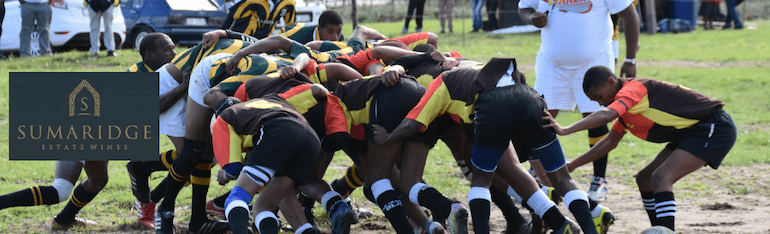
Yes, to be able to supply Sporting Wine Club, you have to be a winemaker with an authentic connection to sport. So like Schalk, you can be a former Springbok international or you can be Jacky Lorenzetti, the owner of French club Racing 92, who supplies some of our French wines. Or another example is the South African Sumaridge Wine Estate who built a rugby pitch in their vineyard for the local township rugby team.
We make the judgement if there is a genuine connection and support of sport. Being true to our values dictates the relationship with the winemaker and they become partners in our attempt to display wines at sporting events and drive membership of the Club.
What’s your favourite sporting story associated to one of your wines?
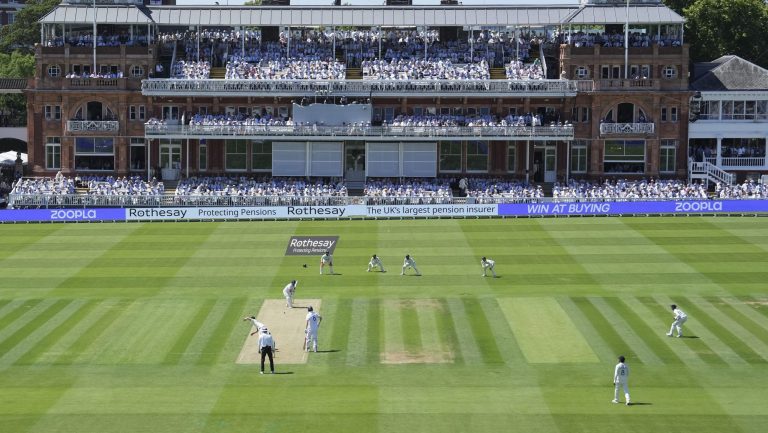
The ‘Cricket Pitch’ is a wine made by Schalk Burger using the grapes which grow alongside the boundary edge of a cricket ground they have built on their Estate (headline picture). They play a lot of charity matches on this pitch and for me this sums it all up when a rugby international has a cricket pitch in his estate and the grapes alongside the boundary are used to make a sporting wine, plus it helps support good causes.
In addition to the sport connection, what else helps you stand apart as a smaller company in a competitive wine market?
Other than the narrative, which is already very different to anybody else, we also demand that the wines are estate wines. There are a whole number of wines in the market place where you aren’t certain of the provenance. We insist that our winemakers that the grapes are picked from the estate and only those grapes are used to make the wine which is also bottled on the estate.
The other unique element about us is that all of our winemakers support good causes. I firmly believe that if you are a winemaker and supply a sporting institution or some sports-related activity then you should be prepared to buy into the ethos of the sport and that includes addressing any hardship or adversity that exists. Last year we donated more than £100,000 to sporting and other charities. All of our winemakers care about people either in sport or beyond who need help and assistance.
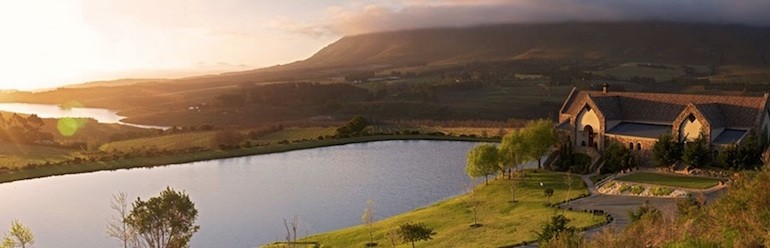
Sumaridge Estate Wines vineyard – owned by Simon and Holly Turner, in Hermanus, South Africa – which will be served at the BT Sport Industry Awards 2018
A lot of your wine comes from the traditional rugby nations, what are the other sports your wines are connected to?
We have five rugby winemakers, two in South Africa, one in New Zealand, one in France and one in Italy. We have cricket wines from Ian Botham and Bob Willis out of Australia; we have Jimmy Anderson’s Numbers Collection of French wine.
We also have a collection from Sir Nick Faldo who has six wines to celebrate the six major championships he won. The wines from Italy, Spain and France make up the Faldo Shield, three claret stripes (The Open) and three green stripes (The Masters).
Then we have Drew Bledsoe, the quarterback before Tom Brady at the New England Patriots, who bought a vineyard in the Walla Walla valley in Washington State when he retired through injury. His wine, the Doubleback, is probably our best wine and we served it recently when the NFL matches took place at Wembley.
Tell us about the wines that guests of the BT Sport Industry Awards will be sampling on 26th April 2018?
Sumaridge Wine Estate is down the Garden Route in South Africa, situated in the Heaven and Earth valley behind Hermanus. Well named for the views and the quality of the wine. It’s at the top of the valley but a very cool breeze goes through the whole estate which gives a cool climate feel to the South African wines.
The red blend is a combination of Malbec, Cabernet Franc and Merlot is an incredibly popular wine from a family estate in a very boutique production with only a couple of hundred thousand bottles a year. The white blend is a Chardonnay, Semillon, Sauvignon Blanc is a wonderful fresh wine because of that breeze that propels through the valley. They are very easy drinking and ideal for an evening where you are catering for people with different palettes and I’m confident will be very well received at the BT Sport Industry Awards again this year.
Also, as mentioned they have built a rugby pitch in their vineyard for their local township and we are helping them raise more money to provide more facilities for the team too.
Find out more at www.sportingwineclub.com