




Opinion: Engaging The Motor Sport Enthusiast
Angus MacKenzie, Motor Trend International bureau chief, explores how engaging the motor sport enthusiast is key to the right content in an ‘on-demand’ world…
“Win on Sunday, sell on Monday.” For more than a century, that’s how car manufacturers have justified spending money on motor sport.
In the early days racing was about improving the breed. Many of the fundamental automotive technologies today’s drivers take for granted were developed and tested on the track. But as the automotive industry rapidly evolved away from merely providing transportation – almost everyone in the United States who could afford a new car owned one by the early 1920s – carmakers saw motor sport as an opportunity for connecting with consumers at a brand level, with the racing enthusiast becoming a ‘super-influencer’.
Ferrari is a case in point. Founder Enzo Ferrari went racing because he was a racer. But since the 1990s, under the leadership of Luca di Montezemolo, and now Sergio Marchionne, Ferrari has used the brand awareness generated by its racing activities – primarily Formula 1 – to underpin a lucrative road car business. The only team to have participated every year since the modern Formula 1 era was established in 1947, Ferrari gets paid a bonus to participate in motor sport’s most prestigious and expensive category. But it could be argued Ferrari now needs Formula 1 as much as Formula 1 needs Ferrari.

In the early 20th century the automotive industry resembled the boom days of the dot.com bubble. There were hundreds – thousands – of car companies jostling to exploit a technology that was changing the world. A handful survive, giant enterprises with design, engineering, manufacturing, sales, and marketing operations situated worldwide to serve a global customer base.
Scale and global reach is what counts in the automotive industry these days. And yet, while consumers now live in a world that is connected – in real time, 24/7 – meaningfully connecting with them is, ironically, more difficult than ever. That consumers are so overwhelmed with information it’s almost impossible to cut through the clutter is part of the problem.
The bigger issue, though, is consumers live in an age where the medium can now figure out the message they want to hear. You can’t cut through if you can’t even connect. Thought experiment: Had the internet had existed in 1948, would rock ‘n’ roll have happened? The algorithms would just have kept feeding consumers the music to which they’d always listened.
Traditional mass audiences have atomized into niches, which is a major problem for both traditional media companies, and advertisers. In 1983, the reported audience for the final episode of U.S. sit-com M.A.S.H was more than 105 million. By contrast, the most watched TV series of 2016, The Big Bang Theory, attracted less than a fifth that many viewers. In an era of on-demand content, time-shifted viewing, and consumers overwhelmed with choice, the idea of appointment TV, where programmers dictate what people watch, when they watch it, and sell that time-sensitive audience to advertisers is fast becoming as antiquated as the crank-handle on a Model T Ford.
That doesn’t mean valuable audiences aren’t out there, however. They just have to be found, and nurtured. Connecting with an audience today means creating a multi-platform eco-system that surrounds it with the content it wants, available when it wants it. The enthusiast immersed in that eco-system then becomes new kind of ‘super-influencer’, sharing the best content with their friends and colleagues.
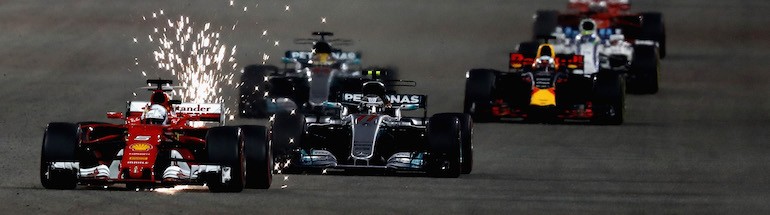
That’s the fundamental philosophy behind the new Motor Trend OnDemand subscriber video on demand platform. There is more motor sport video content available in more places than at any time in history. Motor Trend OnDemand aims to concentrate as much of it as possible in one place, make it easier to access, and, using the resources of respected automotive media brands such as Motor Trend, Hot Rod and Automobile magazine, enhance it with original programming, social media interactions, and web and print content that makes the audience experience even engaging and immersive.
Though Motor Trend was founded as a magazine in Los Angeles in 1949, and for decades focused on the American automotive market and American consumers, video has already made it one of the world’s largest automotive media brands, with a growing global reach. The Motor Trend Channel on YouTube now has more than five million subscribers, and its slate of automotive original programing attracts viewers not only in English language markets such as the U.K. and Australia, but also Germany, Sweden, the middle East, and Asia.
Automotive enthusiasts speak a global language – a new Ferrari or Lamborghini or Aston Martin generates the same excitement in Seattle, Sydney and Shanghai. So do motor sport enthusiasts. Offering all automotive content, all the time, to enthusiasts all over the world via the Motor Trend OnDemand platform connects them all.
Motor Trend OnDemand already offers subscribers more than 2,000 hours of automotive content, live and on-demand, including motor sport, special events, movies, documentaries, and exclusive first runs of Motor Trend original series programming.
Having launched first in the U.S., Motor Trend OnDemand is now also available in the UK and Europe with more than 2,000 hours of live and on demand racing, including FIA Formula 3, America’s Pirelli World Challenge and Germany’s DTM.
The Motor Trend brand’s reach among millennials – the largest single group within its automotive enthusiast audience – is no coincidence given it produces a high volume of automotive content in a format that has strong appeal for this segment, video. And that reach is riding on the back of a demographic trend. In 2015 millennials in California for the first time bought more cars than baby boomers, accounting for 28% of sales. A 2017 study by Utah-based research firm Accel + Qualtrics claims 80% of millennials already own cars, and 75% of those who currently don’t aspire to own one.
Millennials are huge users of social platforms – which are by nature video-friendly – so their sense of place is not anchored so much in physical space, but among a powerful network of like-minded people who are digitally connected, regardless of where in the world they actually live. A socially amplified and globally distributed video platform will be a powerful arena in which carmakers can engage ‘super-influencer’ millennial automotive enthusiasts.
Win on Sunday, sell on Monday. The method may have changed, but the message hasn’t.
Motor Trend International Bureau Chief Angus MacKenzie is an internationally recognized automotive journalist with broad experience in print, digital, video, television, radio and events. He has road tested thousands of cars and trucks, interviewed many of the most senior automotive industry executives of the past three decades, covered many major motor sport events, and written extensively about every aspect of the auto industry, from design and engineering to manufacturing and retail.