

Opinion: Esports – From Millbank To Wembley
Professional gamer Liam Thompson gives sportindustry.biz the inside analysis of the changing landscape of eSports from the player perspective over a transformative four years in the market…
Looking back to November 2012, the launch of Call of Duty: Black Ops 2 marked my first ever experience of eSports, which opened up a whole new world of gaming to me. I participated in my first tournament, a closed event to celebrate the video game launch. The feeling of being “COD-Casted” and hearing my name across the room whilst I was playing was remarkable, adding to the feeling of actually winning the launch night tournament. Going forward to July 2013, Gfinity, now the UK’s leading eSports company, kicked off their first ever tournament which saw professional Call of Duty teams from around the world compete in London’s Millbank Tower.
An invite only event, with teams, players, spectators, camera crew etc all in one large open room. No player booths, no sold out stadiums, no large screen displays. We were sat directly behind the players watching them compete for $55,000. At the time there was also an even smaller room for a game that was completely unknown to everyone there… League of Legends.
Fast-forward nearly four years and how things have changed. There are live LAN events every month around the world; you can watch eSports every single day on sites like Twitch and YouTube, whether it’s pro series qualifiers or teams having friendly matches. The UK has been home to the Counter Strike ECS Series 1 finals which saw Wembley Arena taken over with $750,000 up for grabs, with the same venue hosting the League of Legends: 2015 World Championship Quarter Finals and selling out the arena. I can open up Twitter, Facebook or Instagram and see more content than ever before from my favorite players, teams, leagues and brands – I’m more connected to eSports and the gaming industry than I could have imagined just a few years before.
As the audience and interest in eSports has grown over the years, so has the appeal to brands and the commercial investment. Events, teams and players are attracting brands both in and outside of the gaming space, much like traditional sports. Professional eSports organizations are adding brand logos to their jerseys, giving naming rights to their teams and allowing individual players to have their own sponsors. With this kind of investment into the sport, it’s made things possible that wouldn’t have been those many years ago.
Without commercial interest, would a lot of what happens today be possible? We see talented gamers making full-time careers doing what they love, paid salaries and contracts, helped funded by the commercial interest in them as a player or a team, which results in more and potentially better competition as more teams want a piece of the action. Aside from prize money, only if you’re successful, commercial deals allow teams to get extra funding, the opportunity to create fan experiences and bring entertaining content outside of their professional playing field.
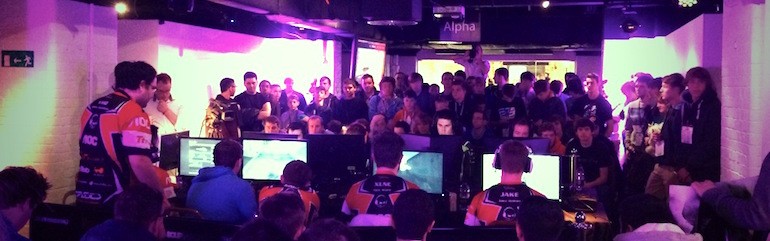
What eSports events used to be like (above), and packed out arenas in the present day (main image)
The largest eSports events in the world are becoming more than just a spectator competition. With brands getting involved events are becoming bigger giving attendees more to do than just sit and watch. I love Counter Strike: Global offensive, but when a competitive match could take 90 minutes to finish, even that can get a little boring after a while. As brands are getting involved it’s opening up space for them to do more than just badge an event, bringing something physical to the venue. IEM Katowice 2017, the biggest eSports event in history, had multiple sponsors who activated from the stadium. Gillette had a 3D printed to give fans the chance to print their own razor handles. Gfuel Energy had a booth where you could get free samples of their range of drink flavours, along with talent meet-and-greets with influencers and commentators. Brands are making eSports events a bigger opportunity for commercial activations, creating exhibition style areas outside of the main arena and giving fans more to do on the day.
Attracting more fans is a good thing, but it’s also about giving the existing fans more of an experience when they do attend. These events sell-out huge sports stadiums, with tens of thousands of keen gamers coming to watch top-level competitive gaming. Most eSports events will gain enough interest to fill out the room, whether it’s 300 people attending Gfinity’s arena in London, or several thousands filling up the Fox Theatre in Atlanta. Over the last few years not only is the audience getting bigger, but so are the venues they fill. During IEM Katowice, 173,000 people attended the event and festival surrounding it during the course of two weekends. Would this have happened 3-4 years ago? Unlikely, but there weren’t many venues being used to allow such a capacity. The eSports industry is now giving fans around the world more space to attend, and they really are attending by the thousands.
From a single room in a central London tower to selling out Wembley Arena, and that’s just in the UK. Around the world eSports is growing, fans are continuing to give their incredible support and dedication more than ever before, with brands there to help push the journey forward. Looking back it’s crazy to see how far its come, but that doesn’t change when you look to where it’s going.
Liam has worked with HSE Cake since 2014 after taking part in an Xbox influencer campaign. Liam now works across multiple brands such as EA, Coca-Cola and Barclays. Prior to joining Cake, Liam spent a year at Google UK learning the ropes within their retail apparel team. In addition to his role at HSE Cake Liam Thompson is a pro-gamer with a large following on YouTube and Twitter. You can follow him on Twitter @LiamTWiiN and you can find his YouTube channel at https://www.youtube.com/user/hallidc1