






Opinion: Football Clubs Taking Digital Control
Damon Mangos, partner, strategy & creative director at Delete, on how digital is helping Premier League clubs take control of their fan experience…
With huge global interest in the Premier League, football clubs have never been more focused on growing their profiles, creating new fans and revenue streams beyond their annual TV income. Fan first digital platforms are becoming the key vehicle for how clubs realise and succeed with this ambition. Already Manchester United, Arsenal, Liverpool and Chelsea are now all inside the top 20 websites for football content, according to the Amazon-owned Alexa.com. Yet, despite being one of the most fan focused industries today, digital customer experience is a concept that only a handful of top clubs have really exploited when looking to connect with fans online.
Many Premier League clubs outside the top six were previously held to using the Football League Interactive (FLI) platform, which offered a generic set of controlled functionality with limitations around promotion, advertising, customer data and brand engagement. With FLI contracts now expiring for some clubs the power to explore the true value of digital engagement is available to them.
But with such a vast landscape to explore, the questions remains – where to start? From website and content hubs to social media feeds and live streaming platforms, the options are endless for marketing decision makers at the respective clubs.

The answer to this conundrum is to make sure that whichever options are chosen, it is done with the fans in mind in a way that’s beyond just the content they’ll receive, but focuses on how, where and when they will receive the best experience the of club. And this is something that can only be achieved with a deep-rooted understanding of the club’s fanbase and a strong, commercially-focused digital strategy built around it.
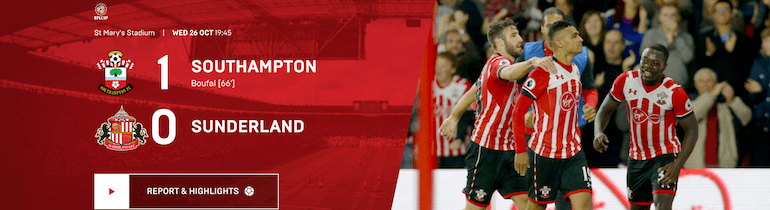
In a recent project which we undertook with Southampton FC, one of our key considerations was how modern fans liked to consume content about their favourite teams and which channels and devices they were most likely to do this on. With that in mind, we undertook research into the media consumption habits of Saints’ fans on the existing site, along with wider industry insights, and discovered that the modern fan is what we deemed a ‘content grazer’: someone who returns to a source multiple times per day, across differing devices, to scan through the latest updates and news in bite-sized snippets as stories evolve – rather than longer dwell time, reading in-depth articles.
With this key audience insight, our team was able to create a clearly defined digital strategy for Saints, one that combined fan need with Saints’ own vision, innovation and technology aspirations. The end result is a progressive club platform with fan engagement at its heart, a future proofed roadmap and a digital broadcast hub for all things Saints.
This new site now includes live news feeds; live streaming and match day commentary capabilities; easily digestible and sharable news articles and updates; and links to relevant social channels, all in one easy to access place to engage the fanbase wherever they are.
We also wanted to ensure the new multi-channel platform supported Saints ambitions to become more commercially sophisticated as a club, and so utilised Sitecore technology to weave in rich customer profiling and automated marketing capabilities. This meant that fans would receive a more personalised experience on the platform, especially when it came to match ticket promotions and merchandising suggestions, and so would help increase potential revenue streams for the club.
All of this revealed that as the industry itself has begun to evolve, so have the fans themselves. As mobile first experiences and the expectation of a personalised user experience from brands becomes the increasing norm, the modern football fan now expects a tailored and relevant a brand experience from their chosen club – just like they would any other brand. Something which the football industry is already having to play catch-up with.
The challenge now for clubs is to ensure they don’t get carried away with the idea of transient digital trends, throwing their vast marketing budgets behind a never ending list of digital ‘vanity projects’, rather than putting strategy and end-customer experience front of mind. The key will be to ensure a deep understanding of each club’s fanbase is achieved, factoring in their preferences and needs, before any decisions are made.
Only then can the Premier League truly move into the 21st century and begin to offer fans the type of experience they expect from a modern brand. Failure to do so will ultimately result in a digital relegation.