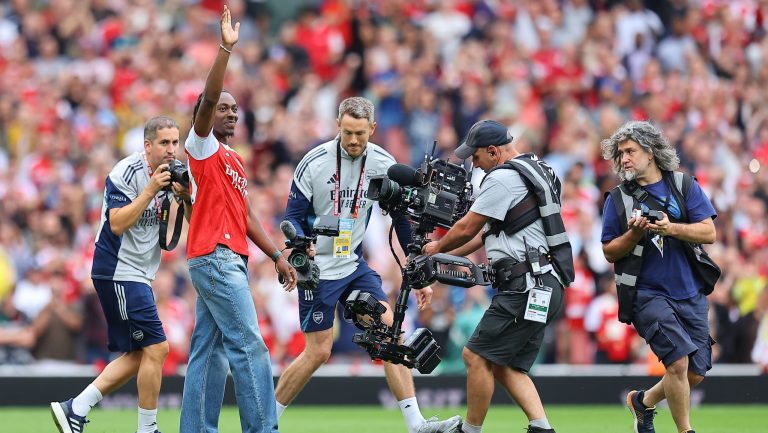






Opinion: In Other News.. The Premier League Rights Auction
Ross Sylvester, head of sport at Wiggin LLP, looks at the new Premier League Rights Auction, which includes the rights to a new 7.45pm slot on Saturday evenings…
The Premier League’s Invitation to Tender (ITT) attracted widespread attention primarily for Packages F and G and the introduction of Saturday Night Football. However, it has been somewhat overshadowed by the news this week that Disney is to buy Fox assets (including its 39% share in Sky) and Sky and BT reaching a cross-supply deal which will enable BT to retail NOW TV via BT TV on Sky’s behalf and Sky to offer the BT Sport channels as part of its Sky TV subscription offering.
Premier League Firsts
It has been reported that for the first time full rounds of Premier League matches may be shown live. Packages F and G offer bidders all 20 matches from two Bank Holiday / midweek fixture programmes. This means that the 7 packages in total reach 200 matches. It may be that these fixture programmes are spread over 2 or even 3 days but, nevertheless, some of them will inevitably kick-off simultaneously or overlap significantly so whilst the Premier League may have satisfied its statement to screen at least 190 games, the actual number of slots (or viewing opportunities) remains fairly static.
Speaking of new slots, Package C contains 8 matches to be played on Saturday at 7.45pm. The introduction of Saturday Night Football sees Premier League football going head-to-head with shiny-floor shows and other peak-time programmes of wide appeal for the first time. Not only will this cause household arguments up and down the country, it may well also contribute to the continued rise of viewing via devices which are not the traditional television set and add to the “value” of commercial subscription rights for pubs and clubs.
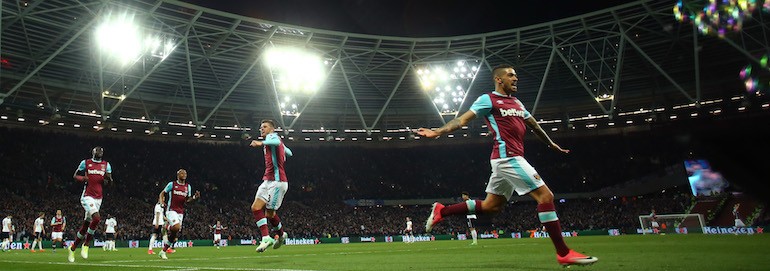
A new fixture under the lights on a Saturday evening will be up for grabs.
Does this incentivise a third entrant?
New packages F and G might, at first glance, look attractive to a new entrant; they are quite different from the year round offering; should be (relatively) well priced; and might provide an opportunity for a new entrant to do something fairly innovative in marketing their offering around a specific period. They may also be appealing to a broader spectrum of broadcasters who offer general entertainment or “mix” channels and fancy introducing an (albeit expensive) variety to its schedule.
There has been much discussion as to whether an OTT service might throw its hat into the ring but, whilst a YouTube would have no problem with consecutive scheduling, there has to be at least two winners in the process, with any secondary bidder, getting at least 42 matches in 33 slots. This means that these new packages couldn’t be taken in isolation by a third entrant as a replacement to one of the incumbents. Further, unless the Premier League is prepared to accept joint-bids from more than one pay operator, a combined bid including an OTT entrant such as Facebook or Amazon, seems unlikely.
Are the rights offered truly platform agnostic?
Prior to the ITT being issued, the Premier League announced that the packages would be sold on a “technology-neutral” basis. Previously, the audio-visual rights have been granted on the basis that the matches will be included on a traditional linear channel which may only be distributed via the Internet as an accompaniment (or simulcast, to use industry parlance) to the primary broadcast means.
The Premier League is reported to be offering the distribution of the audio-visual coverage via any distribution means (i.e. via one of the “traditional” broadcast systems such as satellite, cable, DTT or IPTV and/or via the internet or any other electronic transmission means). However, are the rights “presentation-agnostic” or will the Premier League stick rigidly to the concept of a “channel” whereby programming is arranged sequentially in the 24/7 sense?
By its very nature, live programming will always be linear in that it will always be scheduled in accordance with the constraints of a kick-off time. However, by restricting the presentation to a channel service, the Premier League would be ruling out innovative user interfaces comprising a series of tiles or windows similar to that adopted by Netflix for non-linear viewing.
The answer to this question impacts on the attractiveness of Packages F and G to a digital only player. We wait to see how Amazon seeks to present and exploit its tennis rights but, as it adds further sports properties to its portfolio, it may well launch channels to complement its existing third party distribution arrangements with Eurosport. Other OTT operators, however, may be more hesitant to launch a sports channel service for viewers and may have planning for a more flexible presentation means.
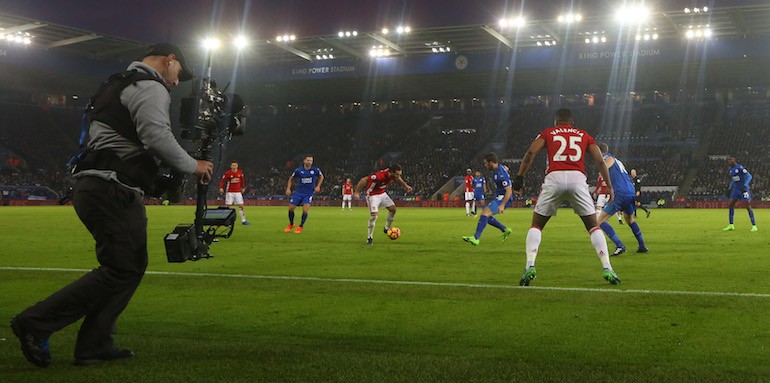
What does the UK ITT mean for the next rounds of international exploitation?
It’s not inconceivable that, outside of the UK, certain rights packages (such as the newly created Packages F and G) could be sold on a larger, multi-territory or even global (ex-UK) basis once the existing contracts expire. The NFL has already successfully sold Thursday Night Football on a global season-by-season basis over the last two years with Amazon reportedly paying five times the amount for the 2017/18 season than Twitter paid for the 2016/17 season. What would be more attractive to an OTT platform (particularly one aiming to sell subscriptions to a certain ecommerce product) than multiple games across multiple territories during a specific period?
Alternatively, does the inclusion of more matches open up the possibility for the Premier League itself to offer some form of subscription-pass? An Easter or Bank Holiday only offering seems unlikely but could this be the first step towards a D2C service outside of the UK? This year, the EFL launched iFollow, a digital live streaming and content platform that enables fans based outside the UK and Ireland to watch their team during the EFL season. Would there be any mileage in some matches being offered on such a service or carving such a service out from the exclusivity provisions altogether? As ever, this may come down to the deemed value erosion for international licensees but perhaps the appetite for the simultaneous match packages in the UK bid will provide some guidance for the Premier League.
BT and Sky finally reach an agreement for cross-supply
Whether or not this round of bidding will result in anything other than business as usual for Sky and BT remains to be seen, but there certainly seems to be an expectation that a shake-up of the sports broadcasting market is not too far away and we can assume that neither of the current broadcasters of the Premier League rights in the UK will want to let that happen without a fight.
After years of on/off negotiations, the rivals have agreed a cross-supply deal to seek to recoup their heavy investment in sports media rights and to keep challengers such as Amazon and Netflix from the door. It is expected that BT will market and sell Sky’s NOW TV streaming service on BT TV (which will include each of the Sky Sports channels), whilst Sky will receive wholesale supply of the BT Sport channels, which will enable Sky TV subscribers to receive the Sky Sports and BT Sport channels pursuant to one contract. Arguably, from a consumer presentation (if not price) perspective, the Sky offering remains the same – the only difference being that the BT Sport channels will be retailed by Sky as part of its subscription packages rather than by BT on the DTH platform. This deal will reportedly start in early 2019 – in good time for the start of the 2019/20 Premier League season (the first in the new rights cycle) – and it remains to be seen what impact the deal will have on the total cost to the viewer.
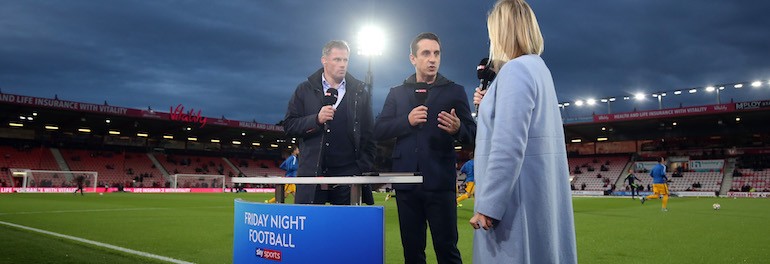
Sky & BT have agreed a deal to share channels on their respective platforms.
A crude analysis would suggest that this collaboration is, however, likely to suppress the bids delivered to the Premier League in the New Year from these broadcasters as presumably part of the deal is to guarantee to each other that each Premier League match will be included on services licensed as part of the cross-supply. This deal also seems to suggest that Sky and BT are confident that there will not be a third entrant into the market – either way, the terms of the cross-supply will no doubt be very complex to deal with a scenario where one (or both) parties fail to maintain the status quo in terms of matches/slots won.
A further twist…
Whilst the numbers involved in Premier League audio-visual rights in recent years are remarkable, they pale into insignificance compared to the reported $66.1 billion total deal value that Disney will pay for the acquisition of the majority of the assets of 21st Century Fox. Whilst there are several regulatory hurdles to overcome, intrinsically linked to this is Fox’s plan to acquire the remaining shares in Sky which are not currently owned by Rupert Murdoch.
Whilst Sky might be an attractive proposition for Disney in terms of securing its position in the UK market with the largest pay-TV platform to showcase its own film and TV content, what this will mean for the future destination of Premier League football is another matter. There is, of course, a long way to go with this transaction (or series of transactions) but we know that Disney previously offered top-flight football in the UK with ESPN (following the demise of Setanta Sports) and that the brand is currently licensed to BT for BT Sport ESPN. If the deal(s) were to go ahead, could there be a renewed vigour for re-launching the ESPN brand as a standalone proposition or, indeed, combining it with (or replacing) the synonymous Sky Sports brand? Premier League matches in the UK may yet return to ESPN.