

Paris, Pride, and Prejudice
On International Day of Persons with Disabilities, Neil Callaghan reflects on the last 12 months in sport.
“My courage always rises with every attempt to intimidate me.”
Elizabeth Bennet, from ‘Pride and Prejudice’ by Jane Austen
The theme for this year’s International Day of Persons with Disabilities (IDPD), is ‘Amplifying the leadership of persons with disabilities for an inclusive and sustainable future’.
With further explanation on the United Nations website adding; “One of the priorities of the global disability agenda is to advance the agency and leadership of persons with disabilities. The theme chosen for the observance in 2024 aims to underscore the importance of leveraging the leadership of persons with disabilities to ensure disability-inclusive and sustainable peace and development for all.”
But therein lies a problem.

Neil Callaghan
Despite disability being the largest and most all-encompassing of protected characteristics referenced in the Equality Act 2010. Despite disability accounting for over 16 million people in the UK (24%) and 1.3 billion globally (15%). Despite it being the group every one of us could join at any stage in our lives, whether permanently or temporarily.
There is a distinct lack of disability representation across all areas of society (including sport), particularly at senior leadership level. Due to historic and systemic inequality, discrimination, and exclusion – which we could abbreviate to ‘IDE’ as the literal opposite of ‘EDI’ (Equity, Diversity and Inclusion).
As the social model of disability explains, barriers whether literal, practical, or attitudinal, inhibit disabled people and prevent them from expecting, let alone receiving, fair and equal treatment in all areas of life. Yet those barriers are continually faced and persistently overcome, every day, as part of life.
Those with a lived experience of disability who go further still, rising to become leaders, elite level achievers, or pioneers in their chosen field, do so against all odds. Something not only to be recognised and celebrated, but more importantly better supported and universally facilitated.
Reflecting on the world of sport through the lens of disability, 2024 has been a historic year. Featuring pride, prejudice, and many impressive leaders.
The standout event in this years’ disability sport calendar was of course the summer Paralympic Games. Introduced at the opening ceremony by Andrew Parsons, President of the IPC, with an assurance the Paris Games “will show what persons with disabilities can achieve at the highest level when the barriers to succeed are removed”. He later concluded post-Games that “everything we had planned, predicted and even dreamed of happened.”
With the host city, its venues, the 4,400 athletes, staff, volunteers, spectators and global broadcasters having raised the bar and taken things “to a new level”. Coverage of all 22 sports was available live for the first time in Games history, with record breaking youth engagement, growth in streaming, and content innovation.

For Paralympics GB, led by CEO David Clarke OBE, a former multi-sport Paralympian now pre-eminent leader with lived experience of disability, it has been a momentous time both on and off the field of play.
The 215 strong squad of ParaGB athletes, with the highest proportion of female athletes ever at 46%, medalled in 18 out of the 19 sports they competed in. Securing 124 medals (49 Gold, 44 Silver, 31 Bronze) matching the total from Tokyo but with 8 more golds in Paris, leaving them second in the overall rankings behind China (a team of 284 athletes).
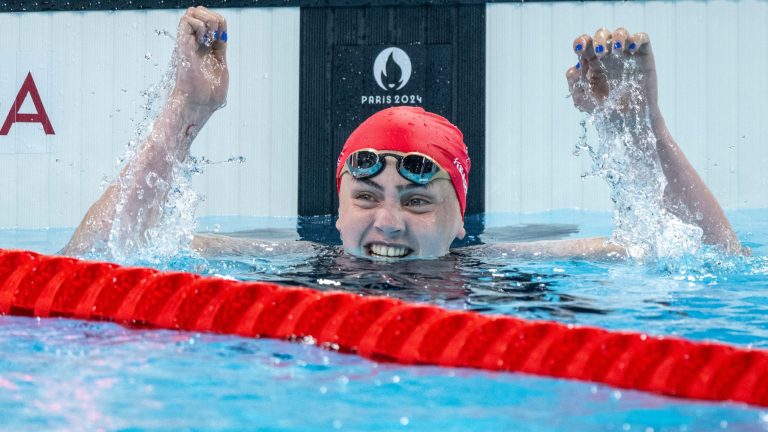
By disciple swimming, cycling, and athletics topped the ParaGB medal table. Para-swimmers Poppy Maskill and Alice Tai, and wheelchair racer Sammi Kinghorn led the individual honours, each winning five medals. Nineteen-year-old Poppy Maskill won three golds on her Paralympic debut.
Britain’s most decorated Paralympian Sarah Storey, picked up two more golds in Paris, racing to a career total of 19 golds and 30 Paralympic medals overall, earned across two sports (Para-swimming and Para-cycling) and nine Paralympic Games since she first competed at Barcelona 1992.
Iona Winnifrith was the youngest member of the team, making her Paralympic debut aged 13, one of fourteen teenage ParaGB athletes and 81 debutants. One of Britain’s longest serving Paralympians multiple medallist Jeanette Chippington, was competing at her eighth Paralympic Games, after making her debut at Seoul 1988.
Boccia player Stephen McGuire, who made the squad having recovered from a broken leg and knee after a fall in 2022, won gold registering his first ever Paralympic medal at his fourth Games, having previously finished fourth in three competitions at the event.
Dan Pembroke landed back-to-back World Record throws during his golden Para-Javelin performance in Paris. Having previously been injured in his quest to compete as a non-disabled athlete in the London 2012 Olympic Games, he left the sport entirely to travel and see the world whilst he could before a degenerative eye condition left him with 10% vision. In a post-performance interview, he said “when they classified me I knew that was my world, I got a second chance at being an elite athlete”.
A distinction the IPC were keen to highlight in their pre-Games campaign that challenged language bias. With Paralympic athletes from a range of different countries announcing on social media they “would not be participating” in the Paris Games, with the correction later revealed that they would instead be “competing” at an elite level.
Off screen Channel 4 continued to enhance representation, accessibility and innovation through its coverage of the Paralympics, produced by Whisper. Including Rose Ayling-Ellis making history as the first deaf person to host live TV coverage of the Paralympic Games. In addition to studios and locations based in Paris, remote galleries and back-of-house production was based in Cardiff, where a new state-of-the-art accessible facility housed around 200 people working on Channel 4’s Paralympics coverage, including 16 disabled people from the broadcaster’s Paralympics Production Trainee Scheme.
Paris was also a source of personal pride for me. Not only to be present and witness some of this landmark occasion for myself, but to know how significant a moment in time this was for other people I’m connected to. Including 23 members of ‘The Ability Group in Sport’ (TAGS), who were working for a mix of organisations in a range of different TV and production roles, contributing towards record levels of representation for disabled staff.
Passion, personality, persistence and talent in abundance across every sport and every day of the Games. And elsewhere, there was plenty to feel proud about in other areas of sport too.
London became the first marathon in the world to give equal prize money for elite disabled and non-disabled athletes. Where nineteen-year-old Lloyd Martin, who has Down Syndrome, completed the course in six hours, 46 minutes and 10 seconds, setting a new Guinness World Records title for the youngest person to do so. “Anything is possible” he said.
The documentary ‘Foot Fault’ followed comedian and Last Leg presenter Adam Hills, tracking his efforts to bring more awareness to the sport of Para-Standing Tennis, as an additional format that’s increasing participation beyond the wheelchair game.
ITV and The Guinness Six Nations trialled live descriptive audio commentary in a bid to make the 2024 Championship “the most inclusive yet”.
The world’s number one golfer with a disability, Kipp Popert, won the DP World Tour’s G4D Tour Championship, making history by winning four events for the season including the G4D Open at Woburn.
Nike’s England football kit launch in March ahead of Euro 2024 featured a collective group of players from the men’s, women’s and para teams, an important if not long overdue collective act of representation.
And very sadly in June we lost rugby league legend, MND pioneer, multi-award winner and national hero Rob Burrow, a leader like no other whose impact will be everlasting.
But the year did not pass without prejudice and challenge too.
In the same opening ceremony speech, Andrew Parsons acknowledged “The fact these opportunities largely exist only in sport in the year 2024 is shocking. It is proof we can and must do more to advance disability inclusion – whether on the field of play, in the classroom, concert hall or in the boardroom.”
In January ParalympicsGB and a collective of 57 partners across the UK’s sport and activity community urged the UK Government to reconsider its decision to remove the role of a dedicated minister of state for disabled people in an open letter sent to the Prime Minister, from David Clarke. The decision was later overturned in July, with Sir Stephen Tims appointed Minister for Social Security and Disability.
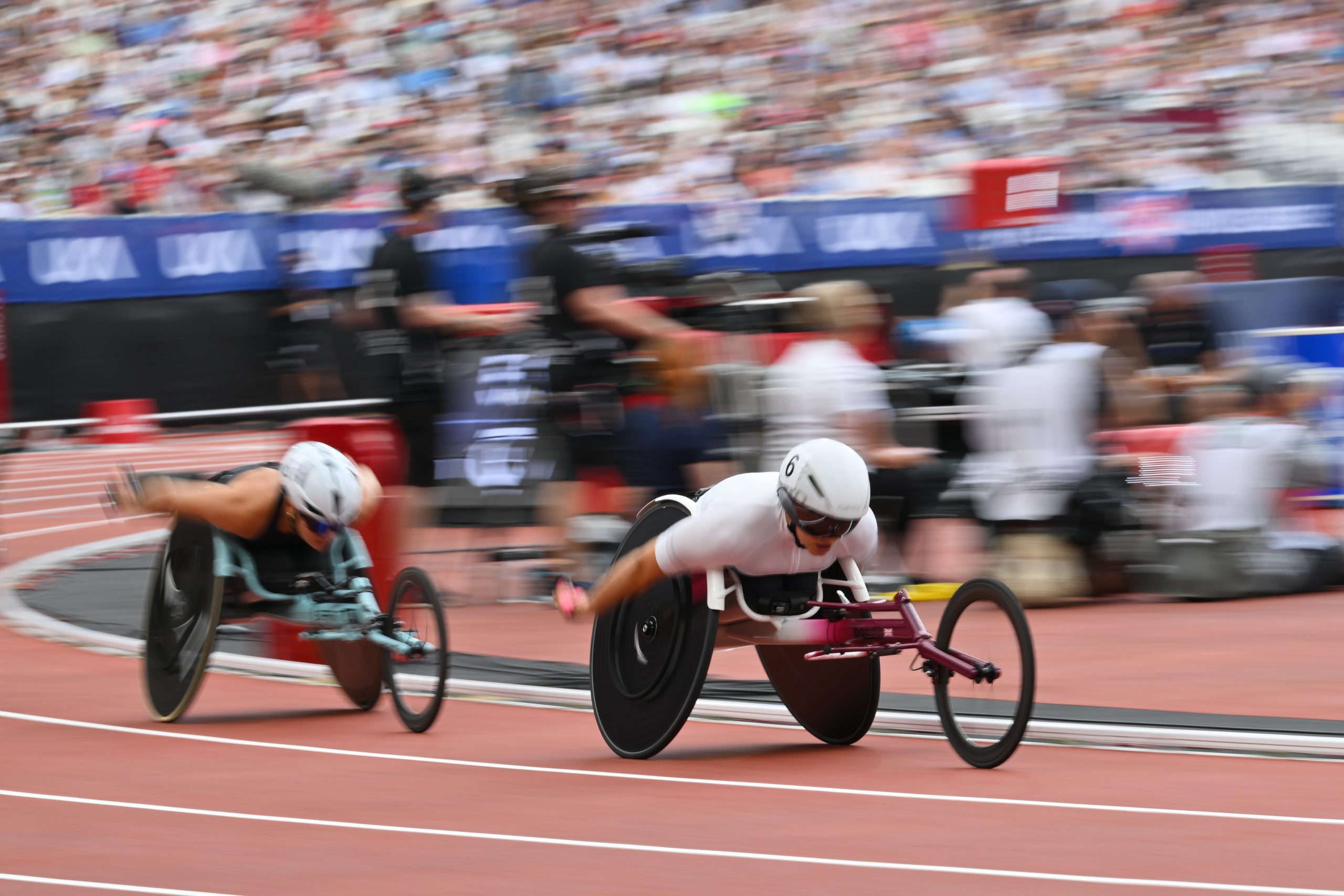
Not the only significant action taken by ParalympicsGB in addressing disability inclusion issues outside the elite performance arena. In addition to the longstanding ‘Everybody Moves’ initiative designed to connect disabled people with more opportunities to get active, ‘Equal Play’ was launched in early September calling for equal access to PE and school sport for disabled children. A powerful documentary featuring Hannah Cockroft (who picked up two more wins in Paris bringing her career Paralympic Gold tally to nine), highlighted that only one in four disabled children currently take part in sport at school. Something that must be changed. It would not be acceptable to anyone if 75% of all school children were not taking part in sport, so why is this any different?

Another pioneering leader Baroness (Tanni) Grey-Thompson, one of Britain’s greatest Paralympic athletes, an Independent Crossbench Peer in the House of Lords, Board member for several organisations, and Chair of Sport Wales – was in the news whilst travelling to Paris on the eve of the Games, when she was forced to “crawl off” a train that had arrived into London Kings Cross where no assistance was available to help her disembark. Far from being the first time she’s encountered such issues of inaccessibility, she told the BBC “It’s exhausting” and “in this day and age, it’s not right”, adding “if another non-disabled person tells me 2012 changed the world for disabled people I will literally scream” in reference to the wider issues of societal inequality still being encountered today.
Retired Paralympian Stef Reid, who growing up experienced an accident that led to her right foot being amputated, publicly confronted Nike in April for using amputee mannequins to promote its products when it doesn’t sell single trainers individually, having been informed she could only purchase in pairs. She told BBC Newsbeat companies that portray “an image of diversity and inclusion” should back it with action. It should be noted this not only led to a direct dialogue with Nike to explore a solution, but other brands recognising and responding to the issue too.
Which raises the question of solutions, of the meaningful and lasting variety.
As outlined in this article and others from previous years, there is undoubted progress being made in the world of para and disability sport. But the summer Paralympics does create a peak and bubble in four-year cycles. The true test and barometer of progress must come away from the Paralympic spotlight, in the experiences of all disabled people across day-to-day society, every year, including but not restricted to sport.
Many people, including Ade Adepitan, have called for more para sport and competition to be shown on an annual basis, to help increase profile, familiarity, and reduce that cyclical gap.
Of the talented disabled people from behind the scenes whose involvement in Paris enabled progress to be made on representation figures in TV and production roles, not only will some have experienced a post-paralympic ‘low’ after the highs of the event, but many who freelance will return to fighting for employment opportunities once more. Key groups, networks, and initiatives set up to promote disability inclusion and address the stark employment gap, are themselves struggling for the funding or support to continue.
The saying ‘nothing about us, without us’ has long been an important mantra amongst the community on the topic of disability inclusion. Which some refine further still to ‘nothing without us’, when emphasising how essential it is to directly involve disabled people in the creation and development of anything, if we want it to be inclusive and accessible.
It’s also important in my view, that disabled people are not left to advocate or fight for themselves. It should not be the case that non-disabled people may consider themselves somehow absolved, until such time that they experience disability directly, when attention and attitudes will certainly be transformed. Which is why allyship matters.
Improving knowledge and comprehension around disability and accessibility, is an essential skill and capability everyone should be trained to possess. That would go some way towards helping to make our world more equitable and accessible by design.
It’s also not acceptable to treat disability inclusion or accessibility as anything other than an always-on requirement to address. It matters beyond single days, weeks or months of designated observance. It’s more than just a ‘campaign’ with an activation start and end date. And if it’s something your organisation ‘cares about’ but is planning to focus on after other areas of EDI have come first, you’re getting it wrong.
Lasting solutions that deliver tangible equity require certain ingredients for success but are not as difficult or costly as many may assume. In fact, assumptions about disability in general are part of the problem.
Improving education, access to opportunities, removal of barriers, and collaboration between disabled and non-disabled stakeholders, is all important. But ultimately as Lloyd Martin said, ‘anything is possible’. Fundamentally it comes down to intention, commitment, effort, and action.
Here’s to more pride and progress, with less prejudice, in the year ahead.
Neil Callaghan is founder of 20-Fifteen SPORT delivering consultancy focused on harnessing the value of disability inclusion and accessibility, through the power of sport, sponsorship and partnership marketing.
He is also co-creator of The Ability Group in Sport (TAGS), a network for disabled people working or aspiring to work in sports media and production.