



“shining A Positive Light On Inclusion”
Andrew Douglass, founder of Parallel London – shortlisted at the BT Sport Industry Awards 2017 – speaks to Sport Industry Group about the fully accessible fun run and free family festival at Queen Elizabeth Olympic Park on Sunday 3rd September 2017, the role of inclusion in mass participation events and the commercial benefit for sponsors…
How did the Parallel London journey start and what is your role in the organisation?
I founded Parallel London, via a slightly unexpected journey, after founding Innovision with my wife 20 years ago. In that 20 years, we have created many high-profile events and established a good reputation through our ability to deliver large-scale events; often with multiple stakeholders, technical innovation and logistical complexity. One of our clients is Red Bull, who I see as brand pioneers for events through their boldness and creativity, and we count ourselves lucky to be their event partner in the UK – supporting well-known events such as Air Race, Flugtag or Soapbox. One thing about Red Bull which few people know is that they underwrite a charity called Wings for Life, which is dedicated to fund research into spinal cord injury. Innovision was asked to help support the charity’s programme of major events when the charity was set up in the UK. Not only did that allow me to learn a great deal about spinal cord injury, but it also opened my eyes to a world of inclusion and disability. I met some really interesting people and as a result of that I looked around and thought I could create an event at scale to shine a positive light on inclusion, the likes of which were not present in the UK or anywhere else in the world. We then set about designing an event which was not only authentic, but cool, surprising and dynamic.

Andrew Douglass, founder of Parallel London
What aspects set Parallel London apart from other mass participation events?
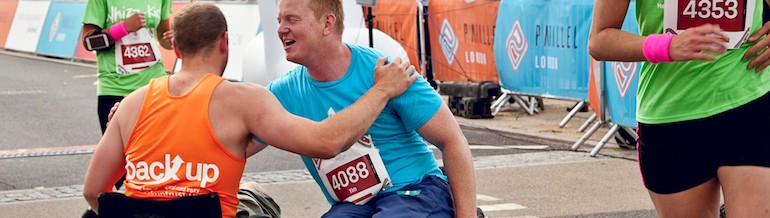
I wanted a mass participation event or fun run element to the event, but I also wanted to innovate. After speaking to a variety of people with disabilities, impairments and restricted mobility, it was clear we had to design something everyone could access and remove as many barriers to entry as possible. As a result, we decided to create a range of distances to cater for all ages and abilities. We settled on distances from a 10km to 100metres, because for some people 100metres is like a marathon.
I then wanted to take the innovation one step further with the creation of a Super Sensory 1km, which is designed for individuals who respond better to a more sensory environment. This might include people with autism, special education needs or profound mental and learning difficulties. Every 100 metres there is an activity based on a sensory experience and this was a massive hit last year.
We also do not have any cut of times at Parallel London, so everybody can complete their chosen distance at their own pace without the pressure or frustration of being stopped. We have a motto at Parallel London ‘start together, finish whenever!’. The event last year had many families enter, and it was great to see them taking part in the fun run together. It is also a really nice way of engaging whole families especially where a member of the family has a disability. Roughly 50% of our tickets are family tickets.
Lastly, we wanted to place considerable emphasis on what I call beneficiaries to benefactors. I passionately believe that if you create the right environment and remove barriers then the recipients of charity can give back. Not only is this incredibly powerful, it also creates a sense of purpose and motivation to get active. A perfect example was brought to life really well last year by one of our charity partners, Whizz Kidz – a fantastic charity providing children with wheelchairs to help them lead more independent lives. They filmed a selection of their beneficiaries raising money for them; whilst at the same time challenging themselves to do something they had never done before – it’s so powerful. The other key thing I always say to the charities is that their beneficiaries are their greatest advocates and this can commercially be a huge unlocking of fundraising potential; which has been overlooked.
Other than the fun run, what else can people expect at Parallel London 2017?
I wanted to further enrich the experience for everybody and create more depth to the event. So, I decided to integrate a free Family Festival that celebrates the best of inclusion. This year there will be nine zones including technology, food & drink and culture. Within these zones we showcase an exciting range of really cool interactive activities; which provides a wonderfully immersive experience of inclusivity. This also provides a great opportunity for brands to engage and bring to life their own inclusive products and services within these zones. The zones are deliberately designed to enable us to engage in a more meaningful way with brands as I firmly believe they have significant cultural influence. So, if you have cool or household named brands standing shoulder to shoulder with inclusivity or disability, then it can help change attitudes and behaviours in a positive way.
What is the commercial appetite for inclusive mass participation events?
The appetite is at the early stages, but growing. There is little doubt that greater education and awareness is required and few companies truly understand the difference between diversity and inclusion. Many brands use inclusive campaigns which are more short-term and with no longevity. Inclusivity needs to be embraced as an integral part of corporate values which is baked in at every conceivable touch point – with customers, enterprise or employees. But I am pleased to see brands aligning themselves with inclusive mass participation events; such as parkrun and Tough Mudder. I always say to brands that this isn’t about being worthy, trendy or ticking CSR boxes. There is a really good commercial upside to inclusivity. For example, the current government figure for the combined total spend of families in the UK where at least one member has a disability is around £248bn – it’s known as the ‘Purple Pound’. Add to this, nearly 20% of the population live with some form of a disability. However, brands are not creating enough experiences, products and services for this part of the population. Many people call the disability community a minority, but there are almost 7 million disabled people of working age – it’s not a small number…
What do you see as the main benefit for your sponsors?
We are able to authentically place sponsors in front of an audience who want to engage in society, engage with brands and feel like they belong. We can put brands at the heart of a significantly large community and this can benefit businesses considerably from a commercial stand point. From the other side, we want to act as a catalyst; which will influence more companies to integrate diversity and inclusivity into the workplace. I’m really pleased to see the rise in the number of Director of ‘Diversity & Inclusion’ job roles; who are focussing on internal values of company culture and subsequently how this is then projected to their consumers and clients. For our sponsors, it can help them bring to life their purpose for consumers and be seen as a great place to work.
Can you tell me more about your collaboration with parkrun?
parkrun is a fantastic and simple idea which continues to grow. We were keen to engage with them, but certainly not compete with them. We felt parkrun can offer a great opportunity for those who get active for the first time at Parallel and want to continue being active throughout the year. As I said before, we see our role as a catalyst and we want to point people in the direction of authentic inclusive organisations. parkrun already has a wonderful attitude towards inclusion and accessibility, so it seemed to be a really great place to start.
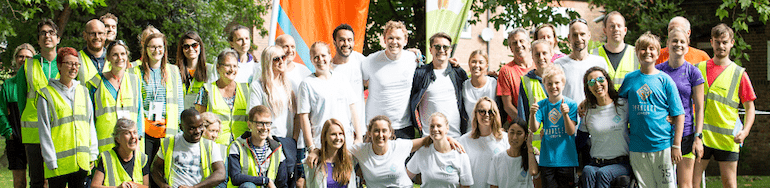
Our team have been working on a Parallel and parkrun collaboration and I’m so happy that our first event took place in Southwark Park. We used our expertise to adjust the route and make the event even more accessible. We also added a signer to the briefings. The team at Southwark parkrun made us feel so welcome and it was a great success and added to one of our goals to encourage more people to get active and have the confidence to do it. My hope is that this collaboration will continue to grow and a fully inclusive parkrun will one day just become parkrun.
What are the hopes for Parallel London moving forward?
We will look to continue the growth of Parallel London and firmly establish the event within London’s annual event calendar. But we do need to find a home to grow into; as the developers are fast eating up all the event space in The Olympic Park. Then, over the next few years our aim is to establish a Parallel event in a city in every home nation; plus expand regionally across England. Then we would look to take the event globally, that is the bold ambition.