







The Sport Industry Report 2025: Launch Event
On Tuesday, The Sport Industry Report 2025’s exclusive launch event took place at EY’s offices in central London.
Following the conclusion of the end-of-year research period conducted by Sport Industry Group and Nielsen Sports, the event brought together leaders in UK sport, business and politics to discuss the report’s findings and to assess what the next 12 months within the sector will bring.
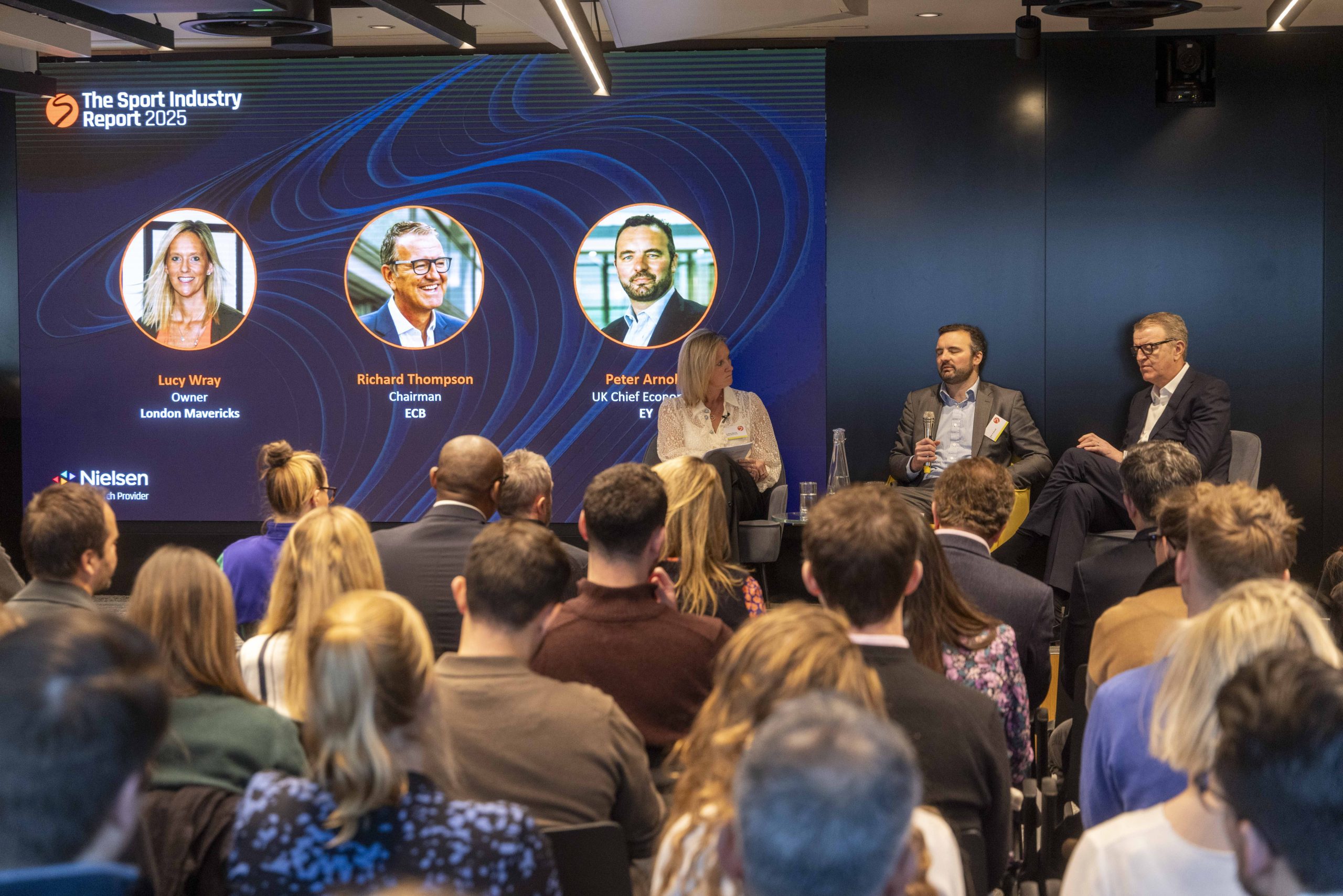
Hosted by Radha Balani, Global Head of Strategy & Leadership at Think Beyond, leading figures from the sport industry joined for numerous panels to open further discussions around the report findings.
You can see all the insights from the report by downloading here.
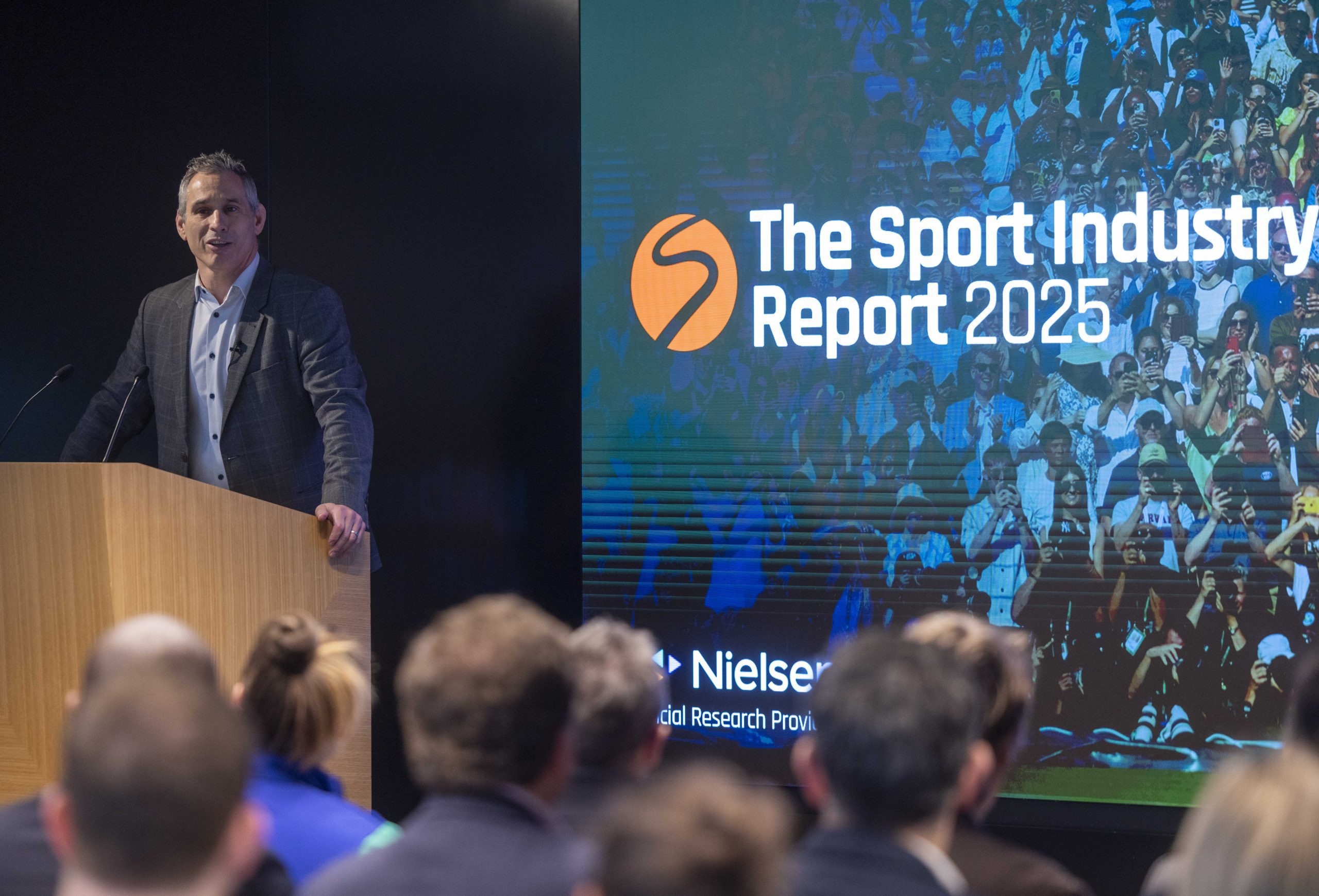
SIG Chairman, Nick Keller, opened proceedings by highlighting the overall themes of the research, which pointed towards optimism for the sport industry despite a turbulent political and economic climate.
“A big takeaway for me is around social impact and sustainability. The report highlights just how much fans value brands that engage with sport as a force for good. They see these brands in a more positive light, and that’s a clear signal for all of us. Fans are buying into the idea that sport can drive change—and, importantly, they’re expecting it.”
NICK KELLER
To delve into sport’s new value proposition in more detail, Sally Munday, CEO at UK Sport, discussed the importance of funding, equal investment across genders, and the report’s statements around fan’s growing focus on sustainability and social change.
“Social impact is at the heart of our decision making. When we were thinking about social impact within our own organisation – we considered ‘what do we mean by social impact?’ Where can we operate in this space?”
“There are three areas – diversity and inclusion, environmental sustainability, and physical and mental wellbeing. So, when we are looking at events we focus on these things, and in particular, their impact on local community.”
SALLY MUNDAY
With the report stating that investment is flowing into UK sport from a healthy mix of sources, with $6.5bn committed across 375 deals in 2023/24, Peter Arnold, UK Chief Economist at EY, discussed why there is so much room for optimism in the sports market.
Arnold commented, “2024 was a challenging year for the global economy. We had ongoing political and geopolitical uncertainty which always creates a headwind for investment. Investment into sport certainly suffered the way the rest of economy did, with reduced levels of M&A, for example.
“But still a great year. Sport is such a vibrant sector and is such a popular area of investment. It is a sector that has been able to deliver exceptional market returns. It outperforms other industries and that what is attracting that institutional capital, as well as opportunities for growth in areas such as women’s sport and e-sports.”
PETER ARNOLD
On the topic of investment in sport, Richard Thompson, Chair at the ECB, joined the panel to discuss the current state of cricket and the high-profile search for investment into The Hundred. Thompson also discussed the $350m bid for the tournament last year.

“A day before, the ninth team to come into the IPL was sold in $780m. That is for one team. And we’re being offered £350m for the whole tournament. And I couldn’t correlate the two,” said Thompson.
“I know a lot of the counties disagreed and thought it could transform the game of cricket. But that just didn’t correlate for me – we would essentially be selling our August. We’ve got to be more ambitious. The tournament is only three years old, and it can only get better bigger and better.”
Before the morning’s discussion came to an end, Radha Balani reflected on a day of insights, conversations, and learnings from some of the industry’s key players.
“Reflecting on all of these conversations today, it seems to me like we need three things going into 2025. Loads of innovation, some courage, and that optimism.
“It was really important to see the focus on the fans today, because that is who we are trying to serve here. And listening to them through the report has been crucial. we are hearing that they are open to new formats, we can be courageous and innovative. We are seeing a shift from a CSR obligation to a business necessity of shared value.
“We hope this report will give you some fuel, and help you make decisions going forward.”