




Trends Of Trends Report
In this, the inaugural Sport Industry Trends of Trends report, we draw out the key themes from the many end-of year trends reports that have graced our inbox from across the sport industry.
You’ve shared your thoughts. We’ve listened carefully. This is what we’ve heard:
1. LIVE HAS A FUTURE
As Mindshare explained: “‘Live’ moments are very much alive and kicking, as the proliferation of technology brings us together to share our experiences in real-time. This trend is unfolding amidst a growing need for human interaction in a digital world; rather than digital diminishing the importance of live, it is enabling it like never before. 42% of 18 – 34 year olds say they feel like they are missing out if they don’t watch shows or events as they happen.”
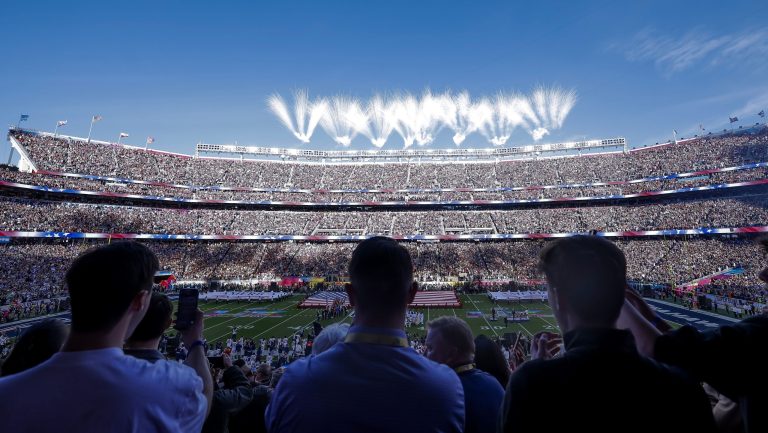
Two Circles concurred, revealing: “UK sport’s ‘Golden Decade’ has reached another landmark year, with total attendances for live UK sports events hitting 74.6m in 2018. UK sports attendances have grown 2.8% year-on-year on average between 2012 and 2018 not including one-off annual events – representing 11.5m more attendances in 2018 than in 2012.”
“Sport has always been a popular leisure choice due to our cognitive bias for unscripted human drama. However, The quality of experience has improved with sports rights-holders increasingly investing in the stadia, the stars, and the service. More young people are also coming to watch sport: the proportion of ticket-buyers aged 16-24 has increased from 15% in 2012 to 23% in 2018.”
Fuse focussed on the evolution of the live sport experience: “For the last 50 years, very little of our experience of live sport in stadiums has changed. That will not be the case ten years from now.
“AR will be part and parcel of the live experience. Fans will be able to see a world around the play on the field that adds a new layer of detail to their view of the game.
“A world of largely invisible technology will make catching a match at a stadium not just more convenient, but a lot more fun. This will keep fans, old or new, flocking to see the athletes of the future take to the field.”
2. ATHLETES AND AUDIENCES ARE GETTING CLOSER
As Fuse explained, “with new AI-driven animation techniques from companies like Soul Machines, amateur athletes could one day benefit from virtual coaches with lifelike human movements and mannerisms.
“The technology could even be applied to bring virtual versions of professional athletes to fans who could then study and learn from the greats directly.”
Meanwhile Seven League discussed the implications of sports stars increasingly going “direct to consumer” with their content, highlighting the emergence of athlete-to-fan media platforms.
The momentum for athlete media has dominated headlines over recent weeks with the launch of the OTRO football platform and the global expansion of The Players Tribune via its acquisition of Unscriptd.
“Players are becoming more aware of the value of access and no-one controls access better than the players themselves.
“With new independent platforms giving athletes alternative outlets to build their brands and boost their income [we can] expect the tension between clubs and athletes to increase.
Ear To The Ground also noted the related rise of niche, alternative idols. “It’s not just the global superstars who are creating strong personal brands. Players are using social media to carve out a niche among discerning fans.
“Global technology company Beats by Dre saw the potential of tapping into this trend by featuring cult former Manchester United and France player Patrice Evra in its global World Cup advertising campaign.
“Although he’s a player nearing the end of his career he has a huge social following and has created a hilarious online persona. It just goes to show that it’s worth thinking a little differently when it comes to choosing talent.”
3. A NEW GLOBAL-LOCAL DYNAMIC IS EMERGING
Ticketmaster, for example, identified a shift in the concept of fandom, particularly in football, where its research found that almost a third would consider switching teams. Support for local teams is particularly thriving, with the Ticketmaster data showing that the main reason fans switch teams is to support a local team instead. Almost half (48%) of sports fans indicated that they regularly attend local and grassroots matches.
Meanwhile, Seven League told us: “In 2018 the sports bodies with the most ambitious global expansion goals were the ones doing the most specific, locally-differentiated work in key markets. This means building data-light products for key emerging markets, it means localised content, a presence on-the-ground and it often means different business models.
“We expect to see more clubs and leagues operating content channels that are centrally coordinated and locally-flavoured and we anticipate greater adoption of standards like Google AMP and further data light products being released. “
4. SOCIAL PURPOSE IS MORE IMPORTANT THAN EVER
As we heard from We Are Social Sport: “It’s never been easier to speak to millions and to get your message heard, especially with the FIFA Women’s World Cup, FIBA Basketball World Cup, the IPC Cricket World Cup and the Rugby World Cup coming next year.
And there’s never been a better time for brands, fans, media and institutions to take a stand for things that truly matter. To have a purpose and make a difference. To help make people’s lives better through the power of sport.
“The challenge for brands is to not just dip their toe in. This isn’t a case of jumping on a bandwagon, it’s having a real brand purpose that you stand for, care about and act on. It’s not something that can be created for convenience or a short-term sales push – it’s to continue fighting the good fight. The likes of Patagonia have so much brand love because people know what they stand for. They keep finding new ways to help the world, year after year – whether it’s being brave enough to call the American President out for ‘giving away’ protected US land, or donating millions to good help good causes.
“As adidas CMO Eric Lietdke said at SXSW this year – “caring is cool”.
5. COMMUNITIES MATTER
According to everyone, including Seven League, which explained: “We’re now seeing a re-emergence of communities built around passion and interest points, rather than colleagues, friends and family. Of course, community never went away – shown by the continuing health of platforms like Reddit – but its manifestation on major consumer platforms is undergoing a rebirth.
“Facebook’s announcement in 2018 that it would reward more meaningful social interactions was certainly a catalyst. Anyone who’s joined a Facebook group will have seen how much more prominently group-related posts are now being surfaced in your feed. “
AND FINALLY
A Christmas Poem to the Sports Industry:
We hope you enjoy these few stanzas,
Sharing the learnings which we’ve gleaned,
Through 12 months of data-crunching,
For rights-holders in 2018… pic.twitter.com/2jfgyi4Xly— Two Circles (@TwoCirclesSport) December 21, 2018
Credits: Fuse, Ticketmaster, Mindshare, Two Circles, Seven League, We are Social Sport, Google, Strava, Ear to the Ground