



The Big Interview: Kelly Simmons
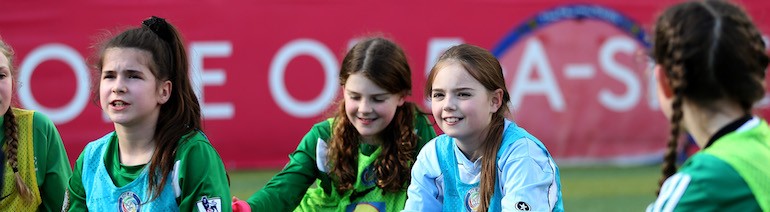
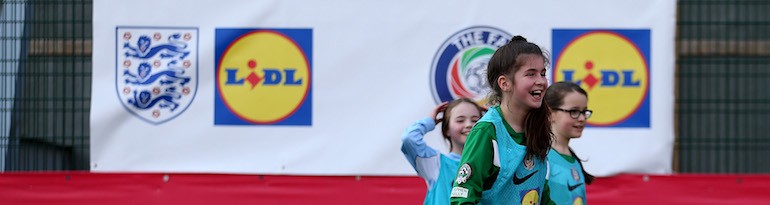
To celebrate International Women’s Day, Lidl hosted a special football training session for girls from the Lidl FA Lidl Skills Programme. The FA’s director of football participation and development, Kelly Simmons MBE, speaks to Sport Industry Group about the positive impact of the programme in getting girls involved in football, breaking down the social and physical barriers for participation and what more the sport industry can do to support the growth of women’s sport…
Tell us about what you’ve been doing today with Lidl and the FA Skills programme?
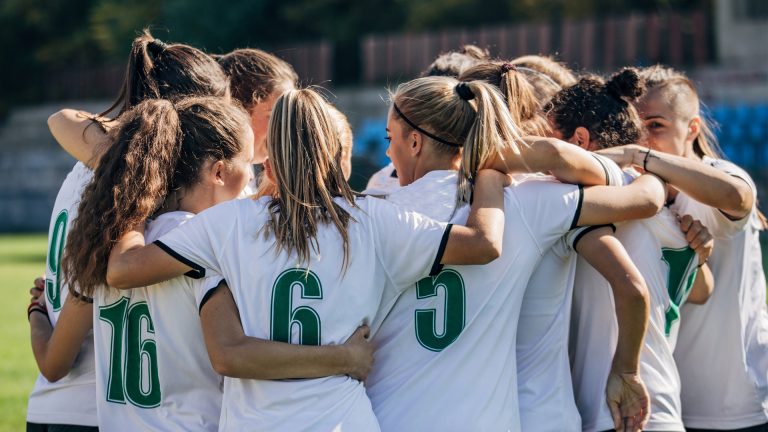
We’re at the Powerleague in Wembley for a girls-only skills session, having a great time – everyone has smiles on their faces. Through the partnership with Lidl we’re offering three million opportunities for children [girls and boys] to play football and learn new skills. It’s specialist coaching for 5-11 year olds, and what we’ve seen over the last year is a massive shift in the number of girls attending the programme. Nearly half of the children attending were girls, which I think people still find surprising. It’s such a popular sport of choice for girls at the moment.
We’re here today to encourage children and their parents to go to fa.com or in-store and sign up for sessions. It’s all part of our wider ambition to double the participation in the girls’ game.
How important is commercial support from organisations such as Lidl to achieve your overarching aim around participation?
Oh it’s massively important. The FA is a not-for-profit organisations and our two major revenue streams are broadcast and commercial income and what’s great is that over the last few years commercial partners have increasingly looked to get involved with grassroots sport and the girls’ and women’s game. To use today as an example, we wouldn’t have been able to deliver the programme at the scale of the FA Lidl Skills without that support, both financially as well as through its marketing reach and awareness. They’ve played a huge part in reaching parents and encouraging them to bring their girls along to events like this. Those partnerships are hugely important to us.
Girls-only sessions were introduced a few years ago, which seem to have coincided with the recent increase in participation. How important have they been to the wider targets for The FA?
There was a lot of research and insight done at the start into the barriers that girls have for playing football. What we found was that it was so important to introduce girls early to the game, so this age bracket between 5-11 when young girls have the confidence to try anything is very important. Saying that, girls-only sessions is just an option. Some girls prefer to play in mixed sessions and we have some girls here today who play competitively in predominately boys leagues every week. With the ambition of the numbers we want playing we know we need to offer as many options as we can, and if girls-only sessions help some children make that first step then that’s great for everyone.
At the other end of the scale, England’s Lionesses just missed out on the SheBelieves Cup overnight, but how important is long-term success at the elite level to your participation targets? Is it a bonus or a necessity?
The exact impact is a bit of an unknown to be honest, but I think it’s really important for the girls game, and that’s because we know one of the barriers for some girls is that they didn’t think it was a sport for girls, and parents are supposedly less likely to encourage their daughters to play as much as they would for their sons.
What success at the elite level can do is normalise football for girls, and show it is just as much a sport for girls as it is for boys. 1.7 million girls play football in this country and it’s huge, and there is now – at the very top level – genuine chances to become a professional. So the Lionesses are hugely important as role models and in terms of profile, showing how far the game has come and how much the standard has improved in recent years.
What do you think the industry can do – from agencies and brands to rights holders and broadcasters – to support your aims and growth of the women’s game?
I think the major change that still needs to happen is future commercial partners seeing the potential and value of women’s sport, and then help invest and drive the game. We’ve been very fortunate in recent times to have some brilliant commercial partners and broadcast partners backing the development of the women’s game, and women’s sport just needs more of that.
We have to break the cycle that men’s sport is high-profile, so takes up most of the media coverage, and therefore it’s the obvious place for a sponsor to get involved with. At some point we have to break that cycle and it’s really important for this generation of girls sees role models and strong, healthy women – it’s hugely important to society, and brands need to get behind the change. What we need are brands to step forward and say ‘yes, my customers are male and female, and my brand values are equality, so I’m going to make that change’ – that would be my call to action for International Women’s Day!