


The Big Interview: Marathonbet
Sport Industry Group speaks to Dan Towse, head of brand on behalf of Marathonbet, about utilising the assets of a sponsorship, the changing habits of a betting consumer and the freedom involved in being a self-confessed challenger brand…
Tell us about your role and your work with the Marathonbet brand?
I’ve been working with Marathonbet for about a year in my role as head of brand. I’m responsible for making sure we drive consistency of identity across our platforms and overseeing all communications that go out to customers to ensure they’re aligned to our tone of voice. It was a new role at the time, with the aim of taking some control over the consistency of our communications across our different markets – from Spain to the UK and beyond.
Marathonbet is continuing to build on its football portfolio, but what are the target markets for the brand?
From a brand perspective football is absolutely massive, but there are of course so many other very popular sports for the betting market, so it’s important not to lose sight of that. Whilst our portfolio – with the likes of Manchester United, Hibernian, Dynamo Moscow and Málaga Club de Fútbol – is football-focussed, we’re always looking out for other opportunities in different sports.
We love our horse racing and our tennis for example, so it’s about making sure we can also tap into those customers and keeping our ears to the ground for potential cross-sale opportunities as well.

Regarding your partnership strategy, how did the brand decide on Malaga, Hibernian, Dynamo Moscow and Manchester United – and what is it you look for in a partner?
We get presented with a lot of opportunities so myself and our head of sponsorship are constantly presented with ideas for anything from MMA to table tennis. You name it, we’ll have had a proposal for it!
While we’re there to take a look and utilise – if appropriate – the opportunities presented to us, we have to make sure it’s the right fit for our objectives and overall strategy. We won’t just throw money at anything. We have to know that the clubs we work with will be engaged, have an emotional connection with the fans and our customers, and will represent far more than just an LED board that lights up on matchdays. It sounds obvious, but we want a partnership with our partners.
Speaking of partnerships, you launched your live casino – the first of its kind – in conjunction with Manchester United in autumn last year. Nearly one year on, how has it fared?
It’s doing really well. As we mentioned regarding our partnerships, we wanted to be able to utilise a brand such as Manchester United in a way that made sense for both parties. We didn’t just want to sign a contract, get that ‘official betting partner’ designation, and then put our feet up. The live betting casino was one of the first things we did that would naturally fit with both parties. Since then, it’s demonstrated some positive engagement with United fans all around the world.
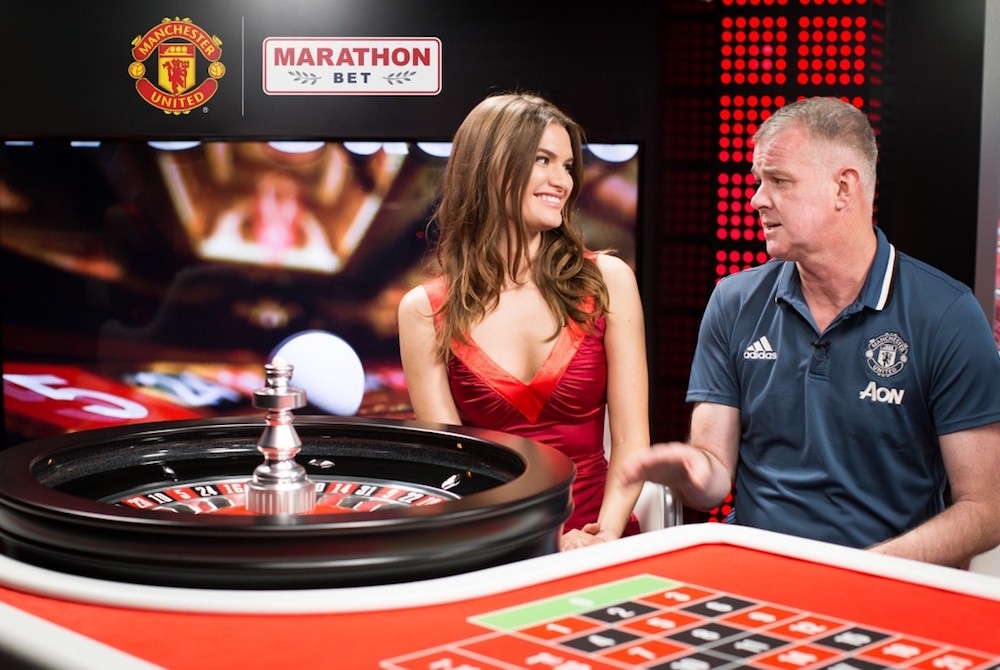
Former Manchester United player and Marathonbet ambassador Gary Pallister at the launch of the club’s first ever branded online casino last year
What’s next?
Watch this space! We know we are a challenger brand, we’re not looking to challenge the big-budget, tier one brands in the market. We’re not expecting to reach that tier in the next few months either.
We’re really pleased with the partner portfolio we have, so we’ll continue to tap into those assets, but we also need to go deeper beyond that. We want to make sure we have the basics right – the products, the experiences – drive brand awareness through strategic sponsorships, and make sure we learn from what our customers are and are not engaging with. 2017 is about learning what we can from what we have, and then in 2018 and 2019 we’ll start ramping up again, based on the insight we generate during this current period.
What’s the aim for the future? Do you aspire to be a tier one betting brand, one day or do you like the ‘challenger’ title?
There’s a few things we need to get right first, but in five years time, if we’re mentioned in the same breath as some of the older, more established brands then we’ll have done a good job.
We’re in the third year of our deal with Manchester United and the access and content that we get from that sort of partnership obviously helps us to engage with huge numbers. The aim is to go far beyond plastering a logo on something. We’re doing the right things, we can always do more, but we’re heading in the right direction.
What’s the biggest challenge for you as a brand being in such as congested market?
Share of voice. The main question we have to ask ourselves is how we stand out from the competition. It is such a cluttered, saturated market and it’s about how you distance yourself from other competitors, without doing something too stupid that can damage the brand.
The other thing to contend with is customer loyalty. Quite reasonably, consumers will jump from bookmaker to bookmaker for any number of reasons. I work very closely with our head of digital who is constantly reviewing our communication strategy.
We need to ensure we’re engaging with our customers, but it has to be at effective, appropriate times. If we end up aimlessly flooding an inbox or social feed, we’re just going to give a negative experience to our user. They have to resonate and be relevant. It sounds simple, but if a user doesn’t watch tennis, and has never bet on tennis, we should not be sending them a tennis offer – whether it’s Wimbledon or not. Building trust through tailored offers is key for us.
In such a competitive marketplace, do you monitor what your competitors are doing?
Oh absolutely. It’s not for us to go around stealing ideas, but at the same time if you’re not watching what is happening in your area of business it’s very difficult to move ahead of it, and there’s certainly things you can learn from. They can range from the smallest activity on social all the way through to the biggest sponsorships, whatever it might be, it’s always good to keep an ear to the ground.
Brighton, Newcastle or Huddersfield to win the #PremierLeague?#PigsCanFly https://t.co/tfMu8wao1w pic.twitter.com/owz9ZYBtVl
— Marathonbet (@marathonbet) August 10, 2017
Have you noticed a significant change in the betting market during your time in the industry? Are people still betting the way they used to?
Ultimately, people are still gambling. I think the biggest change we’ve seen in recent years is the launch of in-play, which has taken the industry to a whole new level. More and more people are betting in-play than ever before and that will only continue to grow.
The other big change in recent years is how and where people bet and, put simply, mobile is king. People want to be able to bet quickly and efficiently regardless of where they are, whether they’re sat at home on the sofa or out doing the shopping. In terms of consumer interaction, that’s been really big for us.
I think looking ahead, we’re seeing more and more cross-sell between markets too. Of course there will always be the more traditional gamblers, and I include myself in that, who will only ever bet on one or two markets. But newer, younger customers are definitely happy to look beyond that – be it different sports, or even casino-based products. Cross-selling is our big challenge for the coming periods.