

Get To Know FEVO: An Interview With Ari Daie
Ahead of the FEVO Sport Industry Awards 2023 on 27th April, we caught up with Ari Daie, the founder, CEO and President of headline partner FEVO, to understand more about the company and what it can offer sports organisations in the UK.
How would you describe FEVO and what is unique about the business?
FEVO is fundamentally altering how consumers behave and transact on their favourite brands’ websites. If you look back at the history of e-commerce, it was built to basically enable a transaction online: verify personal details, verify credit card, process payment. But something was lost. Those early e-commerce pioneers forgot that most of our purchases are ‘socially considered’ — that we rely on people we trust for curation, coordination, validation. And for the last 25 years, things have remained that way.
Our mission is to make every e-commerce site in the world a magnificent social destination — to ‘rehumanize shopping,’ if you will. A shop shouldn’t just be a place to buy things, but a place where you get to experience all the little human interactions that turn a purchase into a moment of genuine joy. This is how people shopped IRL for most of human history, and we believe it’s the future of shopping online, as well.
We debuted this technology in the live events sector — events are inherently social endeavours, so that was a natural fit for our products. In five years, we’ve built a roster of more than 750 partners across sports, music and live entertainment. We’re now by far and away the market leader in our sector, with clients across all the major leagues: MLB, NBA, NFL, NHL and MLS.
How did the idea for FEVO come about?
The origin of FEVO is super simple. If you think about most e-commerce, it’s an entirely solitary endeavour. But that’s not actually how human beings shop or function at all. We might have moments of solitude in our days, but fundamentally, how many times have we purchased an item without the opinions of others, whether it’s from a loved one, friend or colleague? We wanted to figure out how we could bring that human spirit into the shopping journey. That was the genesis of the company.
What made it really click was that for the last 10 years, major brands — e.g., sports clubs — have forfeited their social graph to walled gardens that own their data, manipulate their data and hoard their data. You know who the culprits are. We think organisations that spend billions of dollars to build, design, distribute and create these incredible brands should own that social graph and it should live on their owned and operated domains.
What benefits do you provide to sports clubs and businesses?
The benefits for the brands we service are abundantly clear. It allows them to create deeper, more meaningful engagement and direct touchpoints with their fan base. It removes this giant intermediary between them and their true fans, and it removes the fact that those platforms basically take their data and sell it to other brands. That is dilutive and cannibalistic to what they’re trying to create, which is an environment where their consumers can bond and socialise over this brand they both love.
We’re a white-label solution. We don’t interfere with a brand’s tech whatsoever, and all the data is shared back with the clubs and businesses. Because at the end of the day, that data drives consumption patterns. It informs marketing. It informs where the brand wants to go and how the brand needs to evolve.
Outside of selling tickets, what else can FEVO offer to a potential client or partner?
Initially, everyone thinks this is purely a ticketing play, but it’s not. Our technology integrates with the entire venue ecosystem: merch, food and beverage, experiences, ancillaries — and of course all types of ticket sales, from direct promotional tickets to hospitality and premium. We can create checkout experiences that allow a consumer to add all those items into one order and one transaction. It removes a ton of friction for the consumer and drives massive incremental sales for the clubs and businesses we service. These should not always be looked at as distinct revenue channels, but as cohesive ones, and our job is to make that as easy and clear to brands as possible.
How does the tech behind all this work?
The beauty of our technology is that it no way asks you or requires clubs or businesses to change their existing legacy platforms. We don’t come in and say, ‘Rip out X system, we’re going to replace that.’ We seamlessly integrate with existing services and platforms. We write to those platforms’ APIs and have direct contractual relationships with inventory management systems.
We don’t require a six-month, six-week or even six-day roadmap exercise with the organisation. We can literally turn our solution on for you in two hours, train your entire sales and marketing apparatus on it in 45 minutes, and share best practices with your organisation in one hour. From there, you’ll be making money, engaging better with your fans, and grabbing more data and ancillary revenue immediately. You don’t have to do any heavy lifting to launch FEVO. It’s made for sales and marketers and not for PhD technologists.
On top of that, our entire platform will soon be AI-enabled to make sales’ and marketers’ jobs much easier and much faster in terms of how they proliferate their experiences out to the world.
We’re enabling social commerce and bundling it with AI — it’s about smart tech being deployed rapidly across an organisation and catapulting them into the 21st century.
The business has grown rapidly in the US. What are your plans for expansion into the UK and international markets?
We have a very large footprint and install base in North American live events because our partners see the accretive value we drive: more sales, more data, more engagement. It’s natural for us to extend into markets that have similar attributes. The UK, for example, has a storied history in sports, with some of the most avid and incredible fans in the world. Same with Australia, same with continental Europe. Some of the nuances are clearly different by market, but the fundamental human need to go to a game or concert with friends and engage with clubs, artists and brands they love is universal.
What are the biggest opportunities for FEVO in the UK sporting market?
I think the biggest opportunities in the UK are across the gamut. Clearly football, rugby, motorsport, music festivals. The leagues in the UK — like the Premier League — obviously have rabid fan bases and incredibly high membership rates, but they’re all looking to evolve their businesses through the likes of women’s football, premium seating, hospitality, experiential activations or simply driving incremental merch sales and capturing more data. We don’t look at specific markets having distinct attributes. We think about specific leagues having distinct attributes.

Bournemouth fans celebrate after Dominic Solanke scores against Tottenham Hotspur.
The Premier League is very much like the NFL in the United States in terms of a high season ticket or membership base. But there are other categories that have different attributes. Baseball and collegiate sports in the United States have massive amounts of individual-game tickets that they’d like to sell. There are categories within UK, Europe and Australia that fit those attributes as well.
We also like to look at how we can serve the next generation of purchasers. Every generation has its own way of behaving, its own way of transacting, its own way of building brand affinity, and our job is to always be ahead of that. Our entire business is predicated on, ‘Here’s where the world is going in five to ten years, here’s how this new demographic is purchasing, now let’s figure out how to turn them into a real loyal fan for you.’ Any business that isn’t thinking about that already is basically planning its own obsolescence.
Outside of sport, what other sectors is FEVO working in?
The technology is universally applicable. We are seeing utilisation of the platform in luxury retail. We’re seeing it with merch at the sports teams. We’re seeing it with experiences. We’re seeing it in hospitality, not just at sporting events, but also travel, hotels, airlines. There’s an entire ecosystem that’s thinking about ‘How do I become more socially engaged?’ And that doesn’t mean you just advertise on TikTok, Facebook, Instagram, Snap. It means how you can create social virality that you can own in your own space? That is how brands are going to catapult themselves over the next 10 years.
You have to start thinking about how to build real, multilateral community and engagement on your own brand — not on other people’s platforms where they make billions and even get trillion-dollar valuations off your back.
Can you give us an interesting example of how an organisation uses FEVO successfully?
A couple of my favourite examples are the New York Yankees and F1. The Yankees see the application of FEVO across all their ticket categories: suites, season plans, groups, individual game tickets, merch. They don’t think about inventory as an asset, but as an experience, and they see the broader applications of FEVO. They’ve evolved with FEVO quickly.
F1 uses us for some of their most premium assets. They’ve realized that it’s not just about getting young people to share an event and get cheap seats with a group, but that even higher-income groups also like to collaborate on experiences together. I would add the LA Dodgers to that. The Milwaukee Bucks. There are dozens and dozens of organisations that broadly apply FEVO across their marketing and product mix.

The Yankees’ Aaron Judge rounds third base after hitting a home run against the San Fransisco Giants.
Where do you think the future of live events and ticketing is heading?
Too many clubs hire digital and e-commerce people who think that providing a digital inquiry form is selling tickets digitally. We think that’s a thing of the past. Answering phone calls from sellers over the telephone is becoming antiquated except for the most premium, expensive memberships and season plans. Nobody really wants super high-touch for experiences they can get more conveniently. We think that creates too much friction — it’s a remnant of 2005 or maybe even 1995. It is not how Millennials, Gen Z and that next generation are going to interact with your brand. Our job is to create convenience, but also status.
The brands and businesses that we service — the New York Yankees and LA Dodgers of the world — have clout. Huge affinity. These are brands that make people feel great. Previous generations leverage that as a show of status. They would buy the big season plan, drive the big Mercedes and retreat to the big country house on the weekend. Those people would go to events and take pictures as keepsakes. This next generation is more socially minded and conscious, and they’re driven by a different validation point. They want to build their own clout, and they want to use that clout to mobilise their own, more intimate networks of people to experience these sharable moments with them. FEVO brings both of those elements to life on a brand’s own domain.
That’s where the world is going, and the brands and clubs in this sector have the biggest advantage in the world. People salivate to go to these events. It’s our job to figure out how we give them all the clout and recognition they’re seeking. Consumption patterns are changing, motivations are changing, but the need to be recognized and validated is innate to our DNA.
Why did you choose to partner with Sport Industry Group?
We adore Nick. It’s a privilege and an honour to be on this journey with him, and we think the ecosystem that Sport Industry Group has built is amazing. All the participants share our vision for the future of this industry, and we want to connect with their members in a meaningful way.
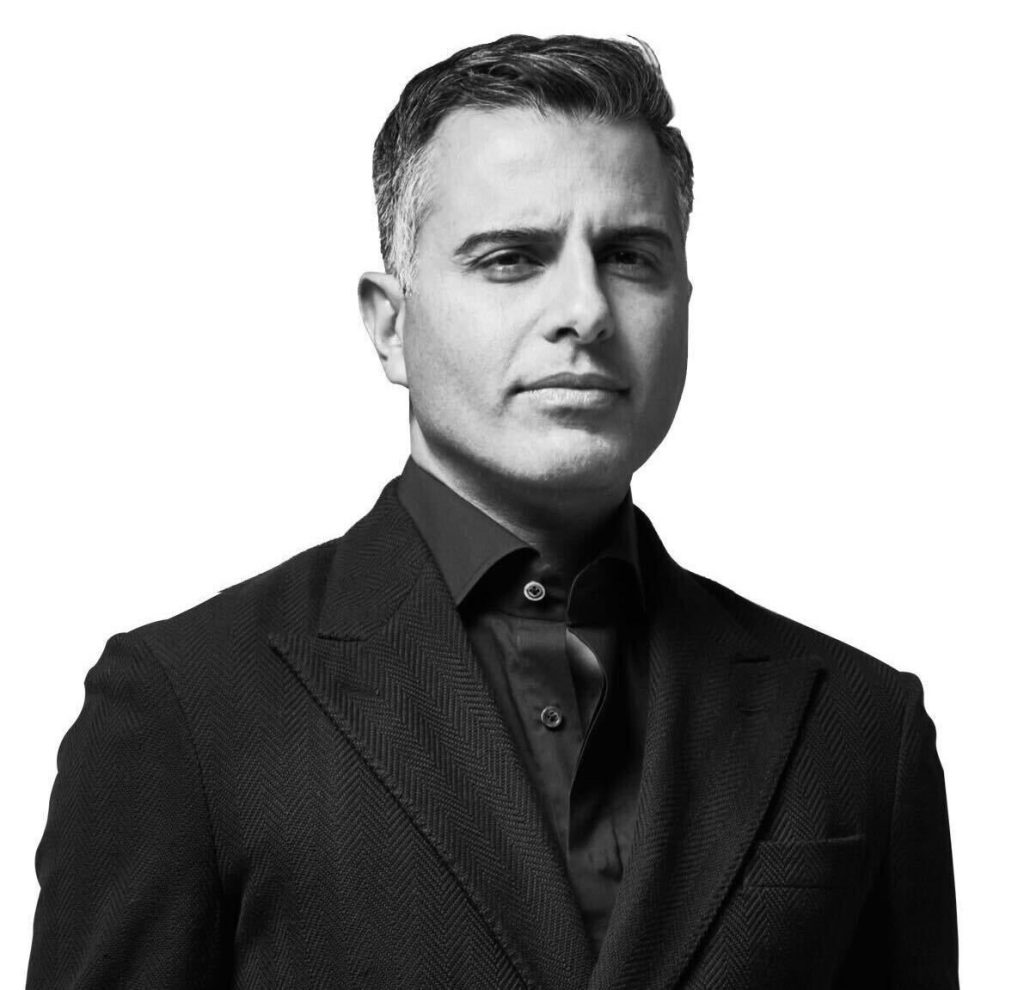
Ari Daie, FEVO founder, CEO and President.
For more information on FEVO, visit their website.