





Former Premier League forward Marvin Sordell on mental health in football
Conversations surrounding mental health in football have become increasingly prevalent over the last decade.
But despite the increase in awareness, recent data suggests that more needs to be done to bridge the gap to make players feel more comfortable in opening up on their personal challenges.
A survey published by the Professional Footballers’ Association (PFA) last year revealed that only 38% of current male players would feel comfortable in sharing concerns pertaining to their mental wellbeing with their clubs.
During his career, former Premier League footballer Marvin Sordell was one of those players.
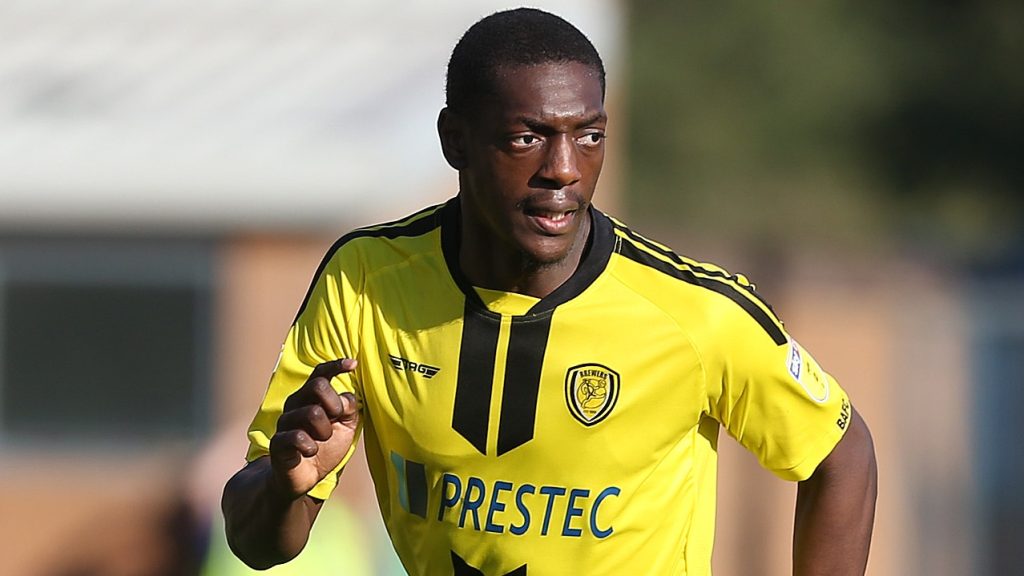
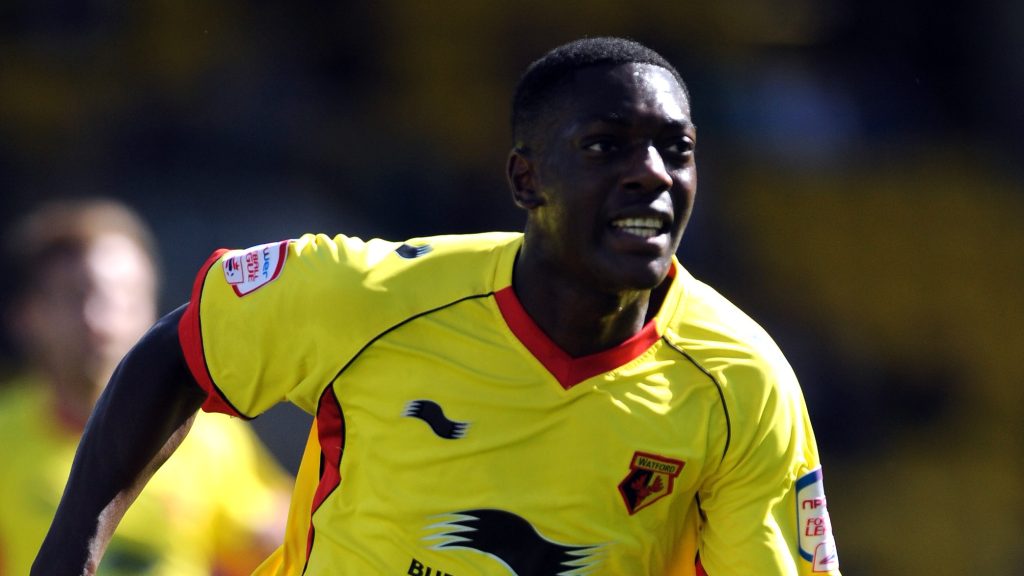
Having faced mental health issues from the age of 21, the former Watford, Bolton Wanderers, and Burnley player suffered from depression throughout his career.
When he decided to retire from the professional game in 2019 – aged just 28 – Sordell cited his mental health, the pressure to perform, and the lack of enjoyment in playing at the top level, as key factors in his decision.

Inspired by the world outside of football, Sordell would go on to found his own production company, ONEIGHTY, shortly thereafter.
Serving as its Managing Director and Co-Founder, the former striker has built an impressive partnership portfolio, having worked with the likes of Adidas, McDonald’s, Sky, and Warner Music.
Sport Industry Group recently sat down with Sordell to discuss his personal experience of mental health during his career, the progress he has seen, and his life off the field since his retirement.
The full interview is available on The Game Plan Podcast, and can be accessed here.
You retired back in 2019 and at the age of 28, and stated that it was largely due to mental health reasons. What were the circumstances that led you to retire at a relatively young age?
There was a lot going on for a number of years. It wasn’t a period of time, right at the end of my career, in isolation, that pushed me to make that decision.
From the age of about 21, I went into quite a dark place. I’ve spoken about a lot in a very public setting, where I suffered from depression. I was on medication, and I was told to go and spend an extended period of time at the priory, which I didn’t in the end of the day, because being a football player, you can’t spend an extended period of time anywhere, really, other than playing football.
I got to my mid to late 20s, and started to see other things in the world outside of football, and that made me realise that I didn’t have to just rely on playing football, and also the fact that football wasn’t making me happy anymore.
It wasn’t necessarily just playing football, but being a professional football player; two very different things. To this day, I still play a lot of football, and I love it, and that was a big, big factor in me wanting to walk away at that age.
Were there certain things that were triggering these episodes? Was there a catalyst?
I wouldn’t necessarily say a catalyst, but there were a lot of things compounded over a long period of time. Like I said, from the age of 21 up until 28 when I decided to retire, there were many different things that happened.
There a lot of things in my personal life, and, some things from my childhood, which you work through in therapy, and you understand these things to a greater extent.
But through those seven years, I had a lot of change in my career, in my life – obviously moving around lot, eventually having kids, and my career, feeling like a roller coaster emotionally.
There are so many things that that happened in that period of time which just took me, in many periods of time, to a dark place where, at some times, I couldn’t really find myself out of. But eventually I made a decision that I thought was the right one.
You hear from a lot of footballers who might be struggling with various things, and they say that the football side of things is almost like a release. Was that the case for you?
No, because there was a long period of time when I didn’t play much football.
The issue in playing football is that if you’re in a period in yourself where you’re not feeling good in terms of your confidence, or if you’re not playing well, you’re not performing well, then obviously you’re not going to play.
But I think what you need more than ever is to play, to kind of get that release.
You’re training Monday to Friday, and on a Saturday, you just need to play. You want to be out there. You want to be able to perform, and try and work your way back into some sort of rhythm and building your confidence up.
For a long period of time, I didn’t have that, so I didn’t really get the opportunity to rebuild my confidence, as well as the fact that there was a lot of pressure externally, at the time – from fans, from the club, and that’s just how it happens sometimes in football.
Sometimes you just need a bit of support externally and people around you to you build that confidence up, if that’s not going to be the way by playing.

You mentioned that you struggled throughout your career with depression. What support network was available to you as a player back then?
At that time, the last thing I wanted to do was tell the club, because I was afraid that they were going to weaponise it, and that it would just be a stick to meet me with.
Unfortunately, I found that to be the case, even though I didn’t tell them.
I ended up going to therapy privately, and was on medication privately, so technically no one at the club knew that anything that was going on.
I was coming to training every day as normal, on time, training, going home. It was very clear that I was down in my mood, so I wasn’t very involved, I would say, emotionally.
If you saw me, you would definitely know that there was an issue, but you could have just attributed that to me not playing.
And so that’s what I did. I just said, ‘Well, I’m not happy because I’m not playing,’ and that’s it, people don’t really ask questions.
But at that point, it was very much me not wanting to share anything, because I thought – ‘are they going to use as an excuse to not involve me, not play me, or try and get me out of the club?’ So I didn’t share it.
I found out years later down the line that someone from the club did know, and they were actively trying to stop me from going to the Priory.
And as I said earlier, you know, the therapist I was seeing at the time recommended that I would go to priory.
If anyone knows about the Priory, you’ll know that if your doctor’s telling you to go to the priory, you’re probably not in a very good place.
I was told that they’re paying me a lot of money, they had paid a lot of money for me, and so I need to be there and train and be better. It was as simple as that, really.
What do you do now to keep track of your own mental health?
Therapy is a big thing for me. I go regularly, still.
I see therapy as like having a personal trainer; going to therapy is like going to the gym for your mind. So it’s incredibly valuable, and I think that gives you a lot of the foundations and framework to understand yourself and also understand the areas which you’re impacted in.
Beyond that, there are a lot of little things that I do. I think exercise is part of that: playing football. I love to play football.
It seems like football is doing a lot more now to support mental health. There’s the Heads Up initiative that the FA have started for instance, and Chelsea recently appointed a wellbeing lead. How important are moves such as this, going forward?
I think that’s massive for a big club to take the lead in that way, I think it’s great.
I think it’s interesting that the way that football sees wellbeing and mental health isn’t necessarily in the way that it should.
Because I think if you think of a big football club, they pay their players a lot of money, you think about the way you best protect your assets.
If you look at players in a very cynical way, if you look at them as assets, you think, ‘How do I maximise this asset? How do I protect this asset in the best possible way?’
We understand very much so that our minds are the key to everything. And so if we haven’t got a mind that is working and is operating in the best possible way, then of course, we’re not going to be able to perform at our best.
So if you’re really looking at in that sense, and you said, ‘Right, what’s the best way to protect your assets? That’s by looking after their well being, looking after them in in terms of other things, like nutrition, sleep, physios..football is greater in all these other areas other than mental health and wellbeing.
And if we really, really care about our assets in football, and the clubs do, then that will be an area that they really look look into.
Stay up to date with the world of sports business by subscribing to the Sport Industry Daily.