






“from Pitch To Pitching”
Stewart Castledine, director at Sports Revolution, speaks to Sport Industry Group about being part of the Crazy Gang and taking lessons learned on the pitch to a life in the industry…
Many people may know you from your time as a professional football player, but can you give an overview of how you ended up where you are within the sport industry?
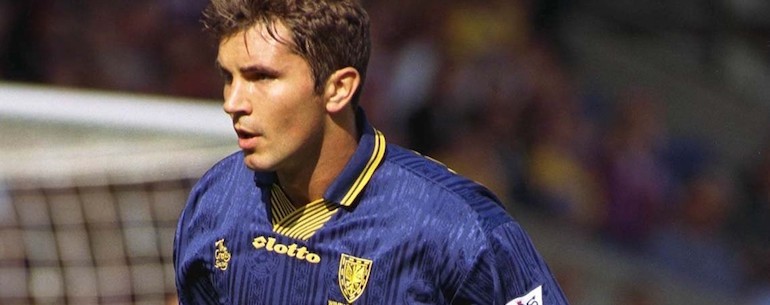
It has been quite a journey. During my time as a Premier League footballer I had to work very hard to be part of a team like the ‘Crazy Gang’ at Wimbledon. When it came to retiring, like a lot of pros, I was unsure about what to do next. For me, business was always attractive as I had experience of buying and selling property during my playing days and I had also been to university, so felt like had a bit of business acumen. It was not a typical route for a footballer to take, but I always felt that it would stand me in good stead for the future, which I believe it has.
The first role after finishing my playing career was as a presenter on a BBC property show. While the TV work was fun, I wanted to make the transition into a business job so over the next ten or so years, I moved into a variety of roles before becoming commercial director at the talent agency James Grant Sports and then Sports Revolution, where I am now.
Whilst working with current professional athletes do you feel they can relate to you more as you are an ex-professional athlete?
Without a doubt, particularly in football which can be a bit of a closed shop, so it helps to have the credibility of an ex-player. However, you need experience and business acumen to go with this. Luckily, as Sports Revolution works with teams in the English Premier League and Championship, UEFA Champions League, La Liga, Bundesliga and also Euroleague Basketball and rugby, I’ve built high-level experience pretty quickly.
Being an ex-player is also useful at the moment, as so much of the narrative in football is around players and their commercial influence. I can use my experience as a player to help brands understand how to maximise the value of their relationships with players and also how best to engage with fans.
How did your football career prepare you for success in business and what are the parallels between the two?
There is an element of transferable skills between the two areas. You have to believe in yourself and be willing to work hard. I wasn’t the most naturally gifted footballer, but on the basis of these core values I managed to make it into the Premier League. At every training session, I would work my socks off, and I have now transferred these attributes to business.
Since your playing days the commercial landscape of football has changed considerably, what do you feel has been the driving force behind that?
The explosion of TV money in the Premier League has obviously created a lot more wealth in the game and also much more global interest. More and more brands, from different geographies – like the USA and Asia – are now involved and are much more scientific about how they look for a return on investment.
The amount of money we see around the Premier League today wasn’t always there. When I was a professional I remember wondering why the top players were not earning the same as the top stars in tennis and golf. That explosion was always likely to happen, and it has now caught up to what I always felt it should have been. Sadly, it didn’t happen when I was playing!
Globalisation has also changed the demographic of the football fan, which explains the increase in sponsor interest. Football is still is ‘the game of the people’ but fans are now far more spread across the social spectrum, with more of the ABC1s that many brands aim for.
Where do you see the future opportunities for clubs and rights holders in the current landscape?
Global interest in football has exploded and I don’t see any reason why this won’t continue. The interest levels are still there and the professional delivery of games keeps improving. Social media in football is also adding to this growth, and we now see the growth of players as brands in their own right. Many have a tangible social media value, which brands want to tap into.
Football – and particularly the Premier League – is now up there with TV and cinema in terms of entertainment. And this evolution of sport into a high-value entertainment asset isn’t confined to football; rugby and basketball are on the same growth trajectories.
How have the prospects of ex-professional football players changed since you retired?
Players with a business brain and drive can always add commercial value to an organisation. Add to that the connections and credibility from playing the game and it makes sense for more players to transition to the commercial side. But none of them should expect to just rock up and expect the commercial world to owe them a living; you have to earn that right. Education is also key; while I was playing I studied at university and found time to do the modules around the training schedule, which was unusual. I guess it ended up helping me that I wasn’t playing week in week out – although I didn’t see it that way at the time!