






Opinion: European Tour On Short-form Sports
Following the second edition of the European Tour’s GolfSixes event last month, which aims to bring a short-form format with a festival atmosphere to the Tour’s golfing calendar, the organisation’s head of commercial partnerships, Max Hamilton, explains why It is placing the emphasis on fan interaction and quicker, more entertaining play…
Of course, ‘short-form’ versions of popular sports are not new in the sporting world. In April, proposals were launched by the England and Wales Cricket Board (ECB) for a ‘100-ball’ cricket league, with the hope that it will help the sport appeal to families and a more diverse and younger audience. Indeed, as we all know, Twenty20 and 50-over, One Day games have been around for some time. It was, however, the latest move in a trend across a number of mainstream sports to try and re-shape traditional formats to help keep fans engaged, and introduce new ones.
At the European Tour, we understand the rationale. We know that in many markets up to 75% of golf participation is through ‘alternative forms’ such as 9-hole courses, entertainment and adventure golf, driving ranges, pitch & putt and golf simulators. And this diversification of participation is building even in more traditional golf markets like the UK.
What this shows us is that there’s clearly interest in playing, and following, shorter, more intensive versions of traditional sports. Particularly with a younger audience. So, whether it is 100-ball cricket, tennis’ Tie-Break Tens, Power8 rowing competitions or GolfSixes, it is a trend worth paying attention to.
In golf, we fully appreciate that the 72-hole stroke play tournament will forever be at our core. But there are over 150 of these across the main six men’s professional Tours per year. Is that sustainable? The current narrative for change across the game would suggest otherwise.
Nielsen Sports listed ‘Content Rules’ as third on its list of ‘Top 5 Global Sports Industry Trends’ 2018 Report. It points out audiences’ shorter attention spans, competition for consumer attention and a rise in mobile consumption as the key micro-trends that are driving the reshaping of sports content. While live sport shown on television screens remains the core sports media product, audience attention now takes place beyond the television set. It is this shorter, more demanding attention span that the likes of GolfSixes aims to hold.
All sports have a need to modernise their game. What is critical, however, is that in introducing short-form sport, the focus on entertainment is not to the detriment of the quality of play. At the European Tour, our mantra is most definitely ‘be entertaining but credible’. We are proud to be leading the transformation of global golf with our players and for us, it is about accessibility and pushing the boundaries, but only to the overall benefit of the game.
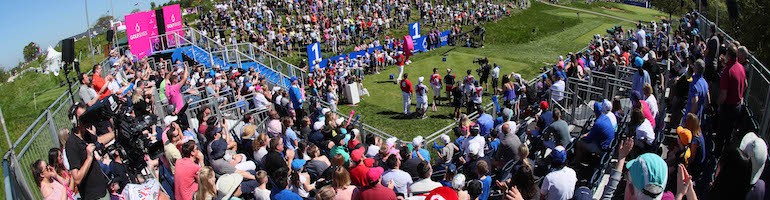
Take GolfSixes as an example. It had one-hour matches but there are other notable in-game innovations too. There was crowd interaction on tee shots, two women’s wildcard teams and a Shot Clock hole, which was expanded at Shot Clock Masters in Austria earlier this month, a fully-fledged €1 million tournament on our European Tour International Schedule.
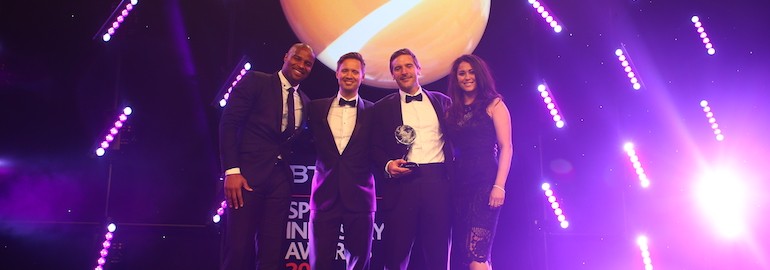
This determination within the sports industry to both attract new audiences also goes beyond the sport’s format and into online programming and content. Over half of the Tour’s digital audience is under 35 and we are seeing exponential year-on-year social media growth across the likes of Twitter and Instagram. Social media content and engagement is therefore something we’ve put plenty of effort behind in the past 18 months or so. The fruits of that labour were seen in April when The European Tour won the Social Media Campaign of the Year Award at this year’s BT Sport Industry Awards, for the ‘Access All Areas’ series.
The campaign is a great example of what we’re trying to do with the sport, and we believe it has resonated so well because it gives fans access to players and to the Tour they wouldn’t previously have thought possible. We’re engaging our commercial partners in this too, which aligns with their need to engage the global golf audience beyond the course, the hospitality unit, and the TV.
As the standard, volume and variety of online content increases, it will be harder and harder for publishers to cut through. Having complete autonomy, as we do at the Tour, over your content is crucial here, as it means you create editorial that you find interesting and that you think your fan base will, too. Format and content are not the only routes to reach new, global audiences – a thorough and layered approach is required. Work needs to be done at various levels to engage with fans in previously untapped locations.
There is a real global aspect across the board to the Tour’s transformation and, particularly in the past few months where we’ve made a series of key appointments with the hope of growing the game across the world. In China, a territory most sports content publishers are increasingly targeting, we’ve appointed a new business development director to add to an existing Asia-based commercial team. We’re also appointing a commercial director for Australasia for the first ever time. Growth continues too, with key appointments and changes being made across the Middle East and South East Asia.
Closer to home, another key appointment was announced last month in the shape of Guy Kinnings who will join the European Tour later this year as deputy CEO and Ryder Cup director. All of these appointments have the growth of the game in mind.
Golf is stronger than ever. Participation in the game is growing and diversifying and our role is the same as those running other sporting organisations: namely to harness this positivity and provide ways in which it can push boundaries, reach new audiences and grow interest and engagement further than ever before, working with our commercial partners in this process.