






Opinion: Aiu – A New Approach To Sport Integrity
Brett Clothier, the incoming head of the Athletics Integrity Unit, on regaining the trust of sports fans through a new approach to sport integrity…
If the past couple of years are anything to go by, many sports fans across the world would be easily forgiven for questioning the honesty of professional sport, and for questioning the legitimacy of what they have witnessed on the sport field.
The findings exposed in various reports of sports regulators, and through the diligent and tenacious efforts of our investigative media have proven an eye opener for many sports fans, and it is for that reason that sport has had to take a long hard look in the mirror and reflect on how it can conduct itself better in this age of openness and transparency.
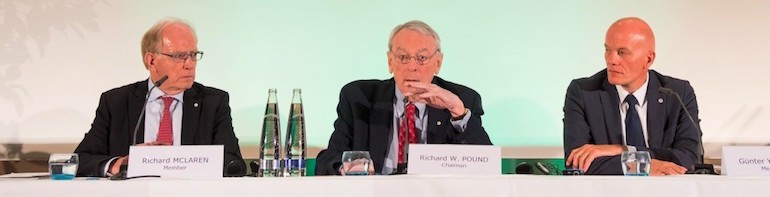
For athletics specifically, the World Anti-Doping Agency (WADA)-commissioned Pound and McLaren Reports prompted a re-think in terms of how the sport should manage threats to its own integrity. As the IAAF President said in his organisation’s Time for Change document, “It is time to leap, not tip toe”. And so the Athletics Integrity Unit (AIU) – one of the key pillars under the IAAF’s Governance Structure Reforms – was conceived as a radical step to meet the challenges of the time.
The AIU offers a new approach to managing threats to a sport’s integrity, the likes of which has never been trialled before. Through constitutional checks and balances to ensure the operational independence of the AIU and by tackling the full package of integrity issues (rather than just doping or match fixing), the AIU model is different to any other in global sport. I hope, several years down the line, that other sports and federations will look to the AIU as a model of success to be replicated in their own sports.
While I believe doping is the number one threat to the integrity of athletics, other pressures are emerging rapidly and that is why the AIU’s remit is so much broader than doping. This remit ranges from detecting misconduct including bribery, corruption and breaches of betting rules, the pursuit of individuals engaged in age or results manipulation, and investigating fraudulent behaviour with regards to transfers of allegiance. Tackling all these integrity issues together in one unit will create synergies and help us work efficiently and in a proactive manner.
This is important because if the AIU is to reinforce public and athlete confidence in our sport, then it is imperative that we not only show ourselves to be an independent body but also to be an effective one. In all of our operations – our testing programmes, intelligence and investigations work, compliance activities, case management, and education – we aim to be a highly skilled, innovative, cutting edge unit that is a world leader in sports integrity. Put simply, it will be the AIU’s task to drive any form of cheating out of the sport, and to do everything within our power to support honest athletes around the world who dedicate their lives to reaching their sporting goals through dedication and hard work.
This mission will drive my AIU team forward in its work day-in, day-out in the months and years ahead; and as someone previously tasked with similar duties for the largest sport in my home country, the Australian Football League (AFL), I am optimistic about what can be achieved in athletics.
However, we cannot achieve our objectives alone. I want the AIU to be a body that works with and empowers athletes and the broader athletics community to help us create a fairer sport. That means encouraging athletes and other individuals in the athletics community to learn, understand and take ownership of the rules and processes that govern their sport. And it means not only contribution from the athletes, but from their support teams, the officials and the administrators that make our sport a great one. It is also essential that we work closely with partners within sport such as the World Anti-Doping Agency (WADA), anti-doping organisations and sport integrity bodies, as well as entities outside sport, such as Interpol, customs organisations and betting monitoring bodies.
I also want the AIU to create a culture shift in athletics. A shift that makes it normal practice for athletes and other individuals in the community to speak out against and report any form of misconduct that they spot, whether it be a violation of the IAAF Anti-Doping Rules or behaviour that breaches the new Integrity Code of Conduct. Individuals must know that for the long-term health of the sport, it is the right thing to speak out against misconduct.
Reinforcing confidence in athletics is a big challenge. Athletics is a great sport and deserves a great reputation, but that reputation has to be earned and that is why the AIU will be working tirelessly to deliver for clean athletes in every part of the world; because if the sport does not regain its reputation, there will be challenges to encourage future generations to take up the sport.
Athletics must show itself to be values-driven sport at all times, and one that prioritises dedication and hard work above a win-at-all-costs mentality. It is this approach that my AIU team will carry with it, as we look to help athletics become a sport that tomorrow’s athletes want to be a part of.
Brett Clothier was appointed as the first head of the independent Athletics Integrity Unit (AIU) in June, starting ahead of the IAAF World Championships in London. IAAF president Sebastian Coe officially launched the AIU at the beginning of April, announcing David Howman as chairperson of the AIU’s Board.
Clothier is one of Australia’s leading sport integrity professionals. He established and led the Australian Football League (AFL)’s Integrity Unit for more than eight years, positioning the AFL as one of the first organisations worldwide to monitor doping alongside match-fixing and other integrity issues. Prior to his role at the AFL, Clothier spent four years as legal counsel to the Integrity Services Department of Racing Victoria.