


The Big Interview: Alex Thomson Racing
Stewart Hosford, CEO of Alex Thomson Racing, speaks to Sport Industry Group about the ever changing technology that comes with a Vendée Globe campaign, delivering for sponsors, and industry recognition at the BT Sport Industry Awards…
For the uninitiated, what is Alex Thomson Racing?
We are a sports team that competes in the Ocean Masters World Championship Series, a single-person ocean sailing event that races around the globe. We are essentially a British sports team, and we cover anything from a short two-day sail to the round-the-world main event – the Vendee Globe – in a four-year cycle. The Vendee is a single, non-stop around the world yacht race that – we all say, at least – is the most difficult sporting challenge left on the planet today.
Three months on your own in the oceans of the world, and you are not allowed to stop. It takes a certain type of person to be able to do that!
It’s certainly a tough ask for the one individual on the boat, but it still requires a huge support team, how do you go about providing that support?
Yes it’s similar in set up to a Formula One race I suppose. Obviously there’s one person in the car but hundreds more are constantly involved around the clock. It is a team sport, and there is a huge effort over a long period of time required to put the team together and deliver the platform for the sailors. In 2012 we came third in the world in the Vendée Globe, and in the 2016/17 Vendée Globe we came second, so you can probably imagine our ambition for 2020…
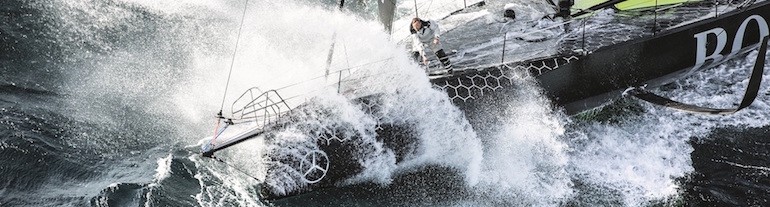
We are currently in the process of sitting down and talking to all of our partners and sponsors to try and put the pieces in place to try and compete and win the Vendée Globe 2020. In the business world it can sometimes get a bit confusing – or people forget altogether – what your actual objectives are. But in sports, especially sailing, it is pretty simple- we want to be the team that wins the Vendée Globe, and everything we do is working towards doing just that.
Regarding your partners and sponsors, you work and activate with the likes of HUGO BOSS and Mercedes Benz, prestigious and iconic brands, but a number of your sponsors are able to go far beyond logo-positioning. How do you work with your partners to utilise partnerships from both sides?
We always encourage our partners to be as involved as they can be in what we do as a team. We regularly spend time with them and go through the schedule and the events of the training programme, evaluating our objectives, strategies and priorities.
HUGO BOSS is a fashion brand, so they provide us with our clothing and team kit, but are open to all sorts of marketing ideas, and have loads of energy. They support us in any way they can.
Mercedes are more of a technical company so there’s a lot of knowledge sharing and it is pretty fascinating. For example, their advancements in technology to systems such as autonomous driving could have a huge impact on a single-racer. When you think Alex Thomson will be covering 40,000km around the world, the boat is driving itself for a considerable amount of that time because you can’t just stand at the wheel for days on end. Autonomous driving has to be a flawless and impeccable co-operation, so any new developments in that area is something we are keen to be involved in. Then there are areas such as electric power and the use of fossil fuels, there’s aerodynamics and safety developments, even the new carbon fibre used in the Mercedes AMG Petronas Formula One team. Work on innovation and technological advancements are something that will never end, because there are so many uses for new ways of thinking.
So many of our other partners we also rely on hugely, like any technical sports team, so that the boat is not only reliable but competitive. They are all involved at different levels, but ultimately everything has to be controlled by us.
How has the boat changed during your time with the team, and how is it looking as you plan towards 2020?
Unlike the America’s Cup, which has the entire field set against very strict parameters, the boats which take part in the Vendee Globe aren’t one design. Each team basically starts with a blank piece of paper and a box that we have to operate within, and from there we have the freedom to get pretty creative if required.
In the last ten years we have taken some huge steps forward, covering everything from capability and understanding carbon fibre technology, trail technology, new electronic and hybrid systems. Everything has developed and improved.
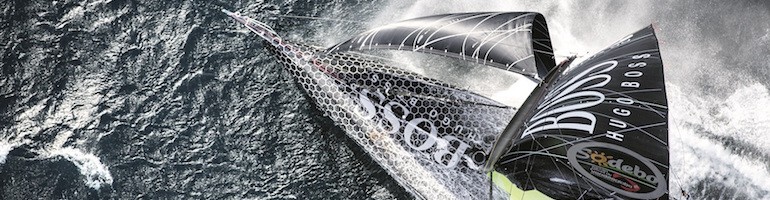
In the four year period building up to the Vendée Globe, we do 12 races within that cycle, which is a big time commitment, so effectively the boats that were built for the 2016 Vendée Globe are now already one generation old. It is amazing what can be done when you ‘get under the hood’ of these incredible boats and begin to learn more about the aerodynamics and hydrodynamics. Now, we are literally lifting boats out of the water and it is changing the whole sport from top to bottom. Nowadays these boats are sailing sometimes three times faster than the actual wind, where as in the past teams would always be restricted by the drag of the boat through the water, and that is a huge change. 100 years ago if you were to say that you sail faster than the wind you’d have been accused of witchcraft! The advancements make it much more technically exciting, opening up new boundaries for the sport to challenge.
These advancements have presumably been heavily aided by your hub of excellence. Can you tell us about your home in Gosport?
There is a team of 15 full time people at the moment but that will grow to up to 50 when we hit race phase. On a wider note, it is a hugely strong and important centre of excellence for sailing. There are probably only four or five of them in the world on this scale.
We are based down there and we have utilised every part of the infrastructure in order to help make ourselves competitive. We have all the capabilities to keep building and improving the intellectual property and the capability of the team. I think it is a bit of a hidden gem.
You’ve had huge success in the last two editions of the Vendée Globe, while there’s been tremendous British results at a number of Olympic Games recently, as well as promising signs of growth in the America’s Cup. What do you think has changed for sailing and Great Britain over the last decade or so that has allowed all of this success to follow?
The Olympic success in particular has been tremendous for the athletes, the fans and the sport as a whole. It is a leading factor in the capabilities we have in the UK and that is down to the programmes, UK Sport and the funding and the drive to 2012 and beyond. We never underplay the importance of that. Cycling has experienced a similar thing in the last decade and now it has become such a popular sport.
We know that the heritage is there and Alex (Thomson) is performing well, and we’re very proud of the third and second, but now we need to win. The British public love to read and watch British teams win, and if we do win the Vendée Globe, we will become the first non-French team ever to have done so.
We are on the journey, we just need to put together the right team and the right structure and the right boat and the right athletes for the 2020. It is a big challenge, but one we are determined to rise to.
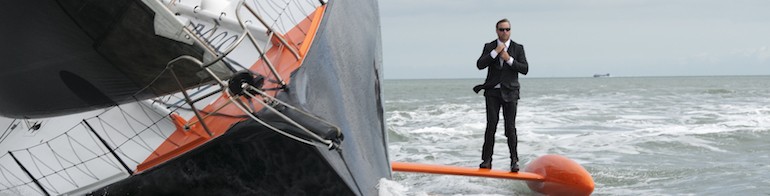
Finally, your partnership and subsequent activation with HUGO BOSS was shortlisted at the BT Sport Industry Awards 2017 for Team or Individual Sponsorship of the Year, and won the Best Use of PR Award in 2015 for The Mast Walk (below), clearly you’re a partnership open to pushing boundaries?
We are very keen to keep pushing those boundaries and recognition at the BT Sport Industry Awards, in front of the industry, was brilliant. We have a simple strategy as a team to win on the water, return on the shore.
Being able to keep our sponsors happy and meet our sporting objectives is a challenge and we always have to balance that carefully. Our mission is to make this amazing sport and amazing athlete part of the public consciousness and we can do that through the broadening of the audience. Therefore, when it comes to our commercial activity, it’s no good just doing the same basic sailing stuff. That won’t reach out to a wider audience – which won’t help the sport, the sponsor, or us in the long run.
We have just finished our evaluation of media and market returns for the last four year cycle and it is close to 230 million euros in terms of media return. That return rate for our sponsors is really important to us and we want to be out there, continually pushing the boundaries. We can only do that by being a bit more adventurous and surprising people with our output. That’s what the trilogy of stunts we have performed (The KeelWalk, The MastWalk and most recently, the SkyWalk – below) have all been about. These are things that non-sailing fans talk to us about over a beer and get excited about, and therefore the return for our sponsors is huge in terms of the number of people we can reach in that way.
Going forward we have to continue to look at our partners and our sponsors and think about how we can add the most value to them – sailing is not regarded as a mainstream media sport so we have to work harder at being creative with partners. But we have a great track record of doing just that, and hugely successful, long standing relationships with our sponsors as a result. We know the value we add has to stack up against all the other sports, and more, so industry recognition of the fact that we are achieving that is very important for us.
Images: ©Lloyd images, Cleo Barnham/Alex Thomson Racing