






The Unintended Consequences Of Labour’s Proposed Ticket Resale Reforms

Labour’s proposed reforms to the secondary ticket resale market are well-intentioned but risk the long-term financial stability of many rights holders and event owners in sport, according to sport finance expert Professor Rob Wilson.
Last month, the Labour party announced plans to cap the resale prices of live event tickets and regulate resale platforms if the party is successful at the next general election.
In a speech at the Guildhall School of Music and Drama, Sir Keir Starmer, said access to culture could not be “at the mercy of ruthless ticket touts who drive up the prices” and asserted that fans needed to be able to see the acts they loved “at a fair price.”
The announcement has gone largely under the radar within the sports industry, where ticketing issues rarely seem to make headlines, unless they are a bad news story.
Historically, ticketing has played a huge part in the revenue generation model for sport. There is a reason why Manchester United have commissioned a regeneration task force for Old Trafford.
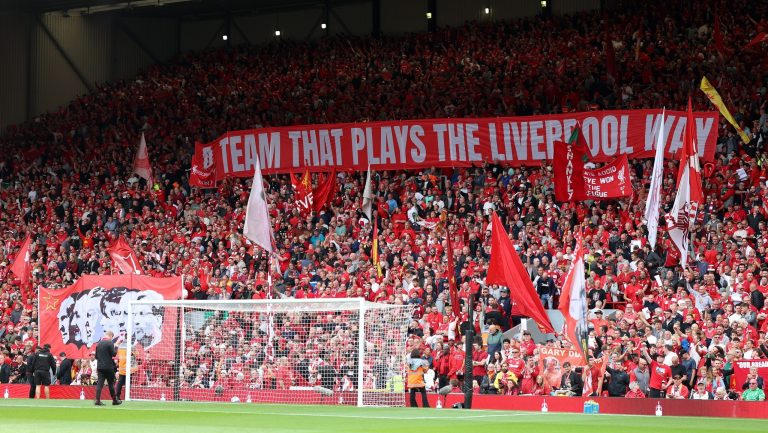
It’s the same sentiment that drove Spurs to invest £1.2bn into their new stadium, Liverpool to increase Anfield’s capacity to 60,000, with Manchester City following suit, and why Chelsea are desperate to redevelop Stamford Bridge or find a new home.

Ticket sales provide long-term financial sustainability for many sports, teams and competitions. So where do Labour’s proposals fit in, and what would be the potential impact on sport?
Supply and demand
First, it’s important to note the current model and consumer buying patterns. Many UK sports competitions, including football, ban the reselling of tickets and/or control the resale by stipulating that tickets must be resold on the organisation’s own ticketing platform, or via an official partner.
Human nature, supply and demand economics, and unforeseen circumstances dictate that many people circumvent the system to sell tickets on their terms and at a ‘market’ price i.e. the price another person is willing to pay to attend a specific event.
Sometimes this transaction happens via secondary marketplaces. Often it happens in the underground market – which is believed to be valued at £300m per year for UK football tickets alone – offering no protection to the buyer and allowing the money to leave the rights holder economy.
By fostering an effective relationship with secondary marketplaces, rights holders can benefit from these revenues, minimising losses to underground markets and providing leverage for further marketing, financing, and investment activities.
A burgeoning underground market
There is little doubt that a cap on resale prices will lead to an explosion of underground activity as punters seek market value for their purchases and the flexibility to buy and sell when and how they wish.
Evidence from the Competition and Markets Authority and the independent Waterson Report suggests that price caps are ineffective and will drive ticket resales to underground and unregulated channels where consumers have no protection or recourse if something goes wrong with their purchase.
We are already seeing this type of activity increase in the music space where a new report by Lloyds Bank estimates fans have lost more than £1m in ticket scams ahead of the UK leg of Taylor Swift’s Eras tour, with 90% of the reported ticket scams emanating from Facebook.
It could be therefore unwise to take away the option for fans to use regulated platforms to avoid proliferation of this behaviour. Afterall, a bigger black market will likely translate into an increased risk of forged ticket scams, as per the Swift scenario, and less consumer protection.
A reduction in sports tourists
Another consequence of an expanded underground market is the availability of tickets for overseas visitors, who can currently buy tickets to events all over the world in their own currency, with money-back guarantees.
If secondary sales are pushed underground, it will dramatically reduce the opportunity for fan tourism and one-off bucket list purchases to major events.
These travelling fans are highly lucrative because they are proven to spend four to five-times more on merchandise, plus the wider value they bring to local economies through hotel stays, dining out and taking in other cultural activities during their stays.
Fulfilment issues
By attempting to control ticket resale, we have seen recent evidence of how event owners have limited their ability to sell out venues.
While resale restrictions are often painted as an attempt to control for high prices, we often see these restrictions used by event organisers in an attempt to control for low prices too, specifically prohibiting below “face value” transactions.
At last year’s Rugby World Cup in France, both the home nation and one of the best supported teams, Ireland, exited the competition earlier than anticipated leaving thousands of their fans looking to offload their seats for the semi-final fixtures.

The World Rugby ticketing platform was set up to only allow resale at a face value price, which, given the circumstance, many people were unwilling to pay. The inability to lower resale prices on the official resale platform, left hundreds of fans out-of-pocket and thousands of empty seats at showpiece matches.
As anyone working in sport will appreciate, full venues are critical for media rights, sponsorship values and the overall value of the ‘product’.
Reassessing ticketing strategies
Labour’s proposals are clearly well-intentioned, with the ultimate goal of providing more affordable access to live sport and music events. The reality though is far more complex and could potentially usher in a myriad of the unintended consequences outlined above.
The proposals have spotlighted the role of the secondary market, and it could be argued that UK organisations are leaving a lot of money on the table when it comes to their resale ticketing strategies.
In the US, a healthy relationship exists between major sports leagues and secondary marketplaces, providing teams with a share of the revenues and valuable data on ticket buyers, which would otherwise be lost.
As the industry awaits confirmation that Labour’s proposals will make the party’s general election manifesto, UK sports properties should use this moment to reassess their ticketing strategies.
There are other ways than simply increasing prices year-on-year – which alienates legacy fans – to maximise ticketing revenues. And this will be an increasingly important commercial stream in the future as media and sponsorship fees come under increasing pressure.
Stay up to date with the world of sports business by subscribing to the Sport Industry Daily.