






The Big Interview: Surrey CCC
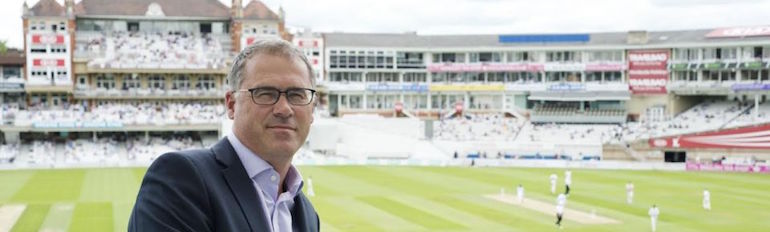
As tickets go on sale for this year’s Vitality Blast, Richard Gould, CEO of Surrey County Cricket Club, speaks to Sport Industry Group about the balance between Test and Twenty20 matches, learning lessons from other sports and his views on potential four-day games…
Tell us about your career journey to CEO at Surrey County Cricket Club?
My original career was in the army, where I was a tank commander for 12 years. From there I moved into football, which was in the family as both my father and brother played. I worked at Bristol City before moving into cricket with Somerset County Cricket Club. Then I came up to Surrey around six years ago.
The landscape of cricket has changed significantly in the time you have been here, what do you think has been the biggest shift since you started in 2011?
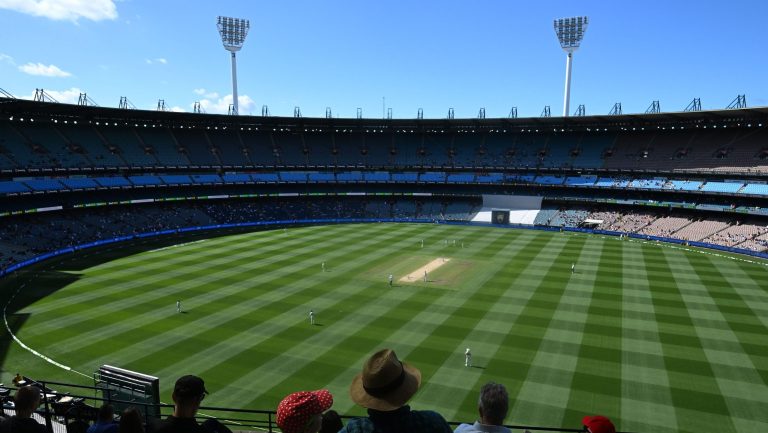
We continue to be a major international ground, which is incredibly important to us. All we have done has developed off the back of international cricket. The first international test match took place here in 1880, and we want to be an international venue long-term. The biggest shift for us has been Twenty20 cricket, where we begin to really understand the value of county Twenty20 cricket and we are now driving sell-out crowds for a lot of these games. This has pushed our income stream from Twenty20 to around £6m a year from a base of £1.5m a year.
Adding to this is a growth of the conference and venue business, which includes a range of rooms we use on non-matchdays. That side of the business has increased from £1.5m to about £5m. As a member’s club we also want to have a constant stream of new members, and we have also been able to manage this the last few years. We will be up to around 10,000 members this year. We strive to be a really engaging club and one that people want to visit.
As a business the annual International Test Match must be crucial, but how do you balance your focus between the day to day running of the business to a one-off Test Match?
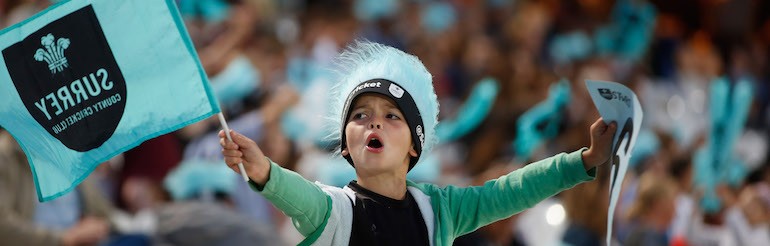
We find the Test Match does seem to attract a largely male and adult audience, and we need to attract a more diverse fan group. This is where the Twenty20 has been amazing for us, as we see lots of kids and families. To put in into perspective, we had over 10,000 under-16s come to watch the Twenty20 Blast this year. For all the people who attended our Twenty20 games this year, 69% had never been to a cricket match at the Oval before.
I believe it is not only about the continuity of the Test Matches, which will always be popular, but to engage the new audience. That is what the team here has excelled at. We are seeing a change in the demographic. The families have something they can really engage in. Alongside that it is pricing policies such as ‘A Quid a Kid’ for the Twenty20 games, which have helped drive that by offering an affordable day out.
The facilities that have been made available also make the Oval a more engaging venue. From next year we are creating a family zone for the Twenty20 Blast, which has previously been used for hospitality. Whilst hospitality has been extremely popular here, we wanted to make sure we had the right balance. We will effectively be evicting the hospitality from that area to have a family area as we think that is the future.
As a club how much do you look at what other teams and leagues are doing?
We don’t just look at other cricket clubs, but we look at other sports. Whilst we do look at others, we also do like to lead from the front.
We have been to experience the Big Bash and IPL, as well as going over to the States to look at basketball and American football. The marketing and comms team are always looking across sports to see what others are doing, and so see what we can do. In this respect, it is generally the American sports that lead the way. Whilst their ideas may not directly translate across, we will always look at how we can tweak an idea to work for us.
To make this work they have to be able to know the players and effectively create relationships with the players. The fans will then care about the players and also care about the club.
What is your average day like in the off-season?
The winter months are all about sales and marketing. International tickets went on sale, along with the Twenty20 Blast. We have sold out ODI and the early days of the Test Match have nearly sold out too. We are very much focused on sales, which is bizarre in the snowy weather – but that is the demand we have managed to create. When the summer comes around the focus is on delivering all these match days and make sure all the fans have a great time.
Aside from that, we also have over 1,500 conferences and events a year, so there’s often five or six different events going on every single day here – it certainly keeps us busy.
What is your take on the potential of a four-day Test Match?
I personally don’t think this is going to work. Cricket is a game of resources, of which there are three: Wickets, runs and time. If you reduce one of these resources then it has an impact on the remaining two. I am not a great believer in it.
From a business perspective, day five is very tricky to organise and arrange. You have no idea if a game will go to day five, and you have 1,500 staff and stewards who may not even be needed on day five. That is our job to work around it. Commercially it would make things easier, but I believe we have to stay true to the sport.
A record number of fans attended T20 cricket at the Kia Oval in 2017, with over 138,000 people watching the likes of Jason Roy, Aaron Finch and Tom Curran in action, as Surrey progressed to the quarter-finals of the competition. Tickets for 2018 are on sale from today (Thursday 1st March). Find out more here.