





The Big Interview: Ds Virgin Racing
Ahead of the finale of the FIA Formula E Championship’s second season at Battersea Park last weekend, sportindustry.biz spoke to DS Virgin Racing CEO and team principle, Alex Tai, about the challenges for Formula E, racing in Battersea Park and the push for sustainability beyond the track…
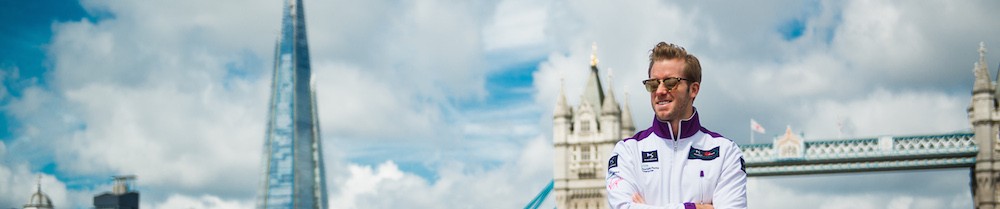
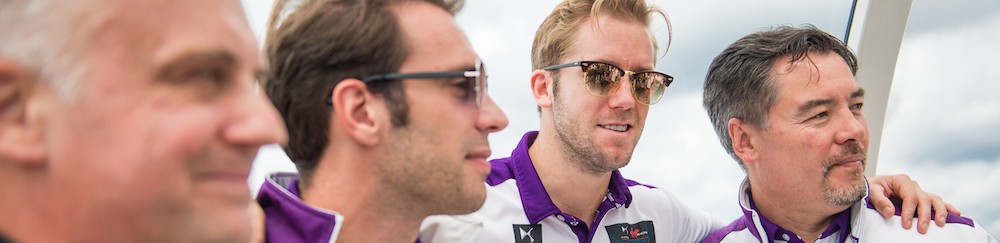
At the time of writing, DS Virgin Racing driver Sam Bird (pictured below) mathematically had a chance of winning the Formula E Championship title, but only if the Brit won both races – taking place over the Saturday and Sunday – secured all the bonus points for pole position and fastest lap, and hoped that neither di Grassi nor Buemi scored a single point. As it transpired, Sebastien Buemi went on to take the 2015/16 FIA Formula E Championship title following a frenetic last day that saw Di Grassi overshoot the opening corner and run straight into the back of his title rival. However, with both rivals dropping to the back of the field following the early damage, Buemi went on to secure the title by two points thanks to the two-point bonus for taking the fastest lap.
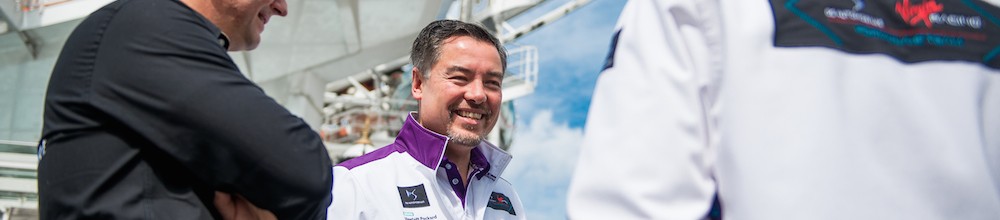
Despite the chaotic finale, Tai (pictured above, left, alongside driver Jean-Éric Vergne) is a huge fan of the unpredictability of the racing: “I think it’s brilliant. I don’t want to turn up to a race wondering which driver from a particular team is going to win, rather than which driver from an entire grid is going to win.”
For the second year running, London hosts the final two rounds of the Championship on back-to-back days, so represents the biggest weekend for the grid.
“London is the most important for us particularly, we are the only British team on the grid so we have to do well at our home race. It’s also a double header so there’s a lot of points on offer for each driver. This is also the home of the Virgin Group, 50% of everything we sell is in the UK so there’s a huge amount of customers that we need to speak out to. It’s also a huge market for our partners Hewlett Packard Enterprise and DS Performance, so they need to be shown to everyone that they’re sporting the best technology. Personally, it’s an added bonus that I can also walk to the course!”
Born into the RAF, Alex Tai first joined Virgin flying the Airbus A340s as captain with Virgin Atlantic, before developing a close working relationship with Sir Richard Branson, who would go on to bring him onto a number of projects over the next decade, including sponsorship of the London Marathon and the Round the World Balloon challenges. Tai later took on senior roles on the Virgin Galactic programme and the Virgin Racing Formula One team.
“I learnt a lot from my time with the Formula One team, and now i’m absolutely loving my time in Formula E. It’s very valuable to the Virgin brand, and it’s been a fantastic activation for us.
“We first came into Formula E because Sir Richard Branson wants to develop technology that is good for the people and the planet. We believe that people should be driving electric vehicles in the future. It’s not ubiquitous at this stage so we need to encourage people to take this step, so to do that, we needed to bring the technology that we develop for the track to the average person on the street.”
This comes less than a month after it was reported that Norway would become the first country to ban the sale of all fossil fuel-based cars within the next decade. Politicians from both sides of the political spectrum reportedly reached a conclusion in June about 100% of Norwegian cars running on green energy by 2025, despite a large proportion of Norway’s funds relying on the country’s petroleum industry.
For the second season of the championship, the rules regarding the powertrain were opened up, with the cars of the leading protagonists very different underneath, with unique gearbox, motor and invertor solutions as well as significant differences in rear suspension design. Despite this, the championship has been incredibly closely fought with title contenders di Grassi and Buemi taking three wins apiece so far.
“It’s the technology I think,” said Tai when asked what made Formula E relevant. “We need to be relevant to the people who watch it, whether that’s the way it’s powered or the ability to transfer technology from a series like this to your car. I love Formula One, but it’s become less competitive because it’s all about one manufacturer and none of the technology in a Formula One car will ever make it into your car. In Formula E, the batteries, the motors, the inverters, they’ll all be things we can use in our everyday cars in a few years’ time.
“The other thing that’s so exciting at the moment, is we do not know who is going to win this weekend. We believe we’re well prepared for it, but then so will most of the grid!”
Formula E was established by the governing body of world motorsport – the FIA – to demonstrate the ability of electric car technology in motorsport. As a result, the series is committed to embracing sustainable technologies. To this end, all the cars are charged by a generator that runs on glyercine, a fuel that is almost emission-free and is – technically – so clean, you could drink it.”
“It is a brave thing to do, and Alejandro Agag (CEO of Formula E) and his team have done a fantastic job, pulling together the FIA, the teams, the cities, the sponsors, it’s brilliant,” said Tai.
“This is the end of our second season in Formula E and we believe it’s the right thing to be involved in, we love what we see here, and everyone should be driving electric cars, we just need to be brave. As Sir Richard Branson says, hopefully we’ll look back on the days when people drove petrol and diesel cars in the same way we look back at people who used to smoke in restaurants. How were people ever allowed to do that!?
“Motorsport in general needs to get their costs down, using unobtanium to make your wheel nuts so the car goes a tiny fraction of a second faster is not the way to help the road car technologies move forward. The system we have in Formula E is a pretty simple cost cap, so our budgets are ten times less, or more, so demonstrably it’s a lot more palpable. It helps with sponsorship as well, because I can ask for less money from them.”
Formula E’s inaugural season was rewarded with the Cutting Edge Sport Award, in association with Loughborough University in London, at the BT Sport Industry Awards 2016, pictured below.

On the problems potentially facing Formula E in the future, Tai citied scheduling as the area still needed to be ‘nailed down’ by the organisers. “People need to know roughly when and where these races are going to be every year, in the same way people know when Formula One will be in Monaco or Silverstone, for example.
“Of course, it’s very easy for me to say that. Alejandro Agag has had a fixed amount of funding to set this up. To run a race here (in Battersea) is in excess of €10m, so if you’re running 14 races, that’s a huge amount of money. Now, these races will make money, but it will take time before they can stand on their own feet. I believe that London should invest to keep Formula E here.”
The temporary track will see the Formula E grid race through Battersea Park, but this weekend will reportedly be the last to take place at the venue, with the sport potentially eyeing a move to the city’s streets in coming years.
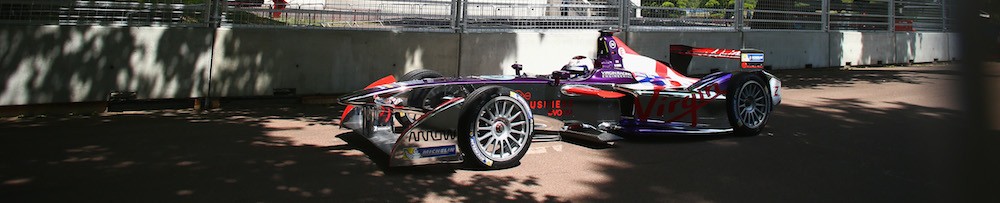
“Maybe Battersea isn’t the right place, maybe we should be racing around the streets of London. With Formula E cars, there’s nothing actually stopping us from racing inside because there’s no emissions. So why not have a race going in and out of The O2, how cool would that be!? You can’t do that with other series.
“The success is there, and it’s building. 190 million people watched this series last year, and 220 million people this year. That’s a big increase already, so early into a new sport. The cadence of the race’s unpredictability is very important to this.”
The final races of the 2015/16 season took place at Battersea, London, on 2nd and 3rd July, which also features the biggest fan area on the calendar.