




The Big Interview: Huub Design
Dean Jackson, owner of Huub Design, speaks to sportindustry.biz about Olympic ambassadors, the growth of women’s participation in triathlon, and bringing Jenson Button to Derby…
How did Huub get to this stage?
I’ve got a long history in the performance and sport trade, taking the plunge and setting up my own running shop in Derby with a partner in 1989. I was let go from a company but I know the triathlon world, so I needed to set my own business up to be involved.
It became clear almost immediately. There was a massive hole in the market, everyone was just copying each other and making wetsuits without thinking about what they were doing. I had science behind me with Professor Huub Toussaint, and knew we could come up with something new. I was fortunate enough to get approached by some investors from Nottingham who put some money in under an Enterprise Initiative Scheme, which got me off the ground, with another £100,000 if I could prove I had the fastest wetsuit, make £200,000 worth of sales and get an Olympian wearing it.
We pulled it off and delivered our first wetsuit a few months later. Now here we are with a scientifically proven product that lets people swim faster, which was always the goal.
So the name Huub comes from the professor you worked with on the product?
We met after rules were changed in the pool. Speedo had all the medals then, via a few quick rule changes, brands like Speedo suddenly didn’t have all the medals. We were called up to go in to address why our suits weren’t trapping air. So I reached out to the best brains in the business, which was Huub Toussaint, and we became friends through him helping us out with that.
I went and met him at Schiphol Airport in the railway station waiting room with a load of wet suits and said ‘I want to build this company and by the way I’ve named this after you, I’ve trademarked your name and I’d like to give you a percentage of the company’. So that was the deal we did!
How are you looking to move into the mainstream?
The challenge is to keep the scientific element as part of our business, with the help of the Technology Strategy Board we built a £250,000 testing rig that measures active drag. If you can imagine knowing exactly what and where your drag is while you’re riding a bike on a windy day down the road, imagine how much that would help cyclists? There was no reason we couldn’t adapt that principle to swimming. Professor Huub invented this piece of equipment – there’s now just three in the world – and we’ve now invented the super version, the turbo version if you like, which is going to be used in Derby. This piece of equipment isn’t owned by any sports brand anywhere in the world, and now we will own it and do all our research from it. With that we will be taking our products into the swimming pool and into that arena with a huge knowledge base we don’t believe anyone can match.
What’s next?
For our next step we’ve teamed up with Tana Ramsay and are producing a range of high performance women’s tri-clothing which has a style element as well as a high performance element.
We tried it before, but admitted defeat. We were just a group of blokes sat round a table trying to design a product for women. We knew we could bring in designers at any time to make it look nice, but we wanted to ensure the science behind it remained an essential part of the suit. Tana’s competing at a good level, so understands the thought process behind it. She wants the rewards from the product sales as well to deliver to Great Ormond Street charity, so she’s really engaged.
Have you noticed a big rise in the women’s side of triathlon?
I’ve been in the industry a long-time, I’ve seen it grow from 8-12% of women participants up to 30-35%, and sometimes you can have more women than men at certain events.
I think Race for Life has been such a catalyst for women’s sport, it’ll maybe never get the pat on the back it deserves, but it shows that sport can be social, it can mean doing it together for something that isn’t a time, position or record. It shows you can train together, get healthier, but it remain a social thing. Once that has been achieved, it’s a natural progression to say ‘what’s next? How can I challenge myself?’
Most athletes in triathlon come from a running background, so this rise in participation means more and more women are looking for their next challenge. There are more beginner events too. Events that don’t require a huge change in lifestyle but gives people an option to try different sports. I give huge kudos for Race for Life there.
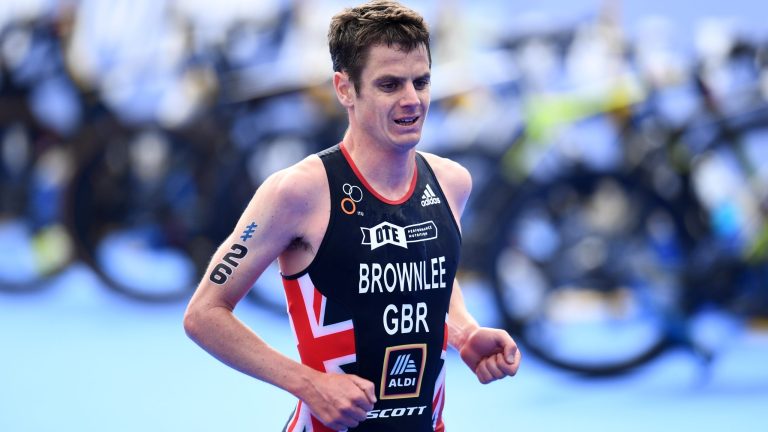
Next year will see the Brownlee brothers return to Olympic action – both ambassadors for Huub – what are your plans to make the most of that in 2016?
We’ve got the widest portfolio of triathletes of any brand, which is fantastic and covers lots of areas. In an Olympic year we’ve really got to focus, and we’ve engaged Soapbox PR, a London PR company that specialises in the sports arena, to really help us get the message out that we partner with Alistair and Jonathan Brownlee. We partner with the fastest swimmer in triathlon and who is likely to be first out of the water in Rio and how we’ve helped them get there.
Obviously with the Brownlee brothers you’ve got two great Yorkshire engines, but we’ve got some technology that are helping with that. It’s really about that whole partnership of delivering to them what they need, when they need it, without getting in the way and cluttering. It’s very easy as a sponsor to make lots of demands on your athletes and ambassadors and we like to take the approach with them both that is that we are there for them. They can tell us when they like to do and we will fit around that, whether that be videos, interviews or magazine shoots, we don’t want to mess with their training schedules. It’s in our interest that they do well, and we don’t want to impact that negatively, so we have to be selective on that.
We are looking forward to the whole Olympic journey and starting early, we were not the wetsuits sponsors or swim sponsors of the Brownlee brothers in London, that was two different companies, so now we’ve got a solid run up to the competition and we are more mature as a company than we were a couple of years back. In 2012 we weren’t even a year old, here we are a mature five years old, which is still a baby in the sports game, so it’s about focus and maximising the competition that only comes around every four years.
You’re also involved with Jenson Button and his triathlon, which you even helped bring to Derby?
Jenson held a fantastic event at Luton Hoo, which is a lovely hotel and spa, but it was very isolated. To me, the format he had – a short triathlon in the morning then double the distance in the afternoon, and if you qualify for the final you do the same short one again – is very exciting. You get those nerves in the morning, especially if you were a newbie, and in the afternoon it was a lot more relaxed affair. But how do you take that to wider audiences?
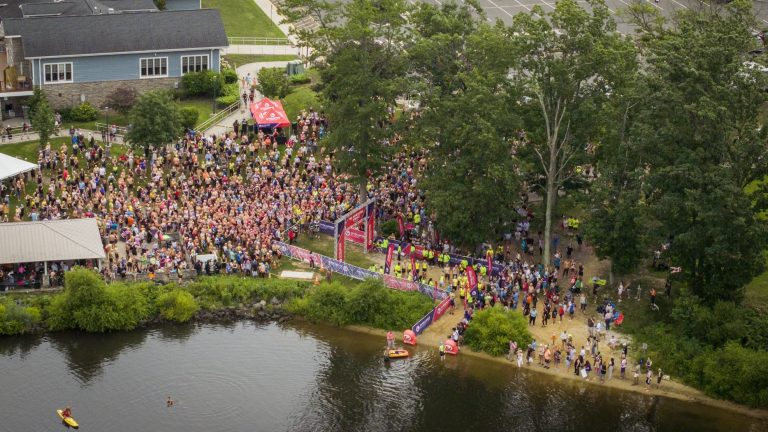
Living in Derby we have awesome access to councils and can make some great things happen, so having Jenson turn up in Derby gave super excitement to the city for getting behind that. The businesses got behind us and the council closed the roads, so it was one of the very few triathlons in the country that had closed roads and a real festival vibe building that we can use for next year. The participation and the awareness numbers were up and next year, we’ll double this year’s numbers. They’ve now asked us to look at another event in the country, so we could start moving the format around.
Gordon Ramsey came up and raced as well. He and I had a head-to-head and he beat me very well indeed, so I paid up our charity bet and demanded a rematch. I beat him in the rematch, and now he’s called me out for a winner takes all. Although the money goes to the foundation, so he wins either way!
There have been advances in your wet suits in recent years, how much quicker can they get?
The industry really stagnated for a long time. When the first wetsuit for triathlon was produced in the late 80s – effectively a surf suit that was adapted – they went for a smooth skin surface rather than a nylon surface.
Since then, there really has been very little evolution, it’s quite sad that the industry has just rolled along with this growth of the sport and continued to make the same product with a bit more printing on. There’s been forearm catch panels introduced so you engage with more water, but when you look at the research it doesn’t work.
85% of triathletes are from a non-swim background so their legs sink, so how do we stop their legs sinking? We looked at the body buoyancy position and distribution in the water, and as a result the set up is very different to any other brand, as we are the only ones who do it. Propping the legs up and dropping the chest reduces frontal drag by 30%, which is great, it’s a huge saving and so simple.
Next for us is how we put controls into the movement of the body in good and poor swimmers to reduce any wasted energy and make the body a strong anchor to take your stroke from. We’ve set challenges to the factories and manufacturers to come up with some new materials as well. Another important focus for us now is thermo-regulation within a wet suit, how can we encourage people in colder climates, like the Nordics, to swim longer with a product that allows them to stay warmer. I’m not talking surface heat or temperature, but core temperature.
We’ve also helped with research into temperature pills, it’s quite fascinating how your body can regulate itself so it’s not as cold as you really think. We see benefits to come in heat, and materials used have a long way to come, we are using the same materials we were using 30 years ago, to me that’s not advancement. That’s the challenge for us and we are leading that charge, we will have the Measure Active Drags (M.A.D.S) system to measure every one of those benefits to see if it is incremental or we are standing still or even going backwards, but we will have the answers, so to answer your question – I believe wetsuits can still get a lot faster.