





Key Takeaways From The CFLI Leadership Forum 2024
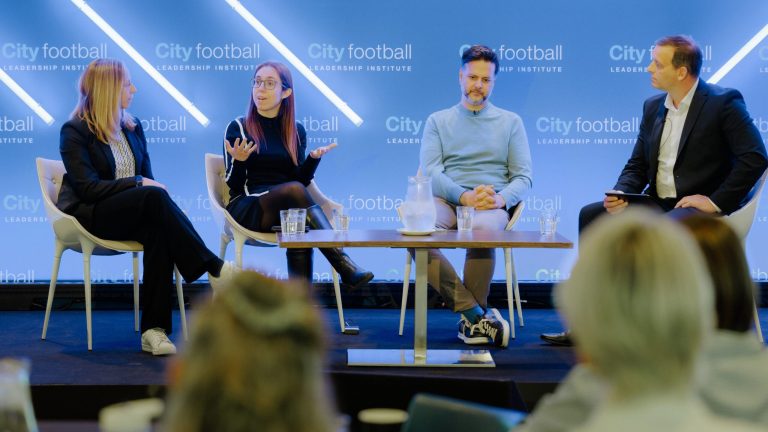
Earlier this month, Manchester City’s Etihad Stadium opened its doors to sport industry executives for the second edition of the CFLI Leadership Forum on Thursday 9th May.
The day’s agenda comprised four sessions on some of the most prevalent topics facing the sports industry, namely the future of fan engagement, leadership, the usage of AI, and the diversification of commercial ventures.
The future of fan engagement
To kickstart the 2024 forum, four expert panellists weighed in on the topic of fan engagement in sport. These included Rugby League Commercial Managing Director, Rhodri Jones, British Cycling CEO, Jon Dutton, Gemba Europe Managing Director, Claire Kelly, and Ahead in Sport’s Director of Education, Nicola McCullough.
Claire Kelly addressed the need for qualitative and quantitative research in understanding fan-bases, and also drew comparisons from her experience of working within both the retail and sports industries.
“I think it’s such a critical time for sport to learn from other industries, so I really enjoyed being able to share some experiences of mine from Sainsbury’s, and think about how fan engagement can transcend from physical through to digital experiences,” Kelly told Sport Industry Group.
Jon Dutton highlighted the opportunity that British Cycling has to drive participation in the sport in the buildup to this summer’s Paris 2024 Olympic Games. At present, only one in three UK adults has access to a bike, with the organisation keen to buck that trend in the near future.
Rhodri Jones meanwhile offered insight on RL Commercial’s ongoing reimagining of rugby league, citing the Super League’s recently signed Sky Sports and BBC Sport deals as pivotal drivers in its growth, in addition to the launch of the Super League+ OTT streaming service.
Following the opening panel session, Jones cited the impact of IMG Digital and the new media rights agreements as crucial factors in driving engagement in rugby league.
“The old adage of ‘how many followers have you got,’ has changed to ‘what are our engagements like, and how long are people actually staying on our platforms to engage with the sport?’
“That’s been a step change for us in not chasing the followers, but chasing the engagement and the duration of that engagement,” he said.

Leadership in the sport industry
On the topic of ‘Leadership – how to develop/maintain a high-performance environment’, CFLI Director, Jenny Morris, sat down with City Football Group Chief Operating Officer, Roel de Vries, for the day’s second session.
The Dutchman, who spent 25 years working with Nissan prior to joining CFG in 2020, has presided over a period of significant growth both on and off the pitch. Manchester City’s on-field excellence was reaffirmed by the club’s fourth successive Premier League title, while off it, the club delivered record revenue of £712.8m for the 2022/23 financial year, setting a new Premier League record.
Morris and De Vries discussed a range of topics, from talent acquisition, to company culture and the evolution of CFG’s commercial strategy since his arrival in Manchester.
Speaking from his personal experience, De Vries expressed how he sees more similarities than differences between the sport industry and other sectors. In his role at CFG, he explained the importance of raising revenue in order to raise funds to invest in a playing squad and club infrastructure at Manchester City, including the Etihad Campus, with the club set to expand the Etihad Stadium to 70,000 seats and build a new 400-bed hotel.
Some of the main points raised during the keynote session included the need for a diverse team, the importance of a positive work environment, and the necessity of a coherent long-term strategy which is understood throughout the organisation.

AI in sport
In the afternoon, a discussion panel aimed to unpack the growing importance of AI in the sport industry. This featured Genius Sports’ Sports Business Director, Paul Hunt, Rezzil Co-Founder, Andy Etches, WPP’s Global Head of Data and, AI Di Mayze, and Omnia Sports Group Executive Director, Ian Budge.
During the discussion, Hunt showcased some of the latest activations employed by Genius Sports, such as AI-generated nametags for footballers during Premier League matches, and the highlighting of players about to blitz the quarterback during NFL games.
Taking a deep dive into the impact of AI on the future of sport, the panel discussed the growing use of data and analytics, gamification, and how the industry can take advantage of the latest innovations.
“When it comes to new technology, sport is often lagging behind, in terms of picking stuff up or embracing it truly,” Etches told Sport Industry Group after the session.
“The more opportunities there are for people to learn about new technology at forums like this, the more likely it is that we’ll get on board with other industries and catch up.”

Diversifying commercial ventures
To wrap up this year’s CFLI Forum, a panel of experts assembled to assess ‘Diversifying Commercial Ventures in Sport’. Speaking during the final session were CFG’s Managing Director of Football Education, Jorgina Busquets, the ECB’s Chief Commercial Officer, Tony Singh, and Nielsen Sports’ UK Head of Client Strategy, Lynsey Pennie-Douglas, who fielded questions from Salford City Red Devils Director, Paul Trainor.
The panel collectively discussed some of the ways in which sports properties and rightsholders may look to expand their target audiences in the increasingly competitive battle for the attention of Gen Z audiences.
Commenting on the launch of The Hundred, Singh outlined some of the broader challenges facing cricket in England and Wales, as the ECB looks to engage younger fans and make the sport more inclusive. Indeed, the organisation recently revealed plans to invest a further £4-5m annually to further develop the women’s professional game.

The future is here
During her closing remarks, Jenny Morris outlined how “sport is ever-changing,” and felt encouraged from the day’s sessions that sport is evolving for the better.
“Yes, there is a future that we need to be aware of, but that future is fast coming and that’s what I meant with saying that sport is ever-changing,” Morris told Sport Industry Group.
“Week-to-week, as an industry, we’re very good at reflecting and taking stock, and you see that on the pitch. If a team loses or wins in a particular way, they might change their style of play.
“I think that’s reflected in the industry, and that’s why the industry has evolved so much over the last 15-20 years, and why we’ll continue to do so in the future.”
Reflecting on the 2024 edition of the Forum, she continued, “I thought our panellists did a fantastic job of illuminating perhaps some of the changes that are afoot that our attendees today might not have been aware of, and also offering up some really exciting solutions or considerations to tackle these changes.”